


Chinese Submarine Launches Ballistic Missile 7,300 Km Into South Pacific In First Such Test
The CSR Journal Magazine

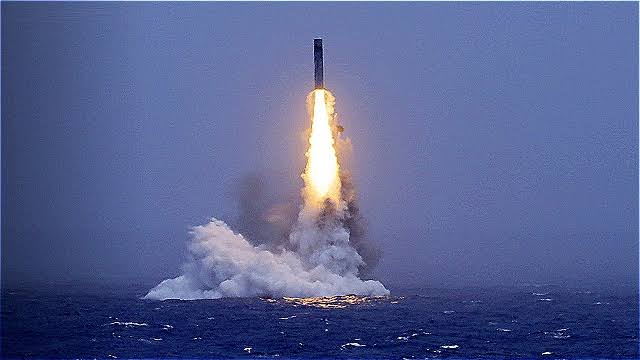
A Chinese nuclear-powered submarine launched a ballistic missile capable of carrying a nuclear warhead deep into the South Pacific on July 6, marking the first time the People’s Liberation Army Navy (PLAN) publicly demonstrated such a long-range submarine-launched missile capability in open international waters.

The unarmed missile travelled about 7,300 km after being launched from the South China Sea, passing over the northern Philippines and the Luzon Strait before flying near Palau and Guam and landing between Nauru and Tonga. The test came amid China’s rapid expansion of its nuclear arsenal and growing investments in nuclear-powered submarines.

China Calls Missile Launch Routine Military Training

Senior Captain Wang Xuemeng, a PLAN spokesperson, said China had “successfully launched a strategic missile carrying a dummy warhead toward relevant high seas of the Pacific Ocean at 12:01p.m., which landed precisely within the designated waters”.

Beijing described the launch as a “routine arrangement of the annual training of the PLA Navy” and said the missile test complied with international law and established practices.

China maintained that countries had been notified in advance and said the test was “not directed at any specific country or target”.

However, Beijing has not ratified the Hague Code of Conduct against Ballistic Missile Proliferation, a voluntary framework that requires advance notifications and disclosures related to ballistic missile launches.

China reportedly notified selected countries less than 24 hours before the test rather than informing all members of the Hague Code of Conduct.

The notifications also did not provide detailed information such as the missile class, launch coordinates and flight direction.

Type 094 Submarine Likely Used For Missile Test

China did not identify the submarine involved in the launch, continuing its practice of maintaining secrecy around sensitive military operations.

However, the missile was likely launched from a Type 094 nuclear-powered ballistic-missile submarine, which forms the backbone of China’s underwater nuclear deterrent.

The PLAN also operates a Type 032 diesel-electric submarine that has previously been used for submarine-launched ballistic missile tests.

Analysts, however, believe China sought to conduct the July 6 exercise under conditions resembling an operational nuclear deterrence mission, making the use of a Type 094 submarine more likely.

Two notices to airmen, or NOTAMs, were issued ahead of the launch, suggesting possible missile activities from both the Bohai Sea and the South China Sea.

Decker Eveleth, an associate research analyst at the US-based CNA Corporation, said the notifications could indicate that China was simultaneously exercising nuclear submarine forces operating from two separate submarine “bastions”.

Analysts Point To Test Of Nuclear Command And Control Systems

Eveleth said China faces geographic challenges in deploying nuclear submarines beyond the First Island Chain because American and allied submarine detection capabilities could identify and track them.

As a result, China keeps its nuclear submarines closer to its coastline, including in protected operating areas in the South China Sea and Bohai Sea.

“I’d interpret the multiple NOTAMs and the confusion over trajectories as evidence China is exercising their sub-based nuclear deterrent command and control, combined with a flight test, to ensure the SLBMs are working,” Eveleth said.

He said communicating with submarines presented significant operational challenges because the vessels operate underwater and require carefully coordinated communication windows.

“Making sure simultaneous launch orders can be given to facilitate a nuclear second strike is vital and requires stress testing,” Eveleth said.

He added that the United States regularly conducts similar exercises to test its nuclear command, control and communications infrastructure.

Missile Could Have Been JL-2 Or JL-3

Analysts have not confirmed which submarine-launched ballistic missile was used in the test.

The missile could have been either the JL-2 or the more advanced JL-3 SLBM.

The JL-3 was unveiled during a military parade in Beijing in September 2025 and is believed to have an estimated range exceeding 10,000 km.

If China used the JL-2, the missile was tested close to its maximum operational range.

Taiwan National Security Council Secretary-General Joseph Wu said the missile was a JL-2, while some Chinese media reports speculated that the newer JL-3 had been used.

Visual evidence from the launch could not establish the missile type because the two weapons appear similar.

China Steps Up Long-Range Ballistic Missile Testing

The July 6 launch was not the first time China had fired a ballistic missile deep into the Pacific Ocean.

On September 25, 2024, the People’s Liberation Army launched a land-based DF-31B intercontinental ballistic missile from Hainan Island.

Before that test, China had not conducted a similar long-range missile launch into the Pacific since 1980.

The two tests within less than two years have raised the possibility that Beijing is increasing the frequency of long-range missile exercises.

The latest launch coincided with the beginning of the US-led RIMPAC 2026 naval exercise in Hawaii and an annual Chinese naval exercise with Russia.

It also occurred a day before the anniversary of the beginning of China’s eight-year resistance against Japan in 1937 and on the same day Australia and Fiji signed a new mutual defence treaty.

Analysts Differ Over Political Signalling Behind Test

Eveleth said the missile launch was unlikely to have been specifically intended as a political signal to other countries.

“We commonly over-index on ‘signaling’ as the reason China does anything, and ignore the reality that the PLA is a massive, lumbering bureaucracy,” he said.

Eveleth said missile tests require months or years of planning, including preparing submarines, deploying tracking vessels and coordinating different military organisations.

“Instead, this is the new routine in the Pacific, and there’s not really any reason to lose our cool about it,” he said.

Tong Zhao, Senior Fellow at the Carnegie Endowment for International Peace, said the political messaging behind the launch remained open to different interpretations.

Zhao said the issuance of two NOTAMs could indicate plans for two launches or provide China with flexibility to conduct at least one test despite changing weather or sea conditions.

Test Highlights China’s Expanding Nuclear Capabilities

Chinese Foreign Ministry spokesperson Mao Ning said the missile test was “aimed at verifying the reliability, safety and effectiveness of relevant weapon systems”.

Zhao said the launch appeared more likely to be an operational demonstration involving a mature missile rather than a developmental test of a new weapon.

He noted that high-profile demonstrations of strategic capabilities generally prioritised reliability over testing new technology.

The missile launch comes as China continues a rapid expansion of its nuclear arsenal.

China’s nuclear stockpile has increased from about 200 weapons to more than 600 within six years.

The Pentagon has estimated that China remains on track to possess more than 1,000 nuclear warheads by 2030.

The United States also assesses that the PLA Rocket Force currently has about 400 intercontinental ballistic missiles available for launch from 550 launchers, along with around 300 intermediate-range ballistic missiles such as the DF-26.

China Expanding Nuclear Submarine Fleet

Zhao said Beijing appeared increasingly willing to publicly demonstrate its strategic nuclear capabilities.

“Beijing appears increasingly willing to display its strategic nuclear capabilities openly and more regularly,” Zhao said.

The missile test also comes as China is reportedly moving towards an all-nuclear submarine fleet and expanding nuclear-submarine production facilities.

Zhao said the launch coincided with the beginning of a new phase of rapid expansion of China’s nuclear submarine force and could substantially strengthen Beijing’s undersea nuclear deterrence capabilities.

The 2024 land-based ICBM launch and the latest submarine-launched ballistic missile test have also raised questions about whether China could next publicly demonstrate the air-based component of its nuclear triad.

“Following the 2024 full-range ICBM test into the Pacific, this launch raises the question of whether China will publicly test an air-launched ballistic missile next, completing the public demonstration of its nuclear triad: land-, sea- and air-based nuclear systems,” Zhao said.

He added that the development of China’s nuclear triad could increase competition between the PLA Rocket Force, Navy and Air Force as each service seeks to demonstrate progress in building strategic capabilities.

Long or Short, get news the way you like. No ads. No redirections. Download Newspin and Stay Alert, The CSR Journal Mobile app, for fast, crisp, clean updates!

App Store –  https://apps.apple.com/in/app/newspin/id6746449540 

Google Play Store – https://play.google.com/store/apps/details?id=com.inventifweb.newspin&pcampaignid=web_share

Latest News

Popular Videos
