


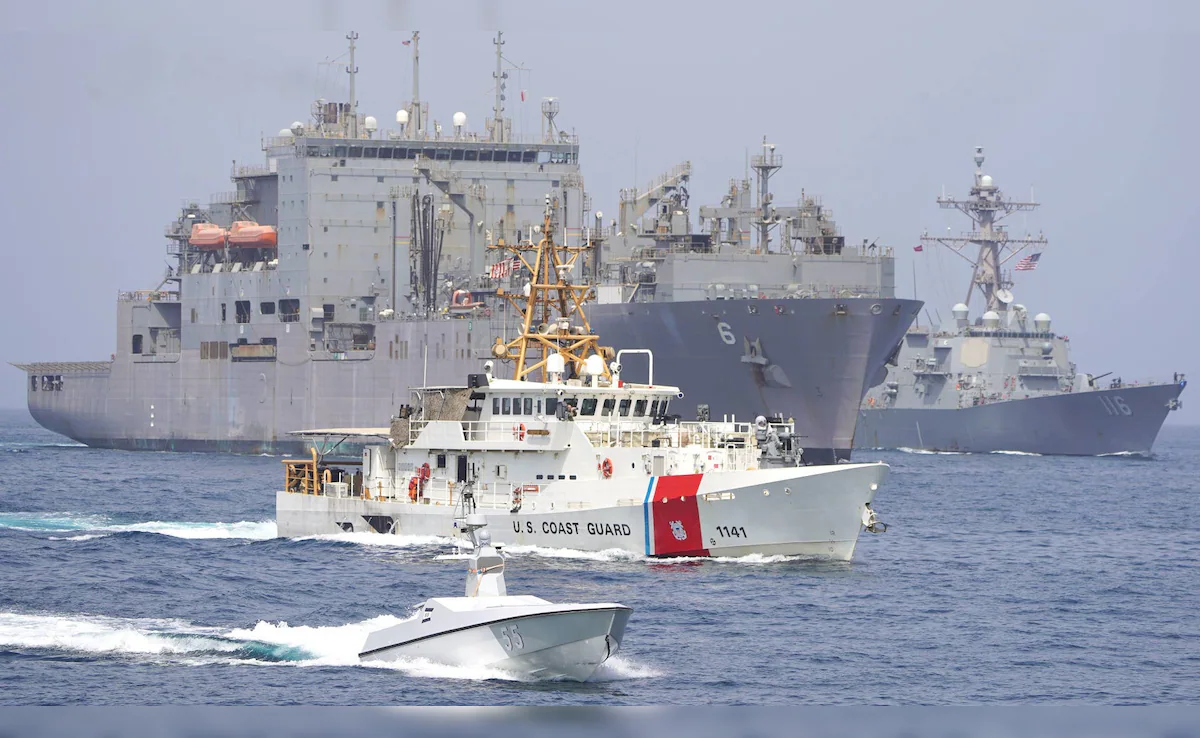

The United States Central Command (CENTCOM) announced that a total of 21 ships have had to turn back towards Iran since the inception of a naval blockade aimed at controlling access to Iranian ports. The blockade was launched amid ongoing diplomatic efforts to address hostilities in the West Asia region. CENTCOM made this announcement on April 17, through a social media post, indicating the enforcement measures put in place.
As part of the enforcement operation, the USS Michael Murphy (DDG 112), a guided-missile destroyer, is currently patrolling the Arabian Sea. This US naval vessel plays a crucial role in monitoring and regulating the movement of vessels attempting to enter or exit Iranian waters. CENTCOM reported that the ship is actively ensuring compliance with the directives issued from the US military.
The blockade represents a significant escalation in the region, correlating with rising tensions between the United States and Iran. As the situation develops, CENTCOM’s naval presence is expected to intensify, focusing on safeguarding maritime operations and curtailing activities perceived as threatening to regional stability.
Statements from Iranian Officials
In response to the US actions, Iranian Parliament Speaker MB Ghalibaf issued a critical statement targeting US President Donald Trump. Following Trump’s assertion that the blockade would persist until a complete agreement with Iran is reached, Ghalibaf highlighted Iran’s commitment to managing maritime activity in the Strait of Hormuz. He indicated that navigation through this vital waterway would be strictly regulated and allowed only through designated routes, with necessary approvals from Iranian authorities.
Ghalibaf’s comments followed Trump’s remarks made on Truth Social, where the US President emphasised that the blockade would be fully enforced concerning Iran until a comprehensive agreement is finalised. Trump suggested that the process of reaching this agreement should occur swiftly.
This exchange of statements underscores the ongoing tensions between the two nations and reflects the complexities surrounding the negotiations aimed at resolving disputes. It highlights Iran’s stance on maintaining control over its territorial waters amidst external pressures from the US.
Current Status of Maritime Activity and Relations
Despite the reopening announcement of the Strait of Hormuz by Tehran, relations between the United States and Iran remain strained. The US has maintained that economic and military pressure will not diminish until there is a significant change in Iran’s approach and compliance with international expectations. Presently, commercial shipping has resumed transit through the Strait, albeit under scrutiny and with expectations of adherence to US regulations.
The backdrop of this maritime situation includes a ten-day ceasefire enacted between Israel and Lebanon, which has once again brought focus to the strategic significance of the Strait of Hormuz. The current dynamics in the region illustrate the interplay between military strategy and diplomatic negotiations, indicating that while commercial activity may proceed, it operates within a framework of heightened oversight.
With US naval operations actively monitoring ship movements, the implications of these developments for regional maritime security continue to unfold. Analysts and observers will closely watch for further reactions from Iranian leadership and any adjustments to the US maritime strategy in light of evolving geopolitical circumstances.