


World Meteorological Organization Predicts El Niño Development in May
The CSR Journal Magazine

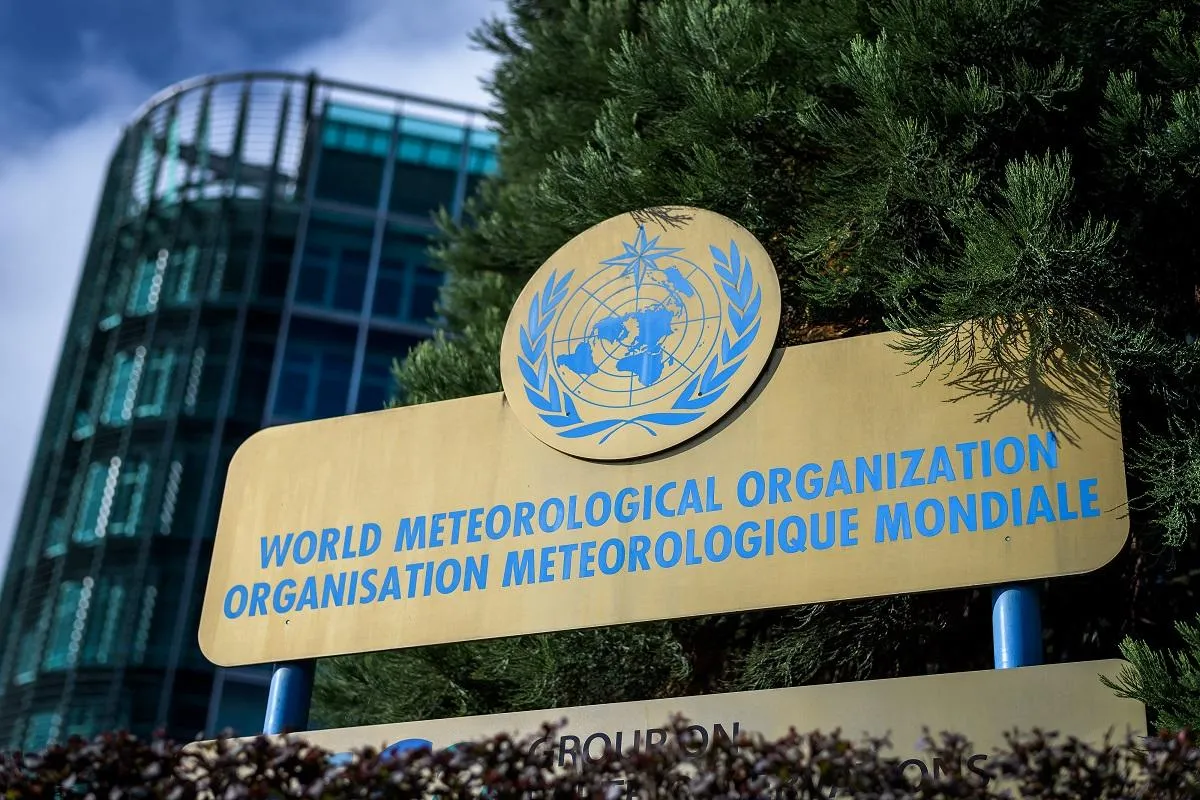
The World Meteorological Organization (WMO) has stated that El Niño weather phenomena are likely to begin as early as May 2026. This development could have significant repercussions for global temperature and rainfall patterns. El Niño refers to the periodic rise in sea surface temperatures in the central and eastern regions of the Pacific Ocean and usually persists for a duration of nine to twelve months, according to WMO guidelines.

Wilfran Moufouma Okia, Chief of Climate Prediction at the WMO, mentioned that after a period of neutral conditions at the onset of the year, climate models have shown a strong consensus. This has led to a high level of confidence regarding the imminent onset of El Niño, which is expected to intensify in subsequent months.

El Niño and La Niña are opposite phases of the El Niño-Southern Oscillation (ENSO) and represent some of the most influential climate patterns worldwide. They significantly alter weather conditions, impacting rainfall, drought occurrences, and extreme weather events across various regions.

Impact on Climate and Weather Patterns

The WMO has noted that for the May-June-July season, land surface temperatures are projected to be above normal in nearly all regions. The forecast indicates particularly strong signals over southern North America, Central America, and the Caribbean, as well as in Europe and Northern Africa.

While expectations for land surface temperatures across the globe lean towards the abnormally high, precipitation predictions exhibit considerable regional variation. The agency has indicated that different areas may experience diverse rainfall conditions, which could adversely affect agricultural cycles and water supplies.

The India Meteorological Department (IMD) has warned that India may encounter below-normal monsoon rainfall this year, marking the first such prediction in three years. According to their findings published earlier this month, the southwest monsoon for 2026—from June to September—will likely generate rainfall that falls below normal levels, effectively measuring between 95 and 90 per cent of the Long Period Average (LPA).

Forecasts for Indian Monsoon and Oceanic Conditions

The IMD’s meteorological models suggest that the total monsoon rainfall nationwide could reach 92 per cent of the LPA with a model error of plus or minus 5 per cent. The LPA is calculated based on historical data from 1971 to 2020 and is estimated to be around 87 centimetres.

Normal rainfall in India is categorised as amounts ranging between 96 per cent and 104 per cent of this 50-year average. M. Ravichandran, Secretary of the Union Ministry of Earth Sciences, stated in a press conference that this year, rainfall is anticipated to be around 80 per cent of normal levels.

Ravichandran also added that currently, weak La Niña-like conditions are evolving towards neutral conditions over the equatorial Pacific, while the Indian Ocean Diapole (IOD) is neutral. He expects that the latter half of the monsoon season may develop positive IOD conditions. Reports indicate that as the southwest monsoon progresses, positive IOD conditions are expected to materialise towards the end of the season.

In its recent global seasonal climate update, the WMO has highlighted that the Nino 3.4 region shows a rapid warming trend. Their multi-model ensemble forecasts suggest an almost universal pattern of above-normal land surface temperatures dominating globally.

Long or Short, get news the way you like. No ads. No redirections. Download Newspin and Stay Alert, The CSR Journal Mobile app, for fast, crisp, clean updates!

App Store –  https://apps.apple.com/in/app/newspin/id6746449540 

Google Play Store – https://play.google.com/store/apps/details?id=com.inventifweb.newspin&pcampaignid=web_share

Latest News

Popular Videos
