


Why Indian Passport Doesn’t Formally Prove Citizenship? Explained
The CSR Journal Magazine

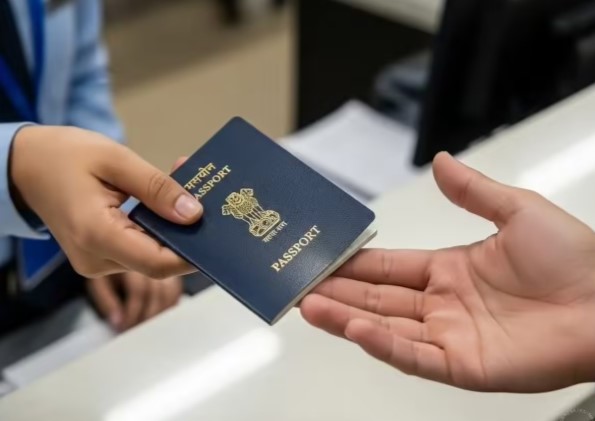
The government has officially stated that a passport has never been regarded as conclusive proof of citizenship. This announcement highlights that no policy changes regarding the status of passports have occurred in recent years, including the last twelve. The remarks were made following a briefing by the Ministry of External Affairs (MEA) on June 24, where officials clarified that the primary purpose of an Indian passport is as a travel document.

The clarification references Section 20 of the Passports Act, 1967. This section allows the Central Government to issue passports to non-citizens in specific circumstances deemed necessary for public interest. This underscores that possessing a passport does not equate to citizenship.

Additionally, the statement included references to a 2013 judgement from the Bombay High Court, which reinforced that a passport alone cannot serve as proof of citizenship. The MEA aimed to clarify any potential misconceptions regarding the document’s legal status.

Political Reactions Follow Clarification

In response to the MEA’s assertion, opposition leaders, including RS MP Kapil Sibal, expressed concerns regarding the implications of this statement. Sibal questioned which documents could be classified as proof of citizenship if a passport is not considered one. His remarks were posted on X, voicing apprehension that the lack of a definitive document could lead to unjust outcomes based on the government’s clarification.

Sibal’s remarks highlighted fears that citizens could be unfairly targeted, influencing their rights, including voting. He suggested that such a stance could have broader implications for electoral integrity and public trust.

Supporters of the government’s position, including BJP leader Amit Malviya, contended that the MEA’s remarks do not represent a new policy but rather reaffirm an established legal framework. According to Malviya, courts have consistently held that citizenship is determined by the Citizenship Act, 1955, based on various eligibility criteria and required documentation.

Legal Context Surrounding Citizenship

According to the legal framework in India, citizenship is established through a combination of official records, comprising birth certificates, documentation of parents’ citizenship, school records, and entries in electoral rolls, among others. This process confirms that citizenship is not solely derived from any single document, including passports.

Malviya elaborated that while a passport is an important identity and travel document that may support claims of citizenship, it does not provide definitive proof in itself. The distinction drawn in the MEA’s statement aims to clarify these nuances in legal understanding.

The Passports Act’s provisions allow for the issuance of passports to individuals who may not hold citizenship, which further complicates the narrative surrounding the document’s authority. Both statutory law and judicial precedents underscore that ownership of a passport does not inherently guarantee proof of citizenship.

The recent clarification has sparked discussions on the nature of citizenship documentation in India, as many citizens seek to understand the implications of existing laws and how they may affect their rights. The MEA’s statements and subsequent political commentary reiterate the significance of a comprehensive understanding of citizenship as dictated by the legal system.

Long or Short, get news the way you like. No ads. No redirections. Download Newspin and Stay Alert, The CSR Journal Mobile app, for fast, crisp, clean updates!

App Store –  https://apps.apple.com/in/app/newspin/id6746449540 

Google Play Store – https://play.google.com/store/apps/details?id=com.inventifweb.newspin&pcampaignid=web_share

Latest News

Popular Videos
