


What is Puffer-Fishing? The New Dating Trend Linked to Fear of Emotional Intimacy
The CSR Journal Magazine

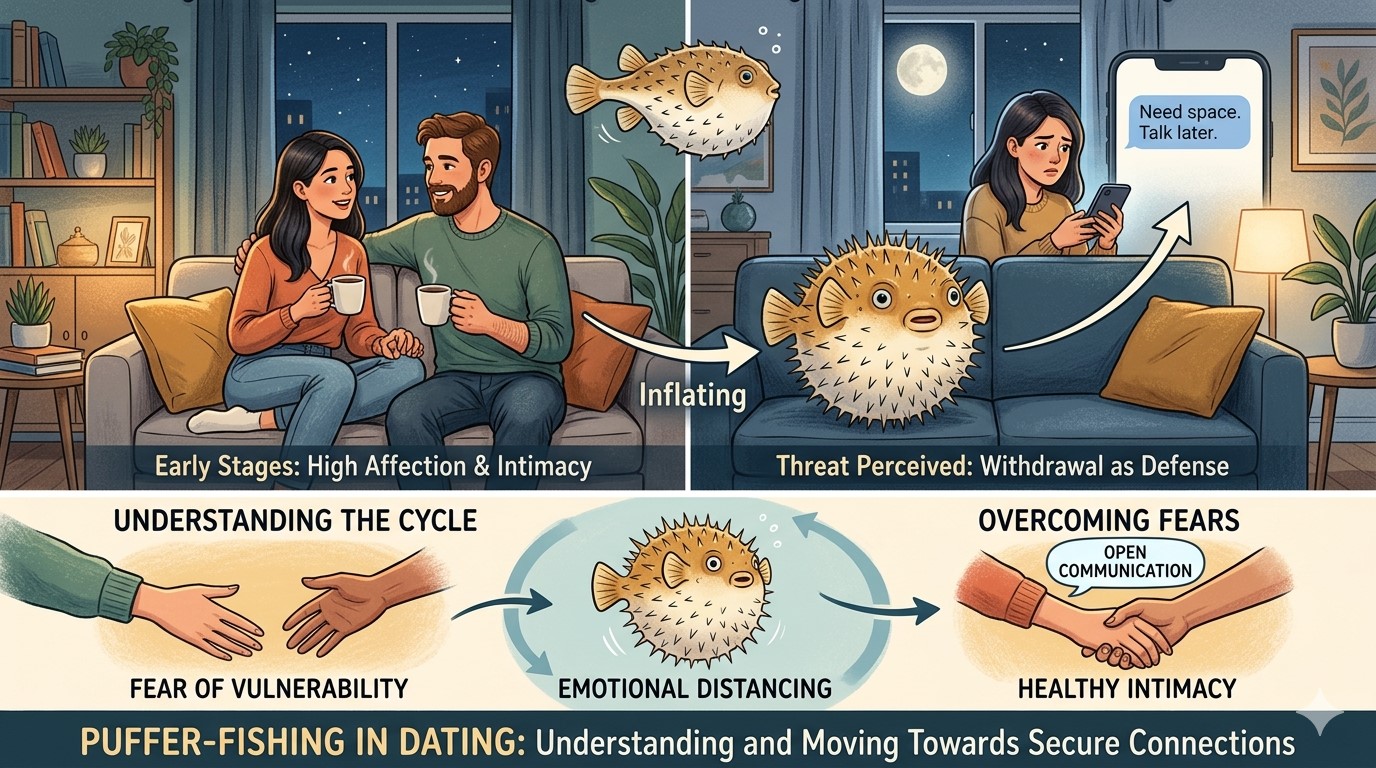
Puffer-fishing has recently been identified as a new trend in dating, which involves individuals emotionally distancing themselves as relationships gain seriousness. This behaviour draws a parallel to how puffer fish inflate as a defence mechanism when they perceive a threat, indicating a withdrawal from intimacy. In essence, those who engage in puffer-fishing may exhibit a pattern of becoming less available and can even ghost their partners when emotional connections deepen.

Origins and Insights from Experts

The term ‘puffer-fishing’ was popularised by Kati Morton, a mental health author who linked the behaviour to fears of emotional vulnerability. Morton learned about this phenomenon from her therapist, who suggested that her patterns in relationships reflected a reluctance to embrace intimacy due to deeper fears. Her insights capture the essence of why some individuals act defensively when faced with closeness.

A relationship expert elaborates on early signs of puffer-fishing. Initially, those engaging in this behaviour may appear deeply affectionate and emotionally invested. However, as the relationship shifts from a casual setting to one that fosters intimacy, these individuals may exhibit erratic behaviour, oscillating between seeking closeness and subsequently feeling overwhelmed. Experts points out that such hot-and-cold dynamics can confuse partners, who may sense a sudden withdrawal without understanding the reasons behind it.

Communication struggles are also hallmark characteristics of puffer-fishing. Instead of engaging in honest discussions about discomfort, individuals may opt to disengage or avoid confrontation, which can lead to patterns of ghosting. When they do withdraw, they may later resume contacts as if no disruption occurred, creating additional confusion for their partners.

Understanding the Roots of Puffer-Fishing

Experts highlights that a person’s upbringing can significantly influence their approach to emotional intimacy. Those raised in environments where emotional connections were deemed healthy typically find vulnerability less daunting. Conversely, individuals exposed to inconsistency in emotional availability may develop fears surrounding closeness, perceiving it as a threat rather than a source of safety.

Despite these tendencies, it is essential to note that the desire for space does not inherently signify puffer-fishing. Healthy boundaries can be established with clear and timely communication, which can prevent misunderstandings. Furthermore, having avoidant traits does not categorise someone as a bad person; self-awareness plays a crucial role in determining if individuals can recognise and address their behaviours.

Frequent withdrawal can lead to unhealthy dynamics in a relationship, particularly for partners who may become anxious due to the inconsistency in communication. It is vital for individuals exhibiting avoidant traits to engage in self-reflection and confront their emotional patterns to cultivate healthier connections.

Looking Ahead: Fostering Healthy Relationships

Experts suggest that individuals can work towards creating more stable and fulfilling relationships through self-awareness and personal development. Building long-term intimacy requires confrontation of fears and accountability for emotional responses. It is acknowledged that vulnerability can be uncomfortable, but disregarding its impact on a partner is counterproductive.

Ultimately, navigating the puffer-fishing trend does not mean that individuals can eliminate their fear of intimacy altogether. Instead, it is about acknowledging that vulnerability can coexist with connection, and understanding that individuals can learn to communicate their feelings effectively. This journey towards emotional maturity can lead to healthier bonds in the future.

Long or Short, get news the way you like. No ads. No redirections. Download Newspin and Stay Alert, The CSR Journal Mobile app, for fast, crisp, clean updates!

App Store –  https://apps.apple.com/in/app/newspin/id6746449540 

Google Play Store – https://play.google.com/store/apps/details?id=com.inventifweb.newspin&pcampaignid=web_share

Latest News

Popular Videos
