


War and Weather Pose Threats to India’s Kharif Season
The CSR Journal Magazine

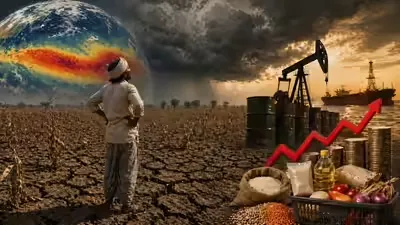
As India approaches the kharif sowing season, various risks have surfaced that may impact agricultural productivity. The Investment Information and Credit Rating Agency has indicated that a below-normal monsoon, the potential for El Nino conditions, and disruptions in fertiliser supplies, notably related to the US-Iran conflict, could adversely affect agricultural yields, rural demand, and food prices in the financial year 2027.

The India Meteorological Department has projected a below-normal monsoon for the year 2026. This forecast raises concerns that insufficient rainfall may impede kharif sowing, diminish reservoir levels, and exacerbate food inflation. El Nino conditions during the monsoon season could further complicate agricultural output, according to the agency.

Research conducted by the Indian Council of Agricultural Research highlights that several districts typically experience reduced rainfall during El Nino years, especially in the critical months of July and August for kharif crops. The findings emphasise that cereals such as rice, maize, pearl millet, and sorghum are particularly vulnerable to fluctuations in monsoon rainfall, with productivity losses likely due to insufficient rainfall.

The study revealed that in 77 rice-growing districts and 65 maize-growing districts, crop yields declined by over 10 per cent during El Nino years. Such findings underscore the challenges posed by weather variability to the agricultural sector.

Dependence on Foreign Fertilisers

In addition to concerns over weather patterns, India’s agricultural sector faces risks due to its reliance on imported fertilisers. Data from the Department of Fertilisers shows that approximately 80 per cent of urea usage and around 85 per cent of NPK fertiliser demand are satisfied through domestic production. However, DAP fertilisers continue to be heavily imported, with local production only meeting about 40 per cent of the demand.

Over recent years, India has made strides in decreasing its reliance on imported urea. Domestic production reportedly increased from 244.6 lakh tonnes in 2019–20 to 306.7 lakh tonnes in 2024–25, while imports have decreased from 92.4 lakh tonnes to 81.3 lakh tonnes within the same timeframe.

Conversely, DAP has proved to be a significant concern, with domestic production declining from 45.5 lakh tonnes to 37.7 lakh tonnes during this period. Despite this, imports of DAP have risen marginally from 55.5 lakh tonnes to 58.6 lakh tonnes. In terms of NPK, production also expanded from 93.3 lakh tonnes to 121.1 lakh tonnes, but imports surged from 11.7 lakh tonnes to 28.7 lakh tonnes, indicating an increasing dependency.

Impact on Livelihoods and Economy

A report from the Ministry of Chemicals and Fertilisers released in March 2026 notes that approximately 46 per cent of India’s population relies on agriculture and related sectors for their livelihoods. The agricultural sector contributes around 16 per cent to the nation’s GDP, emphasising its importance to the economy.

Fertilisers play a crucial role in maintaining crop yields and ensuring food security. Consequently, any disruptions in fertiliser availability or significant price fluctuations during the kharif season may lead to declines in agricultural output, negatively impacting rural incomes and increasing food inflation. The cultivation season thus hinges on stable weather patterns and sufficient fertiliser supply.

The interdependence of weather conditions and fertiliser supply creates a comprehensive challenge for the agricultural sector in India. Understanding these factors is essential for policymakers and farmers alike as they prepare for the upcoming sowing season.

Long or Short, get news the way you like. No ads. No redirections. Download Newspin and Stay Alert, The CSR Journal Mobile app, for fast, crisp, clean updates!

App Store –  https://apps.apple.com/in/app/newspin/id6746449540 

Google Play Store – https://play.google.com/store/apps/details?id=com.inventifweb.newspin&pcampaignid=web_share

Latest News

Popular Videos
