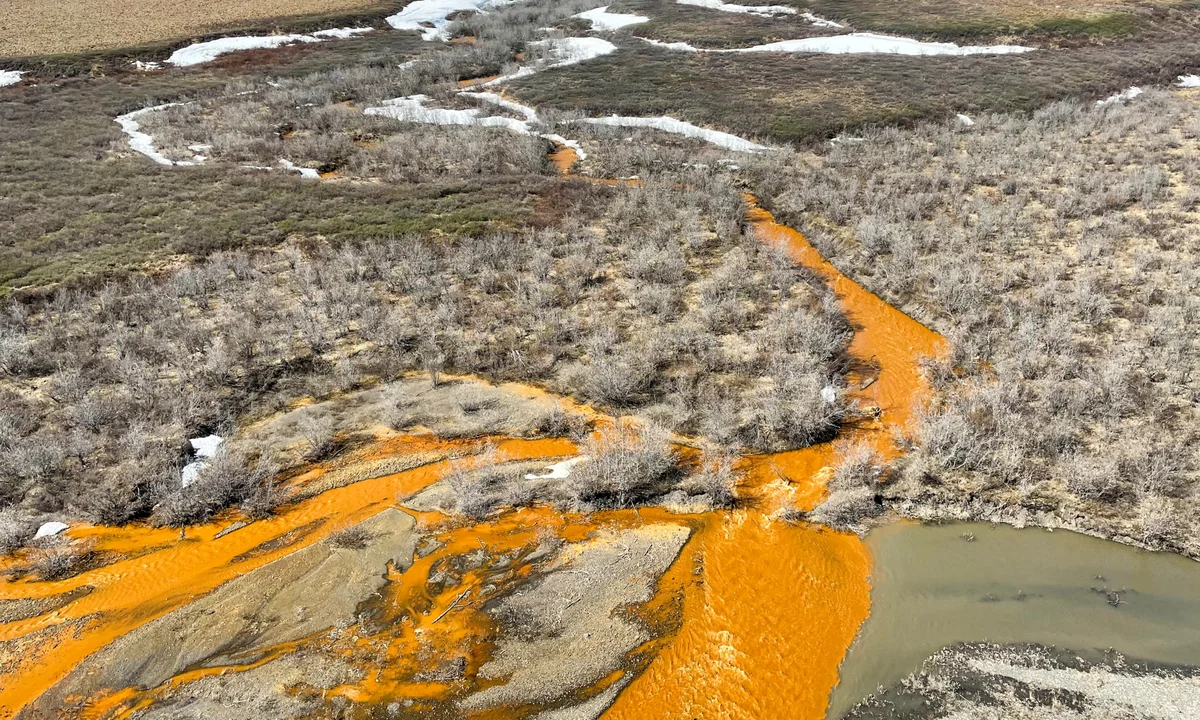
Recent observations have revealed that rivers in Alaska are displaying a striking rust-orange hue. This notable transformation has captured the attention of scientists, prompting investigations into its origins. It has been noted that the colour change is not merely a seasonal phenomenon but is linked to more profound environmental changes.
Role of Ancient Permafrost in Colouration
The rust-orange colouration is believed to be caused by the thawing of ancient permafrost, which has been frozen for thousands of years. Researchers assert that as the permafrost melts due to rising temperatures, it releases organic material and iron-rich sediments. This process contributes significantly to the vibrant colour observed in the rivers.
Furthermore, these sediments, once locked in the permafrost, have remained undisturbed for millennia. The release of such materials into the waterways alters their chemical composition, leading to the distinctive coloration. The thawing process is accelerated by climate change, which continues to impact the Arctic region drastically.
Scientists are now focusing on how this change in river colour may affect local ecosystems. The introduction of iron and organic matter into the rivers could lead to shifts in aquatic habitats and influence the flora and fauna that rely on these waterways for sustenance.
Impact of Climate Change on Permafrost
The melting of permafrost is a direct indication of climate change, which has been extensively studied over recent decades. According to experts, rising temperatures in the Arctic have resulted in a dramatic decrease in permafrost coverage. This has far-reaching implications not only for local wildlife but also for global climate patterns.
As the permafrost thaws, it releases greenhouse gases such as carbon dioxide and methane, further exacerbating climate change. Scientists are particularly concerned about the feedback loop that may arise from this process. The more permafrost that melts, the more greenhouse gases are released, which then leads to increased global temperatures.
Alaska’s changing landscapes serve as a case study for the broader impacts of climate change across the globe. The rust-orange rivers of Alaska are just one visible manifestation of a much larger issue that demands urgent attention and action.
Current Research and Future Monitoring
Ongoing research efforts are focused on monitoring the colour changes in Alaska’s rivers and understanding the implications of these findings on environmental health. Research institutions are deploying advanced technologies to collect data on water quality and sediment composition. This data is crucial in assessing the long-term effects of permafrost thaw on aquatic ecosystems.
Moreover, scientists are collaborating with local communities to raise awareness about the significance of these changes. Understanding the relationship between climate change, permafrost thaw, and river health is essential for effective management strategies that can mitigate adverse effects on local species and habitats.
As this situation continues to evolve, it reinforces the importance of global initiatives aimed at reducing carbon emissions and addressing climate change. The rust-orange rivers of Alaska, while captivating, underline the urgent need for comprehensive strategies to combat the accelerating changes in our planet’s climate.
Long or Short, get news the way you like. No ads. No redirections. Download Newspin and Stay Alert, The CSR Journal Mobile app, for fast, crisp, clean updates!
Barrow, Alaska, known locally as Utqiaġvik, experiences a striking phenomenon where the sun remains visible for over two months. This period of perpetual daylight...