


US and China Unite Against Shipping Tolls in Hormuz Amid Iranian Tensions
The CSR Journal Magazine

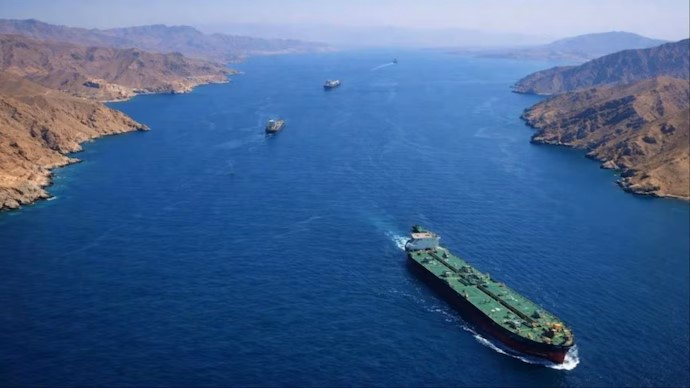
Senior officials from the United States and China have expressed a shared opposition to any country imposing shipping tolls in the Strait of Hormuz. This agreement signals potential cooperation between the two nations concerning efforts to address Iranian control over the strategically important waterway. The US State Department made this announcement on May 14, 2026, ahead of a critical summit involving President Donald Trump and Chinese President Xi Jinping.

The tensions surrounding the Strait of Hormuz have escalated recently, predominantly following significant military actions against Iran. The closure of this vital commerce route, which has been nearly entirely blocked since February 28 due to joint military strikes by Israel and the US, has caused considerable instability in global energy markets.

In an earlier phone conversation, US Secretary of State Marco Rubio and Chinese Foreign Minister Wang Yi discussed the situation. According to spokesman Tommy Pigott, both officials concurred that no entity should be allowed to charge tolls for passage through international waterways like the Strait of Hormuz. This revelation marks a deviation from typical US communication practices, as it was the first time the State Department provided details regarding this particular exchange.

Implications for International Trade and Security

China’s embassy in Washington did not contradict the US account, stating that all parties should collaborate to restore normal traffic through the Strait of Hormuz. Historically, this waterway has been crucial, as it previously facilitated the passage of approximately 20 per cent of the world’s oil and gas supply. In light of recent conflicts, ensuring the strait’s safety and stability holds significance for the global community, according to embassy spokesperson Liu Pengyu.

Iran has reportedly insisted on its right to implement shipping tolls, making this a precondition for any resolution to ongoing hostilities. The US has responded with a naval blockade against Iran, and President Trump has suggested exploring options to either impose fees on vessels or potentially work alongside Iran to collect tolls. However, following negative responses both domestically and internationally, the White House has adjusted its stance, expressing a desire to keep the Strait of Hormuz open without any restrictions.

Chinese officials have refrained from explicitly discussing tolls while condemning the US’s maritime blockade. Reports indicate that Rubio highlighted the notion of Chinese vessels potentially having to pay tolls, possibly to encourage greater Chinese influence in persuading Tehran to de-escalate the ongoing conflict.

China’s Position and Future Diplomatic Efforts

As China continues to maintain its relationships with Iran, it also relies heavily on Iranian oil exports. President Trump has been urging China to leverage its ties with Tehran in pursuit of a diplomatic resolution with Washington. In a meeting with Iran’s foreign minister, Wang Yi reiterated shared international concerns regarding restoring safe passage through the Strait, while also affirming China’s support for Iran’s national sovereignty.

Recently, China vetoed a US-backed resolution at the United Nations aimed at encouraging collaborative efforts to ensure the safety of commercial shipping in the Strait of Hormuz, arguing it was unfairly biased against Iran. This prompted criticism from US ambassador to the UN, Mike Waltz, who accused Beijing of enabling Iran to control global economic flows.

In response to the rising tensions, Washington and Bahrain have proposed another UN resolution calling for Iran to cease its militaristic activities and mining operations in the strait. Diplomatic sources suggest that this initiative is also likely to face vetoes from China and Russia, especially since it also seeks to prohibit illegal tolls. Meanwhile, China has instructed its enterprises to disregard US sanctions impacting Chinese oil refineries acquiring Iranian crude, aiming to support Tehran amid ongoing pressures.

Long or Short, get news the way you like. No ads. No redirections. Download Newspin and Stay Alert, The CSR Journal Mobile app, for fast, crisp, clean updates!

App Store –  https://apps.apple.com/in/app/newspin/id6746449540 

Google Play Store – https://play.google.com/store/apps/details?id=com.inventifweb.newspin&pcampaignid=web_share

Latest News

Popular Videos
