


US Air Power Faces Heavy Losses Amid Ongoing Iran War
The CSR Journal Magazine

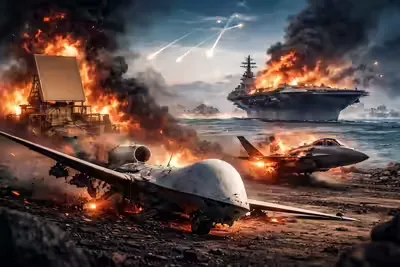
The conflict in Iran has prompted a significant display of US air power for nearly 40 days. Initiated on February 28, Operation Epic Fury has involved sustained air strikes targeting approximately 13,000 sites, including crucial military assets and infrastructure in Iran. Nevertheless, Iranian air defences, along with missile and drone strikes, have reportedly caused notable losses for the US.

By mid-April, US military operations had resulted in the loss of at least 39 aircraft, with another ten sustaining damage. According to the Centre for Strategic and International Studies (CSIS), early combat losses and damage to infrastructure were estimated at a staggering $1.4 billion within the first six days of fighting.

Since April 1, reports indicate that the US has lost 24 MQ-9 Reaper drones amidst rising tensions surrounding the Strait of Hormuz, amounting to around $720 million in losses. The situation showcases the vulnerability of unmanned systems as well as the attack on high-value manned aircraft, which has intensified financial and operational implications.

Significant Aircraft Losses

Among the notable losses is the MQ-4C Triton, one of the US’s most advanced surveillance drones. This aircraft was reportedly lost in the Persian Gulf after sending an emergency signal on April 9. The Triton, valued at approximately $200–240 million, stands as the costliest single US asset lost during the conflict, reflecting the financial stakes involved in the military operations.

The MQ-9 Reaper, which entered service in 2007 at a cost of around $30 million per unit, has suffered the greatest number of losses thus far. Total losses stood at 24 by early April, primarily due to Iranian missile and artillery fire. These losses underscore a fundamental shift in the landscape of aerial warfare, particularly in the face of more robust Iranian air defences.

The F-35, a next-generation stealth fighter, has also encountered difficulties. A report from March 19 indicated that one F-35 was forced to execute an emergency landing after allegedly being hit by Iranian fire, marking the first incident of ground fire affecting this aircraft type in its operational history.

Additional Losses and Impacts

Multiple F-15E Strike Eagles have also been lost during the conflict. On March 1, three of these aircraft were downed in a friendly-fire incident over Kuwait, and on April 3, another F-15E was shot down by Iranian air defences. Cumulatively, these losses amount to significant financial impacts, considering the F-15E’s cost of up to $100 million each.

Furthermore, the KC-135 Stratotanker, vital for air-to-air refuelling, experienced severe losses as well. Two units collided mid-air on March 12, killing all six crew members of one. Iranian missile strikes later resulted in damage to additional KC-135s, further jeopardising US operational capabilities.

Adding to the list of losses, on April 3, an A-10 Warthog was lost near the Strait of Hormuz, while US Special Forces reportedly destroyed two MC-130J Commando II aircraft during a rescue operation to prevent them from being captured. These incidents illustrate the ongoing risks and complexities of military operations in the region amid a challenging air warfare environment.

Long or Short, get news the way you like. No ads. No redirections. Download Newspin and Stay Alert, The CSR Journal Mobile app, for fast, crisp, clean updates!

App Store –  https://apps.apple.com/in/app/newspin/id6746449540 

Google Play Store – https://play.google.com/store/apps/details?id=com.inventifweb.newspin&pcampaignid=web_share

Latest News

Popular Videos
