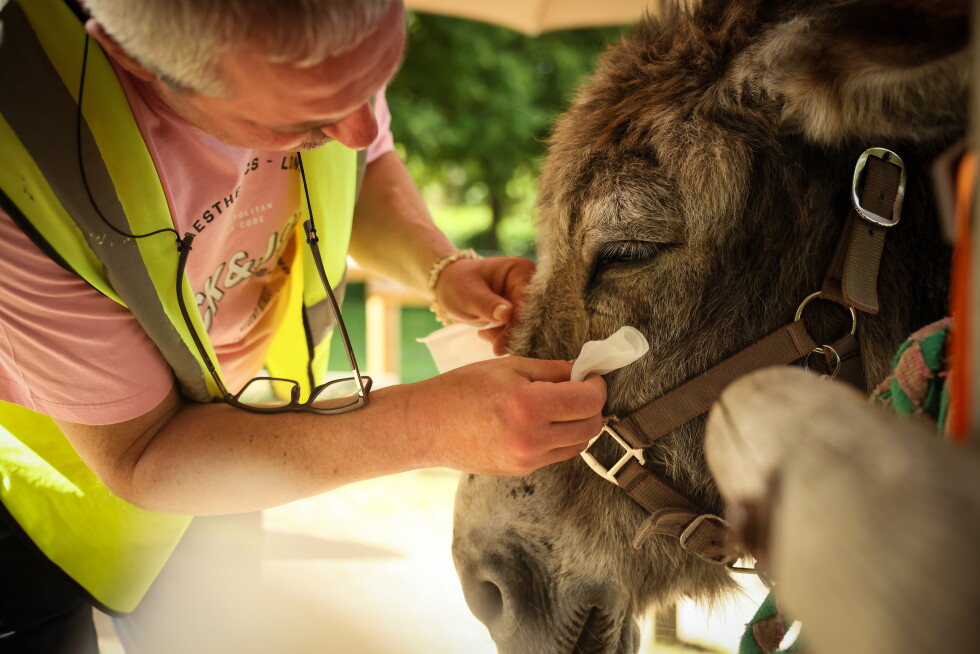
A patient with mental health conditions cleans a donkey's eyes during the animal therapy session at a psychiatric hospital in Neuilly-sur-Marne, in the eastern suburbs of Paris, Friday, May 29, 2026. (AP Photo/Thomas Padilla)
Therapy donkeys have become a valuable resource for assisting psychiatric patients at a hospital located on the outskirts of Paris. This innovative approach is part of a broader trend in animal-assisted therapy, where animals are used to enhance the psychological well-being of individuals undergoing treatment.
At the hospital, patients interact with donkeys in a controlled environment, fostering emotional connections that are said to aid in recovery from various mental health issues. The presence of these gentle animals helps alleviate symptoms of anxiety and depression, allowing patients to engage in therapeutic exercises more effectively.
The donkeys participate in structured activities designed to accommodate the needs of the patients. These activities promote responsibility and social interaction, essential elements in the healing process. Reports suggest that such interactions can significantly contribute to patients’ emotional resilience and overall mental health.
Activities Involving Therapy Donkeys
Patients engage in various therapeutic activities with the donkeys, including grooming, walking, and basic training sessions. These activities not only provide sensory stimulation but also encourage a sense of purpose among participants. The hospital has reported that these interactions foster an environment of calmness and trust.
Furthermore, caregivers observe that spending time with the donkeys can reduce feelings of isolation commonly experienced by psychiatric patients. Engaging in these animal interaction sessions reportedly contributes to building self-esteem and improving social skills, which are essential for effective integration into community life.
One notable aspect of this programme is how it caters to individual patient needs, allowing flexibility in how they interact with the donkeys. Patients can choose their levels of involvement, which can vary from passive observation to active participation, depending on their comfort levels and therapeutic goals.
Impact and Public Reception
The introduction of therapy donkeys in psychiatric treatment has garnered positive feedback from both patients and staff. Many have expressed that the presence of donkeys has introduced a unique dynamic to therapy sessions, one that is often deemed enlightening and enjoyable. Hospital staff have noted a marked improvement in patient engagement during therapy, which they attribute to the contributions of these animals.
This approach has sparked interest in broader communities as well, with several organisations considering similar initiatives as viable alternatives or complements to traditional mental health treatments. Given the growing understanding of the benefits of animal-assisted therapy, more facilities may adopt this model in the future.
In conclusion, therapy donkeys offer an innovative method for enhancing psychiatric treatment. Their gentle nature and ability to connect with patients have underscored the potential for animals to play a significant role in mental health care. As research in this field continues to expand, the hope is that such initiatives will be integrated widely, promoting holistic healing strategies in various therapeutic environments.
Long or Short, get news the way you like. No ads. No redirections. Download Newspin and Stay Alert, The CSR Journal Mobile app, for fast, crisp, clean updates!
France is preparing to inaugurate its first significant Hindu temple, the BAPS Swaminarayan Hindu Mandir, in Bussy-Saint-Georges, situated close to Paris. This momentous occasion...