


Protests Rock Nepal Parliament Over PM Balen Shah’s Border Remarks, Disrupt House Proceedings
The CSR Journal Magazine

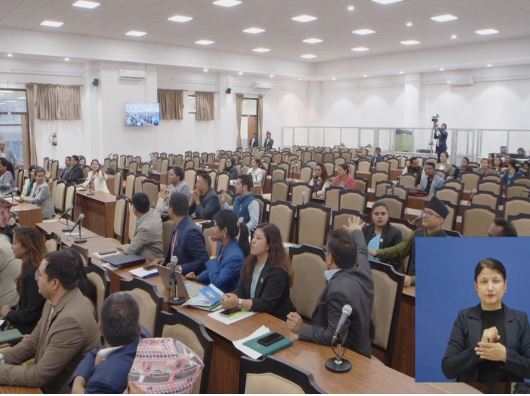
Protests occurred in both chambers of Nepal’s Parliament on June 1 as lawmakers expressed their discontent regarding remarks made by Prime Minister Balendra Shah on a border issue. Members of the House of Representatives and the National Assembly participated in demonstrations, insisting on an apology from the Prime Minister and the retraction of his statements from official records.

The opposition parties initially obstructed the session in the House of Representatives and continued their demonstration the following day. They demanded that Prime Minister Shah revoke his controversial statement, which they deemed inaccurate and misleading.

Gyan Bahadur Shahi, a lawmaker from the Rastriya Prajatantra Party, highlighted the need for factual accuracy in a Prime Minister’s statements. He asserted that such pronouncements are treated as official positions and thus ought to be grounded in evidence and truth. Shahi emphasised that reliance on emotional responses rather than verifiable facts undermines public trust.

Calls for Formal Apology and Clarification

The discontent spread to the National Assembly, where members voiced similar objections to Shah’s remarks. Ranjit Karna, an assembly member, urged the Prime Minister to either provide evidence supporting his assertions or issue a public apology. He requested a report on alleged encroachment by Nepal on Indian territory within a specified timeframe.

Other lawmakers, including Rajendra Lakshmi Gaire and Ram Kumari Jhakri, echoed demands for an official explanation from the government. Their collective actions effectively halted legislative proceedings, demonstrating the intensity of the opposition’s frustrations.

The uproar was sparked by comments made by Prime Minister Shah on the previous day, which the opposition swiftly labelled as baseless. This led to immediate protests in the parliament and a call for a more nuanced discussion regarding the claims made by the Prime Minister.

Government’s Position on Territorial Issues

In response to the escalating tensions, Nepal’s Ministry of Foreign Affairs issued a statement clarifying the context of the Prime Minister’s remarks. Foreign Ministry spokesperson Lok Bahadur Paudel Kshetri articulated that the comments pertained to matters concerning boundary markers, undefined territories, and cross-border land utilisation.

He elaborated that, according to technical assessments, there might be areas where land claimed by Nepal could, in fact, be situated on the Indian side, and vice versa. The ministry reaffirmed Nepal’s commitment to addressing boundary disputes through diplomatic channels and consultations rooted in historical treaties and agreements.

India’s Ministry of External Affairs also responded last month regarding Nepal’s comments on border relations. Spokesperson Randhir Jaiswal noted that India’s stance on territorial claims has been stable and clear. He mentioned that the Lipulekh Pass, a well-known route for the Kailash Mansarovar Yatra, has been in use since 1954, indicating that this matter is not a recent revelation.

Jaiswal further affirmed that India’s position regarding territorial claims is based on established historical evidence, asserting that unilateral attempts to extend territorial claims are not valid. He reiterated India’s willingness to engage in productive dialogue with Nepal regarding outstanding issues, including boundary disputes.

Long or Short, get news the way you like. No ads. No redirections. Download Newspin and Stay Alert, The CSR Journal Mobile app, for fast, crisp, clean updates!

App Store –  https://apps.apple.com/in/app/newspin/id6746449540 

Google Play Store – https://play.google.com/store/apps/details?id=com.inventifweb.newspin&pcampaignid=web_share

Latest News

Popular Videos
