


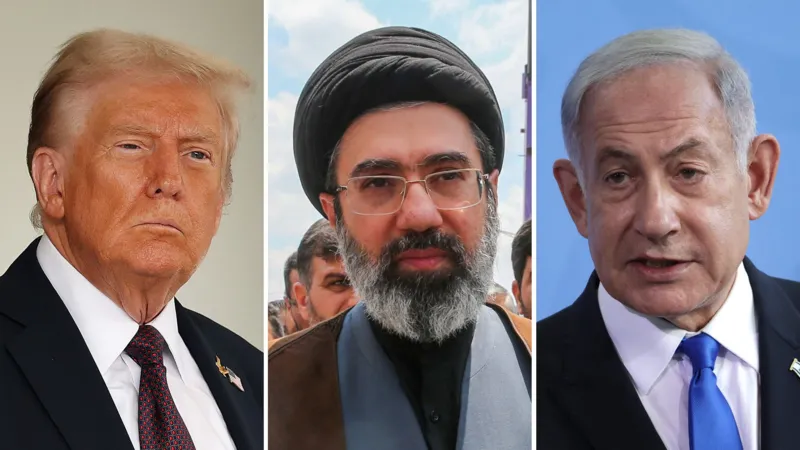

US President Donald Trump has called for an immediate halt to the violence as Iran and Israel resumed military strikes for the first time since a temporary ceasefire was established. The renewed hostilities have raised concerns among international observers and regional players regarding stability in the Middle East.
Reports indicate that the fighting reignited after a brief lull, during which diplomatic efforts aimed at reducing tensions had taken place. This recent escalation is significant, occurring after a period where both parties had seemingly agreed to de-escalate their military actions.
The violence reportedly involves aerial strikes and ground operations, affecting civilian populations and infrastructure. Reports indicate that both nations have intensified their military operations, leading to further casualties and displacement in the region.
International Response to Renewed Violence
The international community has reacted with alarm to the resumption of hostilities between Iran and Israel. Nations across the globe are closely monitoring the situation, with some calling for urgent talks to broker a new ceasefire. The United Nations has repeatedly emphasised the need for dialogue to prevent further escalation.
Trump’s call for a ceasefire joins similar appeals from various world leaders who recognise the potential for wider conflict if the situation is not addressed. Countries that have interests in the region are reportedly considering diplomatic measures to encourage both parties to return to negotiations aimed at achieving long-term peace.
The Middle East remains a complex and volatile landscape, with historical tensions underpinning the current conflicts. Iran and Israel have not only been at odds over territorial disputes but also over political ideologies and regional influence. These factors contribute to the difficulties faced in establishing lasting peace agreements.
Domestic Reaction in the United States
In the United States, Trump’s statements have sparked discussions among political leaders, analysts, and the public regarding the nation’s role in foreign conflicts. Some in the political arena argue that the US should prioritise diplomatic interventions over military ones, while others believe that its involvement could be crucial in ensuring peace in the Middle East.
There is also concern about how these developments may impact US-Israel relations. Analysts note that Israel usually counts on American support in its military actions, and any shift in tone from US leadership could have profound implications on the Israeli strategy moving forward.
The renewed conflict could also have ramifications for US domestic politics, as public opinion often sways in response to international crises. Politicians may face pressure from constituents to respond to the situation, which could include calls for military aid to Israel or humanitarian support for affected populations.
Broader Implications for Regional Stability
The renewed military actions have broader implications for regional stability, especially as neighboring countries are closely watching the events unfold. The potential for a wider conflict is a considerable concern, as escalation could draw in other nations with vested interests in the region.
Furthermore, the civilian toll of such conflicts often exacerbates humanitarian crises, leading to international calls for assistance to those affected. Aid organisations are reportedly preparing to respond to the needs of displaced populations if the violence continues.
In summary, the resumption of hostilities between Iran and Israel indicates a challenging path ahead for peace in the region. Time will be fundamental in determining whether diplomatic efforts will prevail or if the conflicts will further entrench divisions in the Middle East. Observers will continue to watch how international and regional actors respond in the upcoming days and weeks.