


Total Solar Eclipse On August 12 Darkens Parts Of Northern Hemisphere
The CSR Journal Magazine

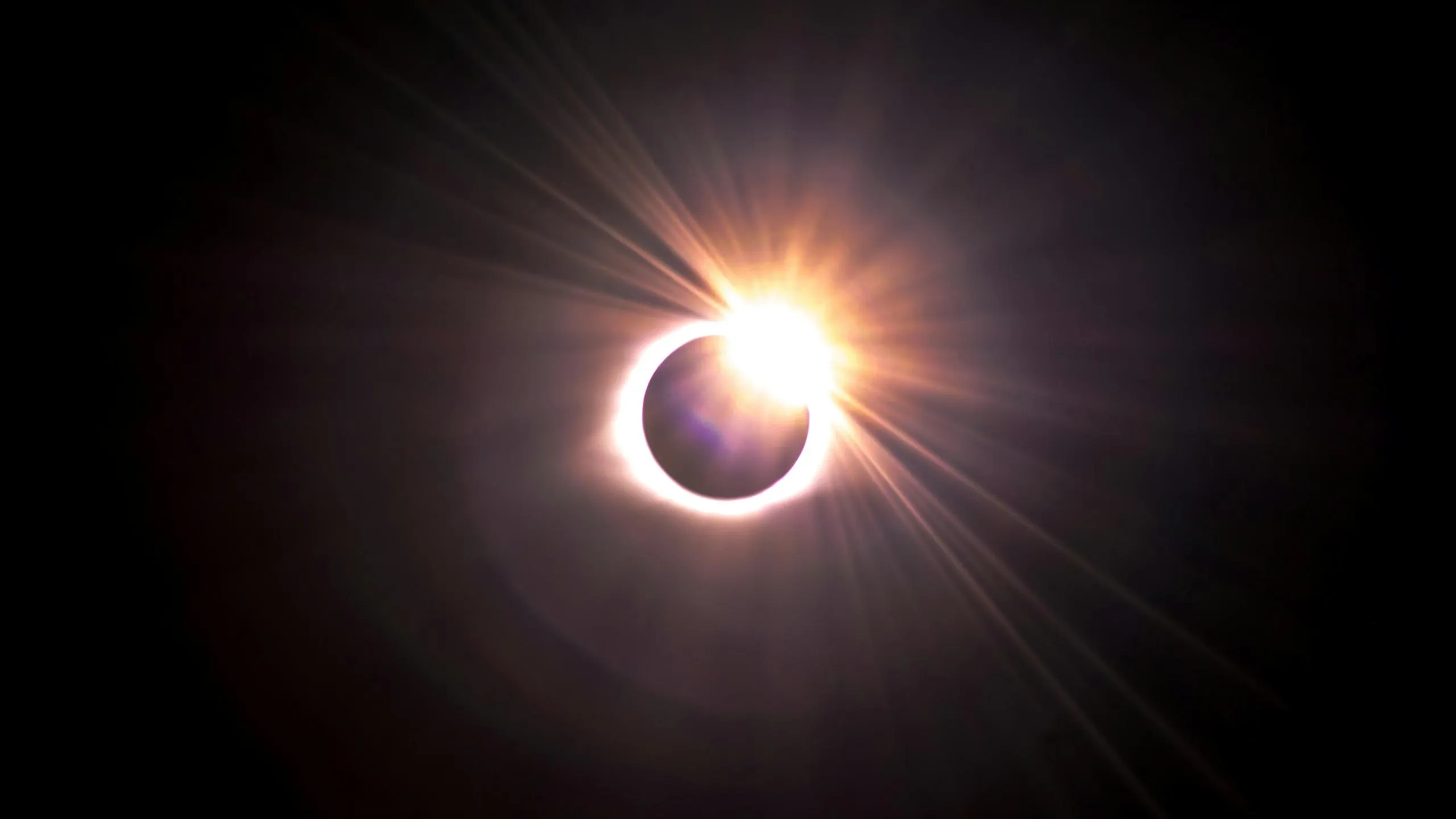
A total solar eclipse is anticipated to occur on August 12, affecting regions in the Northern Hemisphere. During this event, the Moon will align perfectly between the Earth and the Sun, obscuring the Sun’s visible surface, known as the photosphere.

This phenomenon is enabled by an interesting relationship: although the Sun’s size is approximately 400 times greater than that of the Moon, it is also about 400 times more distant from Earth. Consequently, both celestial bodies appear nearly identical in size as viewed from Earth.

As the Moon travels across the Sun’s face, its shadow will fall upon Earth, creating a belt of darkness known as the path of totality. Individuals located in this path will observe the Sun completely hidden behind the Moon. In most areas within the totality zone, this darkness will be brief, lasting under two minutes. However, near the centre of the eclipse path, the duration can extend to approximately two minutes and 18 seconds.

Cities Experiencing Total and Partial Eclipses

The total solar eclipse will be visible along a narrow route through Greenland, Iceland, northern Russia, the Atlantic Ocean, parts of Spain, and a small section of Portugal. Many locations across Europe, together with certain regions of North America and northwestern Africa, are expected to witness a partial eclipse.

Specific cities that will experience totality include Station Nord, Safjrur, Borgarnes, Reykjavik, Keflavk, Santander, Bilbao, Gijon, Oviedo, Vitoria-Gasteiz, A Coruna, Lugo, Logrono, Burgos, Ponferrada, Zaragoza, Palencia, Salou, Valladolid, Mahon, Port de Pollena, Alcudia, Segovia, Teruel, Palma, Guadalajara, Cuenca, Valencia, Sant Antoni de Portmany, and Ibiza.

For those who will observe a partial solar eclipse, locations include Alert, Longyearbyen, Danmarkshavn, Ittoqqortoormiit, Vestmannaeyjar, Torshavn, Stockholm, Oslo, Warsaw, Copenhagen, Berlin, Douglas, Vienna, Dublin, Amsterdam, Rome, Prague, Ljubljana, London, Brussels, Luxembourg, Paris, Zurich, Monaco, Andorra La Vella, Madrid, Algiers, Lisbon, Gibraltar, and Casablanca.

Impact of the Eclipse on Scientific Study

This rare celestial occurrence will provide scientists with a valuable opportunity to investigate the solar corona and examine the effects of reduced sunlight on Earth’s atmosphere. Researchers can gather critical data about solar activity and atmospheric changes during a total solar eclipse.

NASA plans to take advantage of this event by employing a WB-57 research jet, which will fly at approximately 50,000 feet. This will enable extended observation of the solar corona, potentially lasting up to three minutes for those able to chase the eclipse as it travels.

Long or Short, get news the way you like. No ads. No redirections. Download Newspin and Stay Alert, The CSR Journal Mobile app, for fast, crisp, clean updates!

App Store –  https://apps.apple.com/in/app/newspin/id6746449540 

Google Play Store – https://play.google.com/store/apps/details?id=com.inventifweb.newspin&pcampaignid=web_share

Latest News

Popular Videos
