


Houthi Attack on Saudi Refinery, Days After Riyadh’s Defence Pact With Turkey, Pakistan
The CSR Journal Magazine

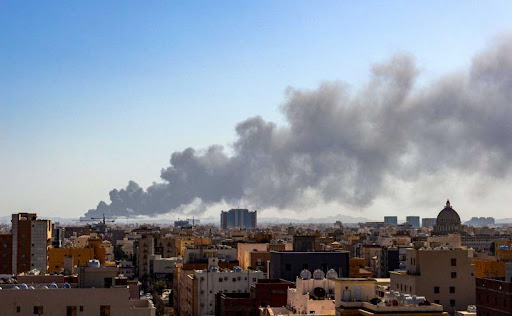
Yemen’s Iran-aligned Houthi movement has claimed responsibility for a drone attack on Saudi Aramco’s Jazan refinery, two days after Saudi Arabia signed a defence pact with Turkey and Pakistan amid escalating regional tensions linked to the US-Israeli war on Iran.

Saudi authorities confirmed that a fire broke out at the refinery but said it was extinguished and that no injuries were reported. The Houthis also claimed separate missile and drone attacks on the Yemeni Red Sea port city of Mocha, adding to concerns over the security of key energy and maritime routes in the region.

Houthi Drone Targets Jazan Refinery

Houthi military spokesperson Yahya Saree said on Sunday that the group used a drone to target the Jazan refinery in southwestern Saudi Arabia.

The Saudi Energy Ministry confirmed that a fire had broken out at the facility and was subsequently brought under control. It did not provide details on what caused the fire but said authorities were dealing with the incident.

The Jazan refinery, operated by Saudi Aramco, has a processing capacity of around 400,000 barrels of crude oil per day. The Houthis have previously targeted Aramco facilities in Jazan as well as the Red Sea port city of Yanbu.

The Houthis declared a naval blockade against Saudi Arabia in the Red Sea last month, alleging that Riyadh was imposing a siege on the group. Saudi Arabia has denied the allegation.

Mocha Port Also Targeted

In a separate statement, Saree said Houthi forces had launched missile and drone attacks against the Yemeni Red Sea port city of Mocha.

The port is controlled by Yemen’s Aden-based government and lies near the strategic Bab el-Mandeb Strait, which connects the southern Red Sea with the Gulf of Aden and the Indian Ocean.

The strategic waterway is an important route for regional and international shipping. Any prolonged closure could deprive Saudi Arabia of an alternative route to the Strait of Hormuz, another critical energy corridor.

Three Yemeni government sources told Reuters that air defence systems were engaging drones launched by the Houthis towards commercial quay facilities and storage areas at the port.

Saree said the Houthi attacks targeted Saudi troops and a weapons arsenal in the area. Saudi Arabia did not immediately comment on the reported attacks in Yemen.

Jazan Refinery Was Shut Down in July

The Jazan refinery had already been shut down in late July, according to the report, adding another layer to concerns over the impact of regional hostilities on Saudi energy infrastructure.

The latest attacks came shortly after Saudi Arabia signed a defence agreement with Turkey and Pakistan, two Sunni-majority US allies. The pact is intended to strengthen collective deterrence against aggression and states that an armed attack against any one of the three countries would be treated as an attack against all.

It remains unclear whether Pakistan or Turkey would provide assistance to Saudi Arabia in response to the latest attacks.

Turkish Foreign Minister Hakan Fidan said on Friday, when the defence pact was announced, that the agreement was not directed against Iran or any other specific country. He described it as a broader commitment to support the security of the three allies.

Fidan said the three countries would consult one another to determine the degree, form and format of assistance that could be provided if one of them came under attack.

Yemen Government Seeks International Action

Rashad al-Alimi, head of Yemen’s Saudi-backed Presidential Council, briefed US Mission to Yemen Chargé d’Affaires Neil Hop on the latest developments on Sunday, according to a statement.

Al-Alimi said the Houthi attack placed a responsibility on the international community, particularly the United States, to go beyond containing the group and address what he described as the sources and instruments of the Houthi threat.

The Yemeni military spokesperson said seven people were killed in the attack on the Mocha port. Yemen’s Transportation Ministry said the strike caused extensive damage to the port’s infrastructure.

“This marks yet another assault on a vital civilian facility that serves citizens and contributes to boosting commercial and maritime activity in the Red Sea,” the ministry said.

Regional Energy Routes Under Pressure

The latest attacks come amid wider hostilities involving Iran, the United States, Israel and allied armed groups across the region. Iran and allied Shi’ite armed groups have targeted Saudi Arabia and other Gulf states and disrupted energy shipments since the US and Israel launched attacks on Iran on February 28.

Negotiations between the United States and Iran have continued as the two sides seek a broader peace agreement, but access to the Strait of Hormuz remains a major point of contention.

Houthi attacks in the Red Sea have further disrupted shipping and energy supplies to global markets, raising concerns about the vulnerability of critical maritime routes.

Pakistan’s military, air force, Prime Minister’s Office and information and foreign ministries did not respond to requests for comment on the refinery attack. The Turkish government also did not immediately respond to a request for comment on the potential implications of the latest strike.

Long or Short, get news the way you like. No ads. No redirections. Download Newspin and Stay Alert, The CSR Journal Mobile app, for fast, crisp, clean updates!

App Store –  https://apps.apple.com/in/app/newspin/id6746449540 

Google Play Store – https://play.google.com/store/apps/details?id=com.inventifweb.newspin&pcampaignid=web_share

Latest News

Popular Videos
