


Supreme Court Dismisses Brinda Karat’s Review Petition Against Clean Chit to Anurag Thakur, Parvesh Verma

The CSR Journal Magazine

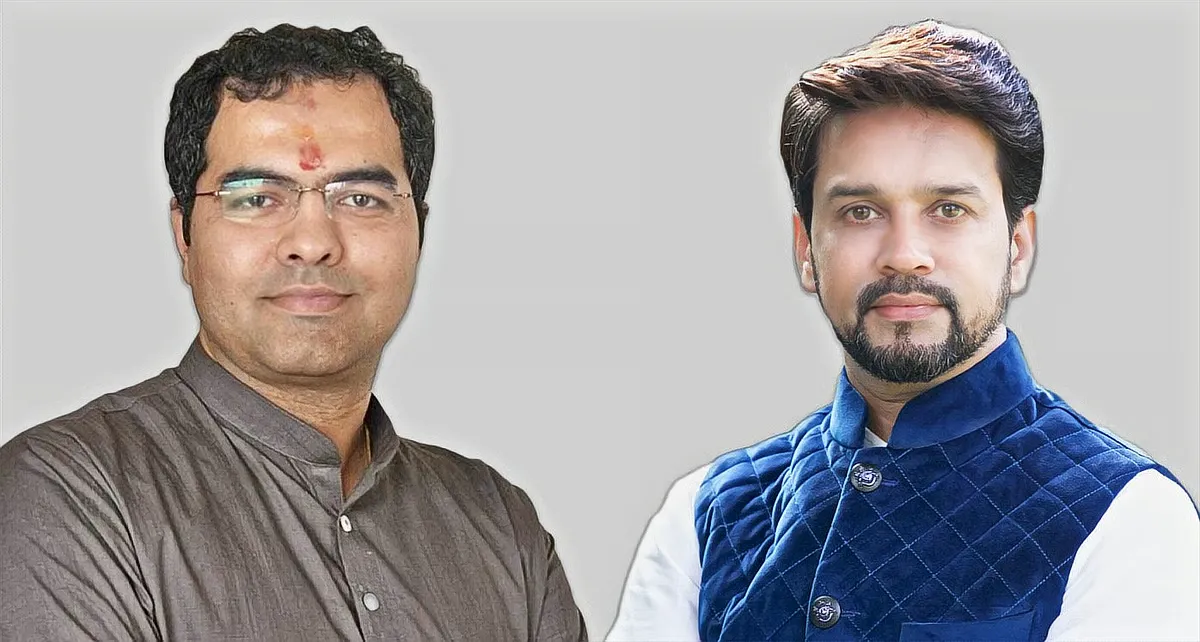
The Supreme Court has dismissed a review petition submitted by CPI(M) leader Brinda Karat, which sought to challenge the court’s earlier decision from April 29. This decision had concluded that no recognisable offence was established against BJP leaders Anurag Thakur and Parvesh Verma regarding their alleged hate speeches connected to the 2020 Delhi riots. The dismissal occurred on July 29 by a bench consisting of Justice Vikram Nath and Justice Sandeep Mehta.

The court’s decision came after a careful review of the arguments presented in the review petition. The judges determined that there were no grounds to revisit the original ruling, stating clearly that a reconsideration was unwarranted. Karat’s request for an open court hearing was also denied, indicating that the judges found the existing documentation sufficient for their assessment.

Background of the Case

The legal conflict originated when Brinda Karat and fellow CPI(M) leader KM Tiwari approached the Supreme Court to dispute a ruling made by the Delhi High Court on June 13, 2022. The High Court had upheld a trial court’s decision that declined to order the registration of a First Information Report (FIR) against Thakur and Verma. This earlier ruling stated that necessary sanctions must be received from relevant authorities before any FIR could be filed.

The High Court noted that the Delhi police had conducted a preliminary investigation, which suggested that there was no prima facie case for a cognisable offence. According to the ruling, the trial court needed to consider the facts and evidence at hand, which could only proceed with a valid sanction. This played a crucial role in the subsequent appeal to the Supreme Court by Karat and Tiwari.

The speeches in question were delivered during the Delhi assembly elections in 2020, amidst ongoing anti-Citizenship Amendment Act (CAA) protests. Karat specifically referenced Thakur’s inflammatory slogan from a rally on January 27, 2020, and Verma’s remarks that labelled the protesters at Shaheen Bagh as “infiltrators.” These speeches have been cited as promoting violence and animosity, which heightened concerns during a tumultuous period in the city.

Court’s Evaluation of Allegations

The Supreme Court had, during its earlier ruling, acknowledged Karat’s arguments to some extent by asserting that prior sanction was not mandatory at the pre-cognisance stage for a Magistrate to initiate an investigation into the alleged offences. However, the court ultimately concluded, after reviewing the content of the speeches attributed to Thakur and Verma, that no cognisable offence had been established.

This determination was significant in affirming the earlier findings of lower courts, which had consistently ruled against the necessity of further legal action against the two leaders based on the evidence presented. The Supreme Court’s assessment reaffirmed the principle that legal scrutiny must be substantiated by clear evidence of wrongdoing.

The implications of the case underline the challenges in prosecuting hate speech allegations, particularly in politically charged contexts. The court’s decisions reflect a stance on the importance of adhering to legal standards and the requirement for substantial evidence in cases involving such serious accusations.

Long or Short, get news the way you like. No ads. No redirections. Download Newspin and Stay Alert, The CSR Journal Mobile app, for fast, crisp, clean updates!

App Store –  https://apps.apple.com/in/app/newspin/id6746449540 

Google Play Store – https://play.google.com/store/apps/details?id=com.inventifweb.newspin&pcampaignid=web_share

Latest News

Popular Videos