


Supreme Court Denies Immediate Relief to Lalu Prasad Yadav in Land-for-Jobs Case
The CSR Journal Magazine

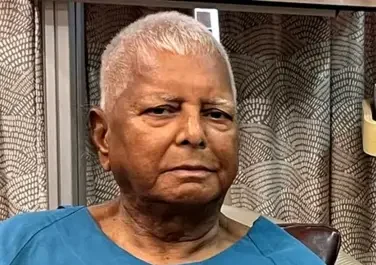
The Supreme Court has declined to provide immediate relief to former Bihar Chief Minister Lalu Prasad Yadav regarding his petition aimed at quashing proceedings linked to an alleged land-for-jobs scam. The decision was made by a bench consisting of Justices MM Sundresh and N. Kotiswar Singh. However, the court did grant a limited concession by exempting Yadav from having to appear personally before the trial court.

In its ruling, the court clarified that the trial court is permitted to evaluate the merits of the case and make decisions based on the applicable law. This has set the stage for ongoing legal evaluations without the necessity of Yadav’s physical presence, potentially impacting the course of the trial.

Arguments Presented by Legal Representatives

During court proceedings, Senior Advocate Kapil Sibal, representing Yadav, argued that the recommendations for appointments attributed to him during his term as Railway Minister were not issued in an official capacity. He contended that, consequently, an approval under Section 17A of the Prevention of Corruption (Amendment) Act, 2018, was not necessary for initiating an investigation into the alleged activities.

Conversely, Additional Solicitor General S. V. Raju asserted that Yadav could still face prosecution on the basis that the acts under scrutiny were associated with his role in public office. Raju maintained that the lack of prior sanction did not invalidate ongoing legal proceedings. His stance reinforces the complexities surrounding the legal implications of Yadav’s actions during his ministerial tenure.

Two primary issues were highlighted by the court: the interpretation and relevance of Section 17A of the Prevention of Corruption Act and whether this provision operates on a prospective basis. The court suggested that irrespective of the potential non-applicability of Section 17A, other legal provisions might still arise, prompting the trial court to examine the case’s merits independently.

Previous Legal Decisions and Current Context

Prior to this ruling, the Delhi High Court had, on March 24, 2023, rejected a plea to quash the First Information Report (FIR) and accompanying chargesheets filed in 2022, 2023, and 2024. This case involves allegations of irregular appointments to Group-D posts within the Indian Railways between 2004 and 2009, a period corresponding to Yadav’s tenure as Railway Minister, purportedly in exchange for land.

Section 17A requires prior government approval before a public servant can be investigated for actions connected to official duties. This stipulation remains a crucial point in the ongoing legal dispute and is now poised for further determination at the trial level.

The Supreme Court’s remarks indicated that the observations made by the Delhi High Court would not hinder the trial court’s proceedings. Furthermore, it expressed its interest in how actions like appointment recommendations—when not strictly classified as official decisions—could still be interpreted as linked to a public office. Such nuances are likely to play a significant role in shaping the trial’s outcomes.

Long or Short, get news the way you like. No ads. No redirections. Download Newspin and Stay Alert, The CSR Journal Mobile app, for fast, crisp, clean updates!

App Store –  https://apps.apple.com/in/app/newspin/id6746449540 

Google Play Store – https://play.google.com/store/apps/details?id=com.inventifweb.newspin&pcampaignid=web_share

Latest News

Popular Videos
