


Super El Niño Anticipated to Impact Monsoon, Historical Context Shows Variability
The CSR Journal Magazine

As the arrival of June nears, there’s heightened awareness among farmers, policymakers, and meteorologists in India regarding the potential development of El Niño in the Pacific Ocean. This natural climate phenomenon plays a crucial role in influencing the country’s southwest monsoon, which accounts for nearly 70 per cent of annual rainfall from June to September. Given its importance to agriculture and water supply in India, understanding El Niño’s implications is essential.

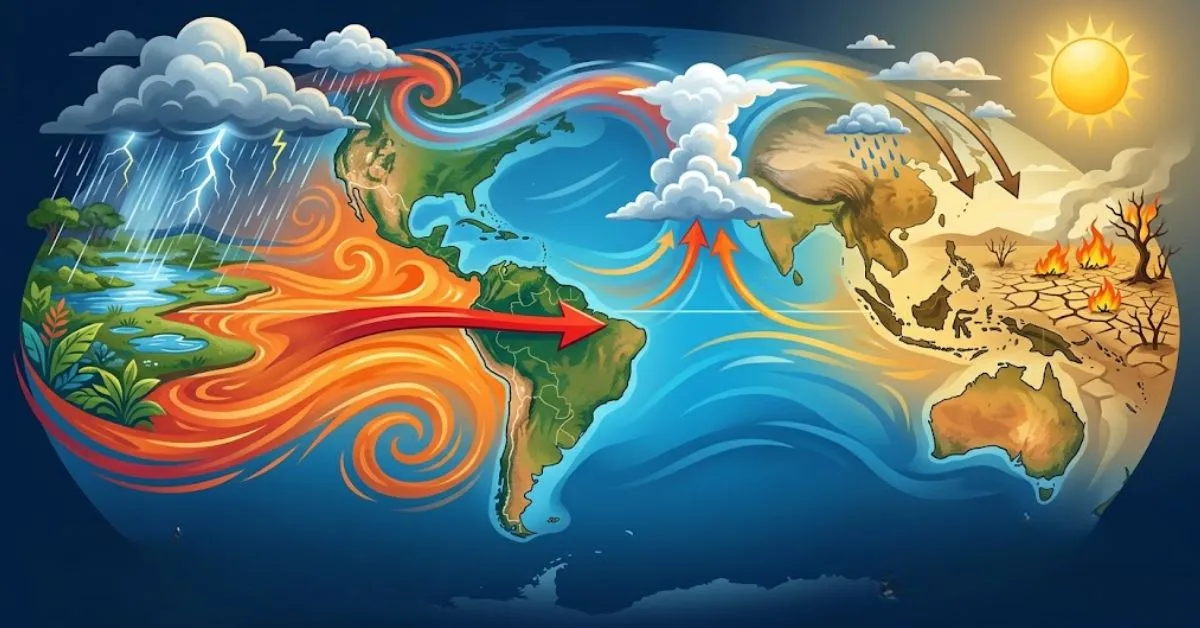
El Niño is characterised by the abnormal warming of a large expanse of ocean water in the central and eastern Pacific, disrupting global wind patterns. Historically, this disturbance has been detrimental to Indian weather, typically leading to weakened monsoon winds and subsequent droughts across several regions of the country. Statistical data indicates that from 1951 to 2022, around 60 per cent of El Niño years experienced below-average rainfall in India, linking every recorded drought to these events.

When meteorologists identify signs of an emerging El Niño, concerns arise due to its past effects. However, there is an interesting counterpoint to this narrative, as not every El Niño event results in adverse outcomes for India’s monsoon.

Instances Where El Niño Did Not Disrupt Rainfall

Over the past seventy years, there have been 17 significant El Niño occurrences, of which at least five led to normal or above-average rainfall in India, defying expectations. One notable case was in 1997-98, when an intense El Niño developed. Predictions indicated potential drought, yet that year saw above-average monsoon rainfall and no significant drought events followed.

Other years also presented unexpected outcomes. In 1983 and 1994, strong El Niño conditions coincided with rainfall that was twelve per cent or more above normal levels. Similarly, a weak El Niño in 2006 had no adverse impact on the monsoon, highlighting the complexity of meteorological interactions.

The Indian Ocean Dipole (IOD) emerges as a critical factor counteracting the effects of El Niño. A positive IOD occurs when the western Indian Ocean warms while the eastern side cools, which can enhance moisture-laden winds that are vital for the Indian monsoon. In 1997, a strong positive IOD effectively mitigated the effects of an El Niño, allowing for sufficient rainfall despite the conditions in the Pacific Ocean.

Challenges in Predicting El Niño’s Impact on Monsoon

Recent decades have seen a growing uncertainty in the relationship between El Niño and the Indian monsoon. Climate change has contributed to warming the Eurasian landmass, resulting in greater temperature differences between land and sea. This phenomenon can enhance monsoon winds, partly counteracting El Niño’s negative influence. A landmark study conducted in 2006 by climate scientist K.K. Kumar and colleagues highlighted that while severe droughts in India have been associated with El Niño events, not all instances lead to drought. The location of ocean warming within the Pacific is as significant as its intensity.

Interestingly, even weak El Niño events have resulted in severe droughts, as seen in 2002 and 2009, which saw rainfall drop to 78 per cent of expected levels. Weather agencies such as the India Meteorological Department (IMD) now employ comprehensive models that incorporate various factors, including IOD and ocean temperatures, rather than solely relying on El Niño indicators.

In summary, while El Niño remains a potential threat to India’s monsoon, it is not an unavoidable harbinger of disaster. Given the complexities of weather forecasting, preparedness through water conservation and contingency crop planning is essential. Recognising the multifactorial influences on monsoon patterns is crucial for a resilient approach to weather unpredictability.

Long or Short, get news the way you like. No ads. No redirections. Download Newspin and Stay Alert, The CSR Journal Mobile app, for fast, crisp, clean updates!

App Store –  https://apps.apple.com/in/app/newspin/id6746449540 

Google Play Store – https://play.google.com/store/apps/details?id=com.inventifweb.newspin&pcampaignid=web_share

Latest News

Popular Videos
