


September 23 Marks Global Equal Day and Night with Equinox
The CSR Journal Magazine

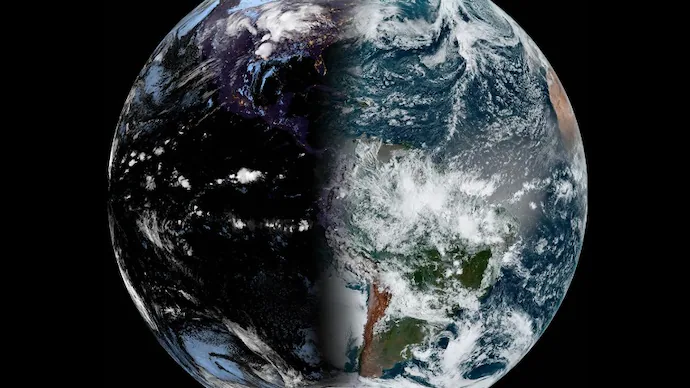
The September equinox, which occurs on September 23, is a significant astronomical event that affects the entire globe, including India. It takes place at 5:35 am IST, as per NASA’s 2026 astronomical calculations. An equinox occurs semi-annually, in March and September, when the centre of the Sun aligns with the plane of the Earth’s equator. This phenomenon signifies that neither the Northern nor Southern Hemisphere is tilted towards the Sun, resulting in both receiving nearly equal sunlight.

Earth’s axial tilt of approximately 23.5 degrees affects how sunlight reaches different parts of the planet throughout the year. During the equinox, the Sun is directly overhead at the equator, creating a condition where day and night are nearly equal globally. This year, as the Sun moves from north to south, the September equinox heralds the onset of autumn in the Northern Hemisphere and spring in the Southern Hemisphere.

In India, however, the transition to autumn is not instant. The country’s weather patterns are significantly influenced by the monsoon season and various regional climates. Therefore, while the equinox marks a change, it does not necessarily usher in a traditional autumn season across the country.

Equinox Observations in India

India will also experience the effects of the equinox on September 23, with the Sun crossing the Earth’s equatorial plane at 5:35 am IST. During this time, the duration of daylight and darkness will start to balance out, although this will vary depending on the geographical location. For instance, on this date, New Delhi will observe approximately 12 hours and 7 minutes of daylight, which is slightly more than 12 hours.

The discrepancy arises because the Sun is not a point source of light, but rather a disc. Additionally, the Earth’s atmosphere bends the sunlight near the horizon, leading to earlier sunrises and later sunsets than one would calculate geometrically. Hence, while the equinox suggests a balance of day and night, local conditions can cause variations.

As a result, different regions in India will experience varying lengths of day and night on the equinox, reflecting the country’s diverse geographical landscape.

Consequences of the Equinox

The September equinox represents a pivotal moment in the annual cycle of the Sun’s movement across the sky. Following this event, the Sun’s rays will gradually shift further south of the equator, influencing the daylight experience in the Northern Hemisphere. For India, this transition signifies a slow but perceptible shortening of daylight hours and an extension of night as the country approaches the December solstice.

While the equinox itself lasts merely for a brief moment, its impact unfolds over the weeks that follow. This change affects not only the duration of daylight but also the climate, as cooler temperatures and shorter days gradually set in, moving towards winter.

In summary, the upcoming September equinox is a vital astronomical event that will mark the transition of seasons globally, influencing the balance of day and night in India and around the world. As the days shorten, residents will notice the gradual shifts in their daily sunlight exposure, marking the changing seasons ahead.

Long or Short, get news the way you like. No ads. No redirections. Download Newspin and Stay Alert, The CSR Journal Mobile app, for fast, crisp, clean updates!

App Store –  https://apps.apple.com/in/app/newspin/id6746449540 

Google Play Store – https://play.google.com/store/apps/details?id=com.inventifweb.newspin&pcampaignid=web_share

Latest News

Popular Videos
