


Delhi Sees Coldest September Morning in 18 Years at 21°C
The CSR Journal Magazine

Delhi experienced an exceptionally cool and hazy morning on Tuesday, 29 September 2026 with the minimum temperature dropping to 21°C, which is 2.3 degrees below the normal for this time of year. This marked the coldest minimum temperature recorded in September since 2008, as stated by the India Meteorological Department (IMD). The decline in temperature follows recent rainfall in the Delhi-NCR region, as the capital transitions from the monsoon season to a drier period.

The significant temperature drop occurred alongside a wet spell affecting the region. The IMD reported rainfall at several locations across Haryana, Chandigarh, and Delhi within the 24 hours leading up to 5:30 am on Tuesday. This rain, combined with persistent cloud cover and moisture levels in the atmosphere, contributed to the lowered nighttime temperatures. On 28 September, minimum temperatures across Haryana, Chandigarh, and Delhi were reported to be near normal.

This unexpected chill resulted in a cooler start to the day for the capital, with Tuesday’s readings setting a record for the lowest September temperature in 18 years. Just days before, on 27 September, Delhi had already recorded a minimum temperature of 21°C, its second-lowest September temperature in 25 years and the lowest since 2001.

Hazy Conditions Accompany the Cold

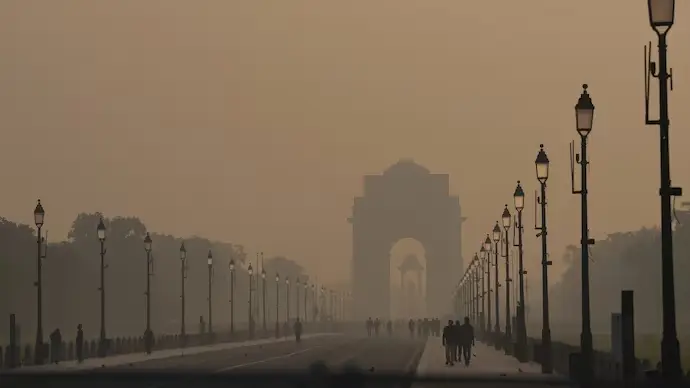
The chilly morning in Delhi was also characterised by a layer of haze, which blurred the city’s skyline. The haze was attributed to the aftermath of recent rainfall and the ongoing moisture in the lower atmosphere. This combination of moisture and suspended particles near the ground can contribute to a hazy appearance, particularly during early morning hours. Despite this, the IMD’s report does not pinpoint a specific pollution event or singular reason for the haze on that particular morning.

The cooler temperatures have sparked discussions regarding the potential for an early winter, especially with developing El Nino conditions observed in the Pacific Ocean. However, it is important to note that the recent chill in Delhi’s weather should not be directly correlated with El Nino. The primary cause of the temperature drop stems from a prolonged weather system that facilitated widespread rain, consistent cloud cover, and a decrease in daytime heating in northern India.

The presence of clouds over New Delhi was evident throughout the morning, contributing to the unusual weather patterns. These atmospheric conditions continue to shape the city’s climate as it transitions from the monsoon season.

Weather Transition Following Monsoon Withdrawal

Although the southwest monsoon has officially withdrawn from Delhi, the capital is still feeling the effects of various weather systems. The IMD’s recent analysis has identified a western disturbance manifesting as a cyclonic circulation over south Rajasthan, while upper-air circulations persist over Uttar Pradesh. For Tuesday, the weather office predicted isolated to scattered rain accompanied by thunderstorms and lightning across Haryana, Chandigarh, and Delhi.

This predicted rainfall is expected to diminish quickly, with the IMD’s forecast indicating that isolated rainfall for Haryana, Chandigarh, and Delhi is anticipated only on 29 September, followed by a stretch of dry weather from 30 September through 5 October. Thus, although Tuesday began with record-low temperatures and hazy conditions, Delhi is poised for a transition towards a drier spell, marking a significant shift into the post-monsoon season.

Long or Short, get news the way you like. No ads. No redirections. Download Newspin and Stay Alert, The CSR Journal Mobile app, for fast, crisp, clean updates!

App Store –  https://apps.apple.com/in/app/newspin/id6746449540 

Google Play Store – https://play.google.com/store/apps/details?id=com.inventifweb.newspin&pcampaignid=web_share

Latest News

Popular Videos
