


America at a Crossroads: Will Trump Survive the Political Test of 2026? The Election That Could Change Washington and America’s Future

The CSR Journal Magazine

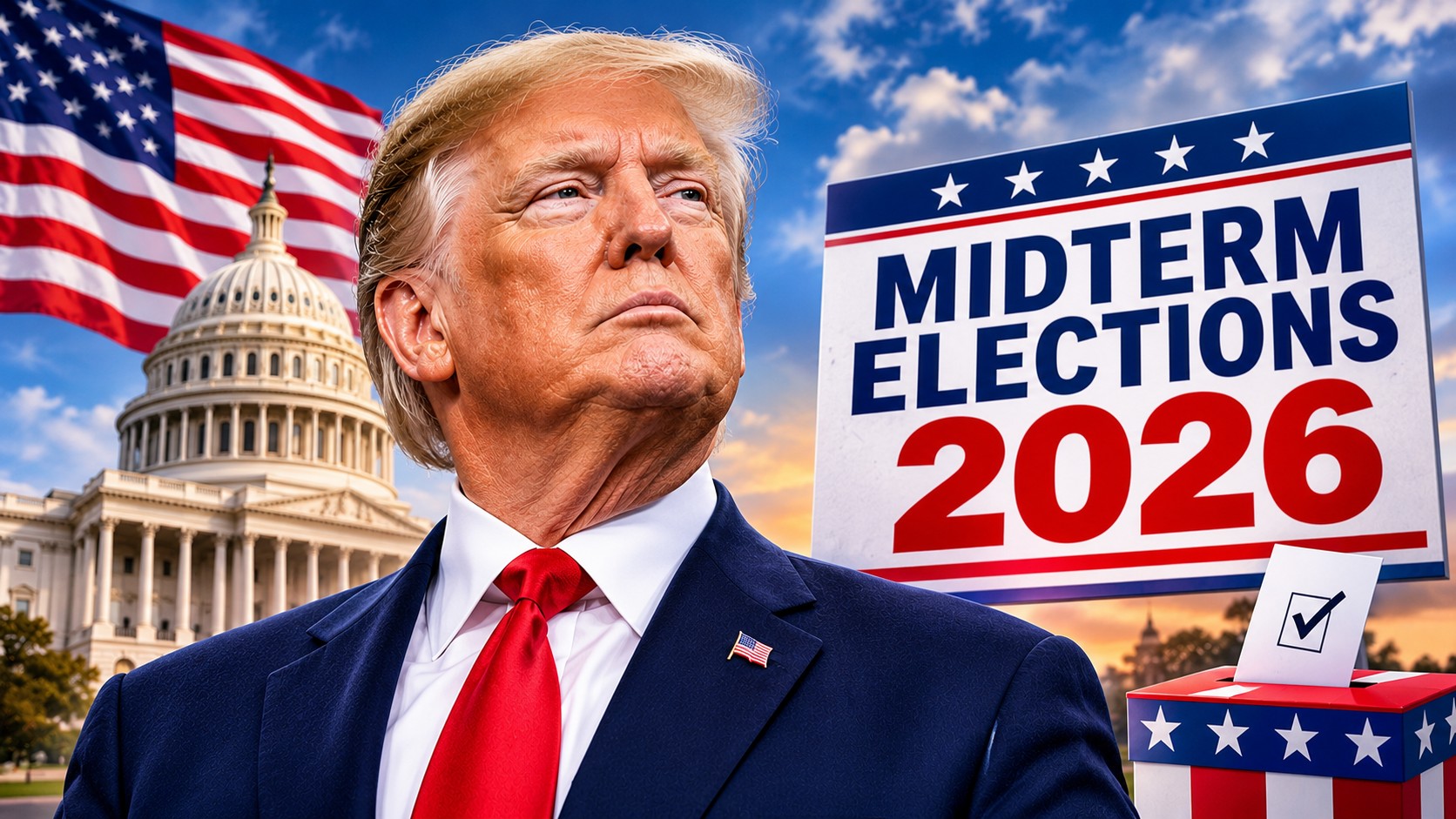
November 3 midterm elections could reshape Trump’s remaining presidency, test the strength of his political movement and determine how much power ordinary Americans are willing to give the Republican administration.

Tomorrow, millions of Americans will walk into polling stations carrying a decision that could fundamentally change the political direction of the United States. Although Donald Trump will not appear on the ballot, the November 3 midterm elections could become the most consequential political assessment of his second presidency. The stakes extend far beyond the fortunes of individual candidates. At the heart of this election lies a fundamental question: Does America still want Donald Trump’s political vision to define its future, or is the country beginning to look for a different direction?

For Trump, this is not an ordinary midterm election. It is a test of political authority, public confidence and his ability to maintain control over Washington during the final two years of his presidency. For millions of Americans, it is an opportunity to express their satisfaction, frustration, anxiety or expectations about the direction in which their country is moving. And for the world, the consequences could be equally significant.

Not Just an Election, But a Referendum on Trump

The American political system is approaching a defining moment. On November 3, voters will elect all 435 members of the House of Representatives, 35 senators and governors in 36 states, alongside numerous state and local representatives. Republicans currently control both chambers of Congress, although their majorities are narrow. They enter the election with a 218-214 advantage in the House and a 53-47 majority in the Senate. Democrats are attempting to take control of at least one chamber.

The distinction is important. Americans are not voting to elect a new president. Trump will remain in the White House regardless of the outcome. What they are deciding is whether his administration will continue to enjoy the support of a Congress controlled by his own party. Recent polling suggests that Republicans are facing a difficult contest. A CNN/SSRS poll published on October 21 gave Democrats a 49-39 per cent advantage among registered voters on the congressional ballot. The same survey placed Trump’s overall approval rating at 32 per cent.

A Reuters/Ipsos survey completed on October 26 also found Democrats leading Republicans among registered voters, 47-36 per cent, although the margin narrowed when undecided voters were taken into account. These figures indicate a challenging political environment for Republicans. However, national polling is not a prediction of individual constituency results. The final outcome will depend on turnout, competitive state races and the distribution of votes across electoral districts. The message is nevertheless clear: Trump’s political popularity is facing serious questions.

The Economy: The Issue That Could Hurt Trump the Most

Political slogans can mobilise voters, but household economics often determine how they finally vote. For ordinary Americans, the cost of living has emerged as one of the most important concerns in this election. Food, housing, healthcare, transportation and energy expenses directly affect household financial security. When families struggle to manage everyday expenses, they increasingly judge their political leadership by tangible economic results rather than campaign promises.

The CNN poll published in October found that approximately seven in ten respondents believed Trump had not gone far enough in reducing prices. Only 27 per cent approved of his handling of the economy, while approval of his handling of inflation stood at 23 per cent. This represents a significant political vulnerability.

Trump built much of his political appeal around the promise of economic strength, American prosperity and putting American interests first. If voters believe that their personal financial circumstances have not improved, the administration risks losing support even among sections of its traditional electorate. Tariffs, international trade disputes and the wider geopolitical environment have also become important parts of the economic debate. The central political challenge for Trump is therefore straightforward: Can an administration that promised economic renewal convince voters that its policies are improving their everyday lives? For millions of Americans, this election could be an opportunity to deliver their answer.

Immigration and National Identity: The Other Big Battle

Immigration remains one of the defining issues of Trump’s political identity. His supporters see stricter border enforcement and tougher immigration policies as essential to national security, sovereignty and the protection of American jobs. His critics, however, question the humanitarian consequences, legal implications and economic effects of the administration’s approach. The debate is not merely about border security. It concerns the identity of the United States itself.

America has historically presented itself as a country shaped by immigration, diversity and opportunity. The current political debate is forcing Americans to reconsider how those principles should coexist with national security and immigration enforcement.  For Republicans, immigration remains an important issue on which they believe they have political strength. For Democrats, the challenge is to articulate an alternative that addresses border security while defending due process and humanitarian considerations. The election will reveal whether voters prioritise Trump’s tougher approach or demand a different balance.

The Democratic Party’s Opportunity — and Its Own Challenge

A possible Republican setback does not automatically mean that Democrats have regained the confidence of the American people. This is an important distinction. Opposition to a president and enthusiasm for an alternative are not necessarily the same thing. The Democratic Party has an opportunity to regain congressional power, particularly in the House of Representatives. But it must also demonstrate that it has a credible economic, social and political programme for the country.

Voters want more than criticism of Trump. They want answers on employment, inflation, healthcare, housing, education and public safety. There is also a larger challenge facing American politics: a substantial number of citizens have become dissatisfied with both major political parties. The CNN survey found that 22 per cent of registered voters believed that a Democratic victory would make no difference to the country’s situation.

That finding deserves attention. It suggests that the problem confronting American politics may be deeper than the popularity of one president or the electoral prospects of one political party. The country is experiencing a crisis of confidence in political leadership itself.

What Happens to Trump if Republicans Lose Congress?

This is perhaps the most important question surrounding the election. A president does not lose office simply because his party loses a midterm election. Trump will continue to exercise the constitutional powers of the presidency. But the political environment in Washington could change dramatically.

If Democrats capture the House of Representatives, Trump’s administration could face more aggressive congressional investigations, increased scrutiny of executive decisions and greater resistance to its legislative agenda. Congressional committees have substantial investigative authority. The House also possesses the constitutional power to initiate impeachment proceedings.

If Democrats additionally capture the Senate, the administration could encounter greater difficulties in securing confirmations for important executive and judicial appointments. Budget negotiations could become more confrontational. Legislative priorities could be delayed or blocked. The administration might have to negotiate with political opponents to secure funding and pass legislation. However, a Democratic majority would not give the opposition unlimited power.

Trump would retain his presidential veto, and overriding it would require a two-thirds majority in both chambers. The Senate’s legislative procedures would also continue to create obstacles to passing major legislation. In other words, a Democratic victory could substantially restrict Trump’s political freedom without removing him from the presidency. It could turn the final two years of his administration into a prolonged confrontation between the White House and Congress.

If Republicans retain both chambers, the opposite message would emerge. Trump would claim that voters had endorsed his leadership and would have a stronger political platform from which to advance his agenda. Either outcome will influence the balance of power in Washington.

The 2028 Question: What Is Trump’s Political Future?

There is another dimension to this election that deserves attention. Donald Trump has already been elected president twice, in 2016 and 2024. Under the Twenty-Second Amendment to the US Constitution, no individual can be elected president more than twice. Consequently, Trump cannot be elected to a third presidential term in 2028 under the current constitutional provision. This makes the 2026 midterms particularly important for his political legacy.

Unlike a president seeking another election, Trump must increasingly consider how his political movement will survive beyond his own presidency. Who will inherit the MAGA movement? Will the Republican Party remain firmly aligned with Trump’s political identity? Can his supporters transfer their loyalty to another leader?

Vice President JD Vance and other Republican figures will inevitably be part of discussions about the party’s future leadership. A strong Republican performance would strengthen Trump’s ability to shape the party’s direction and influence the eventual choice of his political successor. A major defeat, however, could encourage Republican leaders to reconsider their dependence on his leadership. The midterms will not determine the Republican presidential candidate for 2028. But they could influence the political conditions under which that contest unfolds.

The American People: What Is Really at Stake?

Behind the political drama in Washington are ordinary Americans whose lives will be affected by decisions taken by the government and Congress. For working families, the election is about purchasing power and financial stability. For young Americans, it is about employment, education, housing affordability and the possibility of building a secure future. For immigrants, it is about legal protections, family security and the future of immigration policy. For senior citizens, it is about healthcare, retirement benefits and economic protection. For businesses, it is about taxation, trade policy, regulation and economic predictability. For American institutions, it is about maintaining public confidence in democratic processes and constitutional checks and balances.

This is why the midterm elections are more consequential than their name suggests. The United States is built on a system in which presidential power is not intended to operate without legislative oversight. The Constitution gives Congress independent authority over legislation, taxation and government spending, while the Senate plays a crucial role in confirming important presidential appointments.The election will determine how effectively those constitutional responsibilities are exercised over the next two years.

Ultimately, the question is not simply whether Americans support Trump or oppose him. It is whether the political system can deliver stability, accountability and economic opportunity to the people it represents.

Why the World Is Watching — and Why India Should Care

The consequences of the American midterms will not stop at the country’s borders. The United States remains one of the world’s most influential economic, military and diplomatic powers. Changes in its domestic political balance can affect international trade, security partnerships, investment decisions and diplomatic relationships. India has particularly important interests at stake.

The India-US relationship encompasses defence cooperation, advanced technology, semiconductor development, artificial intelligence, energy, education and trade. A Congress increasingly divided from the White House could complicate the passage of legislation and create uncertainty around certain policy priorities. At the same time, the broader strategic relationship between India and the United States is supported by interests that extend beyond any single administration or election cycle.

For India, the important consideration will be policy continuity and predictability. American trade decisions can influence Indian exporters, businesses and investors. Changes in immigration and visa policies can affect Indian professionals and students. Decisions concerning technology partnerships and defence cooperation can shape India’s long-term strategic interests.

The outcome will also be watched by America’s allies and competitors, particularly as Washington navigates an increasingly complicated international environment. A politically divided America may find it harder to maintain consistency in its external commitments. A government with stronger congressional backing may have greater room to pursue its domestic and international priorities. Neither scenario automatically determines American foreign policy, but both carry consequences for the rest of the world.

The Bigger Question: Is America Prepared to Move Beyond Political Polarisation?

Perhaps the most important story emerging from this election is not about the Republican Party, the Democratic Party or even Donald Trump. It is about the condition of American democracy. Political polarisation has become one of the defining features of contemporary American politics. Trust in institutions, confidence in elections and the ability of opposing political groups to work together have become increasingly important national concerns.

Recent reporting has also raised questions about federal government involvement in election administration and the possibility of disputes over the certification of results. These concerns must be examined through evidence and the constitutional framework. American elections are administered primarily by state and local authorities, not controlled directly by the president.

The responsibility of every political leader, regardless of party, is to respect lawful election procedures and the legitimate outcome of the democratic process. A democracy is not strengthened merely when one’s preferred candidate wins. It is strengthened when the rules are respected even when the result is politically disappointing. This is the larger test facing America.

November 3: A Decision That Will Define the Next Chapter

Donald Trump has transformed American politics. His political movement has energised millions of voters, challenged established political conventions and fundamentally altered the Republican Party. But political influence is not permanent, and no leader is above the judgment of the electorate.

The November 3 elections will not end Trump’s presidency. They will not automatically determine the country’s political future in 2028. Nor will a Democratic victory necessarily resolve America’s economic and social challenges. What they can do is establish the limits of Trump’s political authority and determine whether the final two years of his presidency are defined by legislative control, political confrontation or institutional resistance.

For Republicans, the election is about defending power.

For Democrats, it is about regaining influence.

For Trump, it is about protecting his political legacy.

But for the American people, it is about something considerably bigger: the cost of living, economic opportunity, democratic accountability and the kind of country they want to leave for the next generation. Tomorrow, America votes. And when the votes are counted, the most important question will not simply be who won or who lost. It will be what the American people have decided about the future of their country.

Latest News

Popular Videos