




How China turned its own ‘Trade War’ into a ‘Global Franchise’

The CSR Journal Magazine

For 6 years we have been fed a comforting bedtime story. Multinationals are packing up. Supply chains are being “de-risked”. India, Vietnam and Mexico are the happy heirs of a great factory migration, and all we need to do is hold the door open and smile.

Then you open the trade data and the story gets awkward.

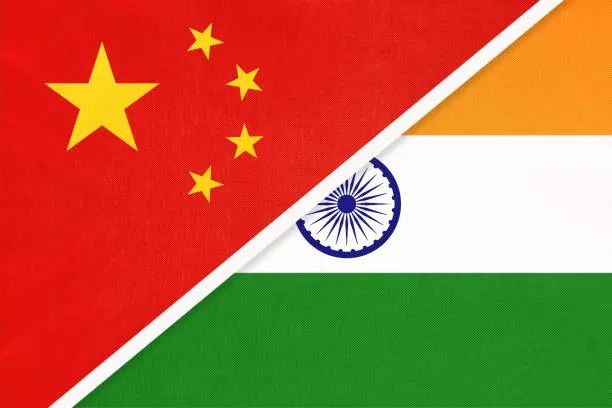
India’s trade deficit with China touched a record $112.6 billion in 2025-26, with imports rising 16% to $131.63 billion while exports reached $19.47 billion. China also overtook the United States as India’s largest trading partner. The supposed winner of the great escape is buying more from the jailer than at any point in its history. That is not a glitch. I think it is the design.

Rerouting is not leaving

China+1 sounds like arithmetic: one factory in China, plus one somewhere else. In practice it works more like a relay race. Chinese components, machines and increasingly Chinese engineers move to Vietnam, Mexico, Thailand or India. Something gets assembled, a new country of origin is printed on the box, and it ships onward. Procurement people have a dry name for the result, “paper China+1”. Final assembly moves, but the circuit boards, semiconductors and specialty materials still come from China, so the tariff and policy exposure is unchanged.

Look at Mexico and Vietnam. Mexico imposed tariffs of up to 50% on non-FTA countries across 1,463 tariff lines from January 2026, and its imports from Vietnam more than doubled in the first half of the year, exactly the pattern that makes customs officers suspect relabelled Chinese goods. Washington’s answer has been blunt, with a 40% tariff on transshipment and AI-assisted customs mapping of supply chains.

And the escape route is not comfortable for the Chinese firms that took it either. A survey circulated in April found about 40% of Chinese-invested manufacturers in Vietnam were running at a loss. Hardly a triumphant migration.

China did not lose its factories. Its supply chains became longer, more spread out and harder to sanction, while the “plus one” countries absorbed the political risk and the customs scrutiny. Beijing outsourced the exposure and kept the core. If you were designing a hedge, you could do worse.

Wolf Warriors with a plan

The name comes from a 2017 action film in which a Chinese special forces soldier rescues civilians abroad and humiliates foreign villains. Diplomats like Zhao Lijian turned that swagger into a diplomatic style, roughly from 2019 onward: combative tweets, public scoldings, ambassadors summoned and ambassadors lecturing. Western commentators concluded that Beijing had lost its patience and its manners.

I think they read it backwards. The shouting was the visible half. The invisible half was paperwork: export licences, dual-use lists, customs inspections, approval delays that never quite amount to a ban.

Japan is the cleanest example. In January 2026, after Prime Minister Sanae Takaichi’s remarks about a possible Japanese response in a Taiwan contingency, China announced export controls on dual-use items aimed at Japan and put them into effect immediately. Shipments of controlled rare earth compounds and metals to Japan have stayed near historic lows since, while South Korea has received increasing amounts. Nobody had to shout. A licensing office did the talking. Reward the friendly, starve the unfriendly. That is “wolf warrior diplomacy” with a briefcase instead of a megaphone.

And it is the real lesson for any country dreaming of diversification. Moving away from China is a negotiation in which China holds the pen on your inputs.

The theory, as Beijing would argue it

Fairness matters here, because the Chinese defence of all this is coherent, and treating it as plain aggression misses how Chinese strategists think.

Start with Deng Xiaoping’s old line, tao guang yang hui, usually translated as hide your light and bide your time. For three decades China built capacity quietly while the West called it a “responsible stakeholder”. Wolf warrior looks like a break from that line. A Chinese strategist would say the line was never about silence. It was about sequencing. Stay modest until the dependencies are in place, then you can afford a louder voice.

Qin Yaqing’s relational theory pushes the same way. In his account, world politics is made of relationships, and power flows to whoever sits at the centre of the most ties, not to whoever hoards the most. A Vietnamese plant that needs Chinese inputs and a Mexican factory that needs Chinese machinery are not defeats for Beijing under this logic. They are new ties, and every tie is a form of leverage.

Yan Xuetong’s moral realism argues that rising powers win through credible leadership, what he calls humane authority, and official Chinese messaging does describe integrated supply chains as a public good: cheap solar panels, batteries and phones for the whole planet. Zhao Tingyang’s tianxia, “all under heaven”, imagines a hierarchical harmony instead of a contest of equals, and its modern echo is the belief that a world organised around Chinese industrial capacity is stable rather than coercive. Plenty of neighbours hear that harmony and see a landlord. Fair enough. But that is the argument.

Then there is Sun Tzu, always. The supreme excellence is to win without fighting. Chinese strategists also lean on the idea of shi, the potential energy of a position, like water piling up behind a dam. You do not push the boulder. You arrange the slope. Strategists have long contrasted weiqi (Go) with Western chess, too: chess hunts the king, while Go places stones across the whole board until the opponent has no room to move. China+1, from this angle, is a slope. Every country that “diversifies” rolls downhill towards Chinese inputs anyway.

The proverbs make the defence even sharper.

Jiao tu san ku: the cunning rabbit has three burrows. Chinese firms digging into Vietnam, Mexico, Indonesia and India are the rabbit. China+1 was never a Western invention, they would say. It is what any sensible firm does.

Jie ling hai xu ji ling ren: whoever tied the bell must be the one to untie it. If Washington started the tariff war, Washington must end it, and nobody should blame Chinese firms for routing around the wall.

Fu chao zhi xia wu wan luan: under an overturned nest, no egg stays whole. Break the integrated system and everyone pays, not only China. This is the mutual hostage argument in a single line.

Qian li zhi di hui yu yi xue: a thousand-mile dyke collapses through an ant hole. The tiny dependency, a magnet, a rare earth oxide, a pharmaceutical ingredient, can bring down the big structure. Ask Tokyo.

You can hate every one of these arguments and still admit they hang together. That is exactly why they are dangerous to ignore.

What it does to the dollar?

Does any of this touch the dollar? Yes, but slowly, and not in the way breathless headlines claim. The dollar is not going anywhere next year. It still dominates reserves, invoicing and debt markets, and the yuan’s share of global payments remains in the low single digits.

What changes is the mood. Every tariff, sanctions package and transshipment rule teaches trading nations the same thing: dollar plumbing can be turned into a weapon. The response is not a grand switch to the yuan. It is a thousand small hedges. More bilateral settlement in local currencies, more swap lines, more gold in central bank vaults. India’s own gold import bill rose 24.1% to $71.98 billion in 2025-26, though that was driven by price rather than volume. I would not call that a Delhi policy choice, but it tells you how the world’s savers feel.

Notice the irony as well. China+1 rerouting keeps the final sale to American customers priced in dollars, so Chinese firms keep earning dollars through third countries. The dollar is not defeated. It is being slowly bypassed, at the margins, by people who have stopped assuming it will always be neutral. Erosion, not collapse. But erosion is how most empires of money have ended.

Japan and South Korea: two ways to get squeezed

Japan is the cautionary tale, and it is a painful one because Japan learned this lesson early. After the rare earth scare of 2010, Tokyo built stockpiles and funded alternative sources. Even so, a country that hosts the largest, rare earth magnet industry outside China is still heavily exposed, and one report puts its reliance on Chinese rare earth supply at about 70 percent. Japanese buyers have reportedly paid sharply higher prices for yttrium oxide they could find at all. Fifteen years of preparation, and the ant hole still opened.

South Korea faces a different and more subtle squeeze. Seoul is getting more of the controlled materials Tokyo is not, which sounds like good news until you ask what it is being asked to give in return. Korean analysts openly describe a dilemma between trilateral cooperation with the United States and Japan and cooperation with China. Samsung, Hyundai and the battery makers need both the American market and Chinese inputs, graphite and processing capacity above all. Beijing’s message to Korea is simple: be a friend and the door stays open.

Put the two together and you see the actual method. Split the American alliance system at the seam, reward the one who hedges, punish the one who commits. No tank required.

And now, India

The official story is that China+1 is our moment. Production linked incentives, Make in India, global phone brands opening lines, ministers on stages. The data tells a different story. India’s deficit with China rose from $44 billion in FY2021 to $112.1 billion in FY2026, a rise of 155 percent. In electronics alone, the deficit under HS Chapter 85 reached $43.1 billion in FY26, up from around $20 billion in FY19, which analysts called structural rather than cyclical.

And 2026 is on track to beat even that: imports from China hit a record $79.41 billion in the first half, and the January to September deficit has already reached $105.93 billion.

We are assembling, not manufacturing. A phone put together in Tamil Nadu from imported Chinese components shows up as an export on Tuesday and as an import bill on Monday. The value added in India is thin. We have subsidised assembly lines whose bills of materials point to Shenzhen and called it self-reliance. In the name of reducing dependence on China, we may have deepened it. That is my argument, and the import data does not contradict it.

There is a second risk nobody wants to talk about. The White House has put India in Tier 1 of its “Great Transshipment Scam” report, among the highest-risk jurisdictions for China-linked rerouting. The think tank GTRI has pushed back hard, arguing the report has big allegations and little evidence, and that goods substantially transformed in India are genuine Indian exports. On the law, GTRI is probably right. But if our value addition were obviously deep, would we be on that list at all? The label is the warning.

And China itself knows our weak spot. Reports last year said Chinese engineers were being recalled from Indian phone plants, and the machine and input licensing that flows through Chinese offices has a way of tightening when relations cool. India’s exports to China did grow nearly 37% in FY26, which is welcome, but they come off a base of $19 billion against $131 billion going the other way. Applause for the growth rate, please, and a calculator for the size.

Now the governance question, because this is where I expect to be accused of exaggerating. To be fair, officials do see the problem. Reporting suggests that Indian officials are more worried about the nature of the goods in the deficit than about its size. Good. Seeing and acting are different things, though.

Our response is scattered across ministries. Commerce holds trade, electronics holds the incentives, finance holds tariffs, external affairs hold the border and the mood. States compete against each other with land and power subsidies, so a Chinese-linked supplier can play Gujarat against Tamil Nadu against Uttar Pradesh. Nobody in the system seems to own one blunt question: which ten inputs must India make itself in a decade, and what exactly are we paying to get there? Meanwhile, the political messaging stays triumphant. We are rightly wary of China at the Line of Actual Control, and we are rightly angry about it, yet the same government presides over record imports that make the Line of Actual Control a negotiating position for the other side. Policy on Chinese investment keeps swinging between suspicion and need, which tells investors nothing except that nobody has decided.

When I did my research (April-May 2018) on informal trade at India’s north-east border, one thing became obvious. Chinese goods reach Indian markets whether a file approves them. Markets route around ministries. That experience makes me deeply suspicious of any plan that treats diversification as something announced at a press conference. You cannot declare a supply chain. You must build it, input by input, over a decade, in a country where power costs, land titles and logistics are still a fight.

So, what should a sensible India do?

Count value addition, not assembly. Every incentive scheme should publish how much of the product’s value is created in India, and the subsidy should fall if the number does not rise. Pick the components that matter, magnets, cells, active pharmaceutical ingredients, display parts, and build them with patient money, even when it is not glamorous.

Bargain with China from strength where we have it: a market of 1.4 billion people is leverage, and we should price our market access in technology and local depth, not in photo opportunities. Stockpile what is cheap to stockpile. Coordinate ministries and states under one accountable owner. And stop confusing chest-thumping with strategy.

The Chinese rabbit has 3 burrows. India, right now, has a doorway, and a crowd of people congratulating each other for standing in it.

Views of the author are personal and do not necessarily represent the website’s views.

Dr. Jaimine Vaishnav is a faculty of geopolitics and world economy and other liberal arts subjects, a researcher with publications in SCI and ABDC journals, and an author of 6 books specializing in informal economies, mass media, and street entrepreneurship. With over a decade of experience as an academic and options trader, he is keen on bridging the grassroots business practices with global economic thought. His work emphasizes resilience, innovation, and human action in everyday human life. He can be contacted on jaiminism@hotmail.co.in for further communication.

Long or Short, get news the way you like. No ads. No redirections. Download Newspin and Stay Alert, The CSR Journal Mobile app, for fast, crisp, clean updates!

App Store – https://apps.apple.com/in/app/newspin/id6746449540

Google Play Store – https://play.google.com/store/apps/details?id=com.inventifweb.newspin&pcampaignid=web_share

Latest News

Popular Videos