


Padma Shri Awards – When a Fruit Seller, Tribal Teacher, and Social Worker Receive the Padma Shri, India Wins

The CSR Journal Magazine

Something deeply emotional has begun to change in India. For the first time in decades, the Padma Shri awards are slowly beginning to reach the hands they truly belong to — the hands that quietly built this nation without fame, power, or privilege and that change deserves applause.

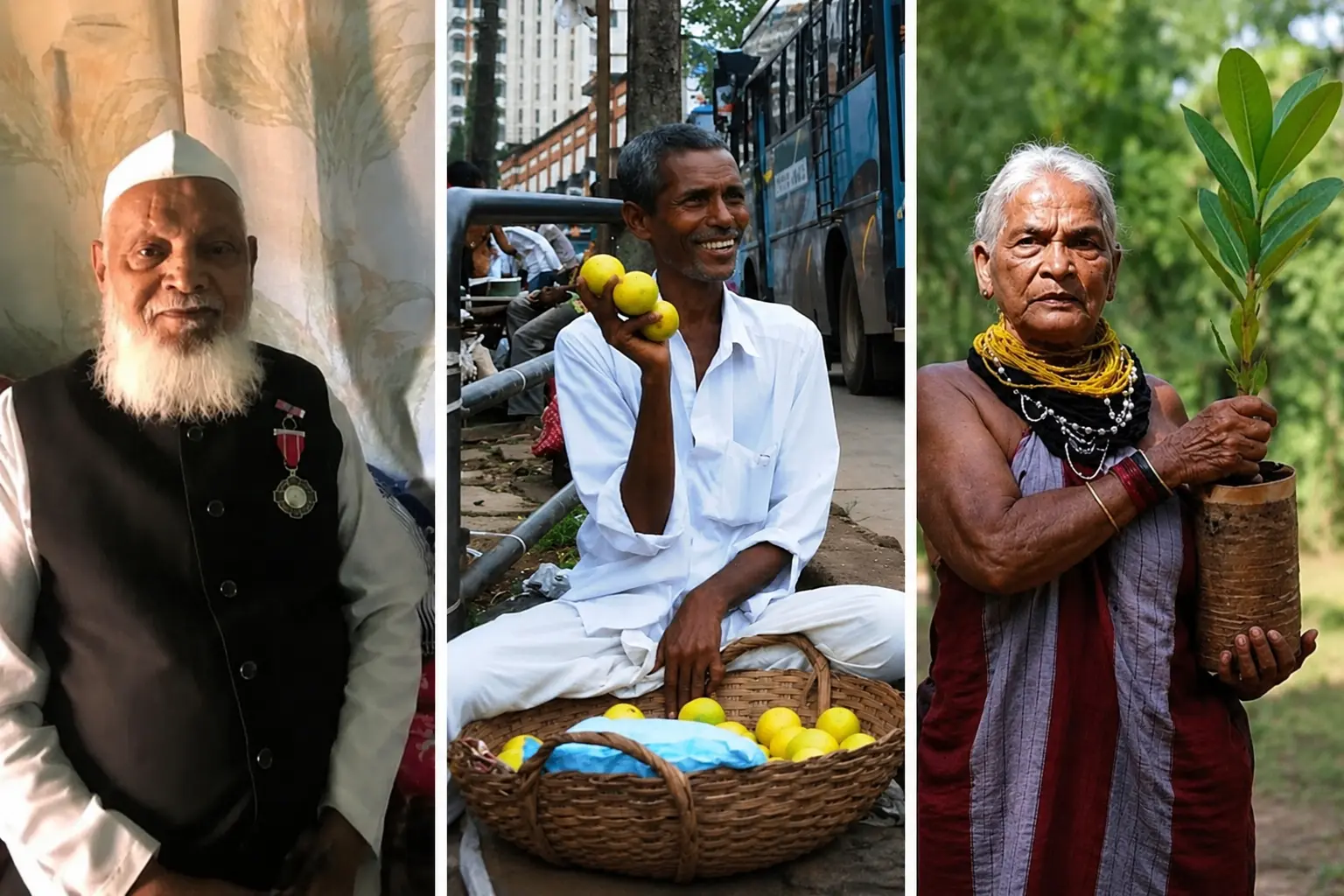
In recent years, India has witnessed unforgettable moments that touched the soul of the country. Elderly village teachers, tribal artists, environmental protectors, folk singers, social workers, and grassroots reformers have walked into Rashtrapati Bhavan not as celebrities, but as symbols of sacrifice and silent service.

Tulsi Gowda: The Barefoot Guardian of India’s Forests

When Tulsi Gowda, the humble environmentalist known as the “Encyclopedia of the Forest,” received the Padma Shri barefoot, the entire nation stood still in emotion. She was not wealthy. She was not famous. But she had spent her life planting and nurturing thousands of trees, protecting nature long before environmentalism became fashionable.

Harekala Hajabba: The Fruit Seller Who Built a School

When Harekala Hajabba, a fruit seller from Karnataka, was honored for using his small earnings to build a school for underprivileged children, India saw something extraordinary: a poor man with no power had become richer in humanity than many who rule headlines every day.

Mohammed Sharif: Restoring Dignity to the Forgotten Dead

When Mohammed Sharif, a bicycle mechanic from Ayodhya, received recognition for performing the last rites of thousands of abandoned and unclaimed bodies with dignity, the nation was forced to ask itself a painful question: How many such heroes live and die unnoticed among us?

These moments matter because they restore faith. They remind India that greatness does not only exist under camera flashes or inside celebrity circles. Greatness also exists in forgotten villages, dusty roads, crowded slums, remote tribal regions, and among ordinary people carrying extraordinary hearts.

For decades, the Padma awards often revolved around the already celebrated — actors, politicians, influential personalities, and people who already possessed national recognition. Many undoubtedly deserved honor for their achievements but somewhere along the way, millions of ordinary Indians silently began feeling disconnected from the idea of national recognition itself.

The message unintentionally became: “If you are not famous, your sacrifice may never be seen.” That belief damaged something important in society because nations are not built only by people who are visible. Nations are built by invisible people. By the teacher who spends forty years educating poor children without media attention, By the nurse who serves in remote villages without complaint, By the farmer protecting the land despite endless hardship, By the tribal artist preserving centuries of culture while struggling to survive, By ordinary citizens who choose service over comfort every single day. These are not side characters in India’s story. They are India’s foundation and that is why the recent shift in the Padma Shri awards feels so powerful. It feels less like an award ceremony and more like long-overdue justice.

This transformation is still only the beginning. It must go much further because for every ordinary Indian receiving a Padma Shri today, there are thousands more still living in silence despite dedicating entire lives to nation building. Their stories never trend, their struggles never become breaking news, their sacrifices remain buried in villages and communities the country rarely notices.

India cannot stop halfway. If this change expands boldly and consistently, it could reshape the mindset of future generations in ways more powerful than any speech or campaign. Imagine millions of children growing up watching farmers, social workers, government school teachers, sanitation workers, tribal reformers, environmental protectors, and grassroots innovators receive the nation’s highest honors. Imagine what that would teach them. Children would stop believing success belongs only to celebrities and billionaires, Young people would begin respecting contribution more than popularity, Service would become aspirational, Character would become admirable again.

A nation that only glorifies fame creates followers but a nation that honors humanity creates builders. That is why the Padma Shri awards must continue evolving towards the people who quietly hold this country together. Not as a symbolic gesture once in a while, but as a permanent national philosophy because the soul of India does not live only on movie screens or political stages. It lives in the unnoticed millions who wake up every day and choose sacrifice over recognition.

The day India fully begins honoring those people without hesitation, without bias, and without the need for fame first — this country will inspire generations unlike ever before. Not because it distributed awards but because it finally understood who truly deserved them.

Latest News

Popular Videos