


North Korea Test-Fires Upgraded Ballistic Missiles with Cluster Warheads
The CSR Journal Magazine

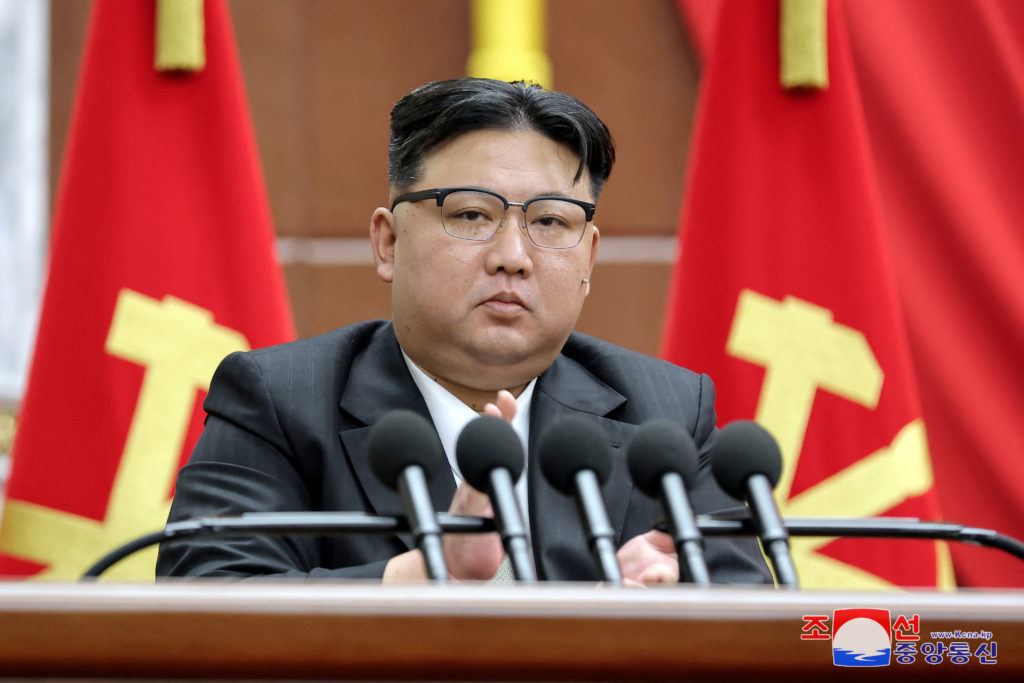
North Korea has confirmed the successful test-fire of enhanced tactical ballistic missiles equipped with cluster warheads, an event overseen directly by leader Kim Jong Un. The missile exercise occurred on April 19, and involved five “Hwasongpho-11 Ra” surface-to-surface missiles hitting a designated target approximately 136 kilometres away.

Reports from the Korean Central News Agency (KCNA) indicate that the test was detected by international monitoring systems. However, there were differing initial assessments regarding the launch locations. While North Korean sources reported that the missiles were land-based, observers from Japan and South Korea noted that several short-range projectiles appeared to originate from the coastal Sinpo region.

The South Korean military suggested that there was a possibility these weapons could have been launched from submarines, given the geographical context of the area. This test highlights North Korea’s ongoing commitment to advancing its military capabilities.

Objectives of the Missile Test

According to details released by Kyodo News, the main objective of the missile tests was to ascertain the capabilities of the cluster bomb warhead and fragmentation mine warhead incorporated into the tactical ballistic missile. This follows an earlier test earlier in April when North Korea announced the successful evaluation of a “Hwasongpho-11 Ka” ballistic missile fitted with a cluster warhead.

These continued missile launches represent a strategic initiative by North Korea to enhance its short-range arsenal, particularly with the controversial use of submunitions. The functionality of these types of munitions, which are designed to scatter smaller explosive devices over wide areas, has drawn concerns due to the risks of unexploded ordnance remaining in affected locations.

North Korea’s ongoing testing of such weapons occurs against the backdrop of international norms, as the nation is not a signatory to the “Convention on Cluster Munitions”. This treaty prohibits the production, use, transfer, and stockpiling of cluster munitions, a position held by over 120 countries while several major powers, including North Korea, Iran, Israel, and the United States, remain outside the agreement.

Wider Military Strategy of North Korea

The development of these advanced munitions forms part of a larger strategy to modernise North Korea’s military capabilities. This push has considerably intensified following the breakdown of nuclear negotiations between Kim Jong Un and US President Donald Trump in 2019.

Since that diplomatic impasse, North Korea has concentrated its efforts on acquiring more sophisticated military technology. This includes multi-warhead nuclear missiles, hypersonic projectiles, and submarine-launched ballistic missiles, all indicative of a focused initiative to advance military effectiveness.

Analysts view the adoption of these technologies as a deliberate strategy to overwhelm the missile Defence systems operated by the United States and South Korea. The developments signify an escalating regional tension, as North Korea seeks to solidify its military position through enhanced capabilities and an expanding arsenal.

Long or Short, get news the way you like. No ads. No redirections. Download Newspin and Stay Alert, The CSR Journal Mobile app, for fast, crisp, clean updates!

App Store –  https://apps.apple.com/in/app/newspin/id6746449540 

Google Play Store – https://play.google.com/store/apps/details?id=com.inventifweb.newspin&pcampaignid=web_share

Latest News

Popular Videos
