


Nasa Astronaut Captures Grand Canyon from Space, Reveals Complex Landscape
The CSR Journal Magazine

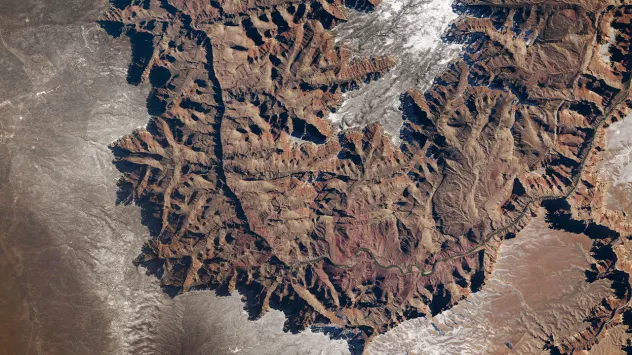
Nasa astronaut Jessica Meir has shared remarkable photographs of the Grand Canyon taken from the International Space Station (ISS), showcasing the landscape’s intricate features. The images, which circulated widely on social media, depict a network of ridges, tributaries, and distinct rock formations. This breathtaking view highlights the canyon in colours ranging from rust to gold, drawing comparisons to a vast system of nerves across the Earth’s surface.

Scientific Significance of Orbital Views

The Grand Canyon, shaped over millions of years by the Colorado River, spans approximately 446 kilometres in northern Arizona and reaches depths exceeding 1.8 kilometres in certain areas. While the canyon attracts millions of visitors annually at ground level, observations from space reveal geological patterns and textures that are often overlooked. Such high-resolution imagery is not only visually stunning but also invaluable for scientific research.

Researchers utilise these images to investigate various environmental phenomena, including erosion, sediment transport, vegetation distribution, and the ongoing effects of climate change on delicate ecosystems. The perspective provided from orbit allows scientists to view and analyse these patterns in ways that are impossible from the ground, thereby enhancing our understanding of the Earth’s dynamic processes.

Meir, known for capturing striking images of Earth, describes the Grand Canyon as one of the most astonishing sights observable from space. This portrayal illustrates how landscapes might seem dramatically altered when viewed from an aerial perspective, prompting a different appreciation of their complexity.

Public Engagement through Earth Observation

The images from Meir have sparked considerable interest, with many online viewers drawing parallels between the canyon’s formations and biological structures such as blood vessels or neural pathways. This response underscores the public’s fascination with how Earth not only exhibits visual beauty but functions as a living system continuously shaped by various natural forces, including water and atmospheric conditions.

Nasa regularly engages astronauts aboard the ISS in photography as part of their Earth observation initiatives. These efforts serve to inform scientific monitoring while simultaneously connecting the public to the planet’s natural wonders. The imagery produced often changes how familiar landmarks are perceived, transforming deserts into abstract art and giving rivers and mountain ranges distinctive characteristics that challenge conventional views.

As the prevalence of space-based imagery increases, the potential for reshaping public perceptions of Earth grows as well. Astronauts like Meir play a crucial role in providing a vantage point that enhances appreciation for the planet’s fragility and beauty. The insights drawn from these orbital perspectives contribute to a broader understanding of the geological and ecological challenges we face today.

Conclusion on Earth’s Dynamic Landscapes

The Grand Canyon serves as a prime example of how geological formations can be viewed from an entirely new perspective when seen from orbit. The recent photographs captured by astronaut Jessica Meir not only highlight the majestic beauty of this natural wonder but also reaffirm the importance of monitoring and understanding Earth’s ever-changing landscapes. As advancements in technology continue, insights from space are likely to deepen our relationship with the world around us.

Long or Short, get news the way you like. No ads. No redirections. Download Newspin and Stay Alert, The CSR Journal Mobile app, for fast, crisp, clean updates!

App Store –  https://apps.apple.com/in/app/newspin/id6746449540 

Google Play Store – https://play.google.com/store/apps/details?id=com.inventifweb.newspin&pcampaignid=web_share

Latest News

Popular Videos
