


Monsoon Arrival in Delhi Delayed This Year
The CSR Journal Magazine

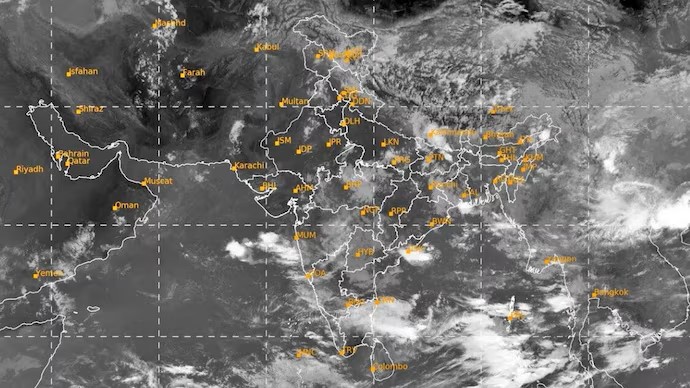
The anticipated arrival of the monsoon in Delhi has been delayed this year. By June 27, the city typically experiences wet weather, but instead, clear blue skies and persistent heat prevailed. This date is established as the average onset of the monsoon, according to the India Meteorological Department (IMD), which has tracked these patterns for several decades. In contrast, last year, the monsoon arrived only two days late, on June 29.

As of now, the monsoon has not yet appeared across significant portions of northern, western, and central India. The lack of rain has left residents in search of much-needed relief from the continuing heat.

Factors Contributing to the Delay

The southwest monsoon does not advance uniformly; instead, it travels in pulses guided by a monsoon trough, a lengthy belt of low pressure that extends across India. This trough is typically pulled northward by low pressure systems emerging over the warm waters of the Bay of Bengal, which help to draw moist air inland. However, these systems have reportedly been absent this year, leading to the trough remaining anchored to the south.

As a result, dry and warm winds from the deserts of Pakistan and West Asia have dominated the weather in northwest India. These descending winds suppress the rising air needed for raincloud formation, resulting in persistent clear skies and unrelenting heat for the region.

Wider Climate Influences on Monsoon Patterns

A more extensive climatic phenomenon is impacting the local weather scenario. The IMD has indicated the development of El Niño conditions in the Pacific Ocean. El Niño refers to the unusual warming of surface waters in the central and eastern Pacific, which can alter wind patterns across the tropics. This alteration tends to weaken the cross-equatorial flow, which is critical for the moisture-laden southwest monsoon that reaches India.

With the cross-equatorial flow weakened, less moisture is transported to India, resulting in drier conditions. Historical data suggest that years characterised by El Niño often experience below-normal rainfall during the monsoon season.

The IMD anticipates that rainfall from June to September may be approximately 90 per cent of the Long Period Average, a fifty-year reference point for a normal monsoon. Any figure below 96 per cent is considered below normal. Compounding the situation, the Madden Julian Oscillation—a weather phenomenon affecting rainfall—has been in a phase unfavourable for precipitation in India, while the Indian Ocean Dipole is currently neutral.

Future Rainfall Prospects for Delhi

Despite the adverse conditions, there is hope for imminent rainfall in Delhi. The IMD forecasts that favourable conditions will soon enable the monsoon to advance into Gujarat, Madhya Pradesh, Uttar Pradesh, and Uttarakhand. Forecasters are closely monitoring the Bay of Bengal, where a new low pressure area is expected to develop, potentially nudging the trough northward.

If these conditions materialise as predicted, Delhi could experience its first substantial monsoon showers during the first week of July. While this arrival would be late, it would provide the much-needed relief that the parched city has been awaiting.

Long or Short, get news the way you like. No ads. No redirections. Download Newspin and Stay Alert, The CSR Journal Mobile app, for fast, crisp, clean updates!

App Store –  https://apps.apple.com/in/app/newspin/id6746449540 

Google Play Store – https://play.google.com/store/apps/details?id=com.inventifweb.newspin&pcampaignid=web_share

Latest News

Popular Videos
