


Isro’s Bahubali LVM3 Rocket Falls Back to Earth Safely After Nine Months in Space
The CSR Journal Magazine

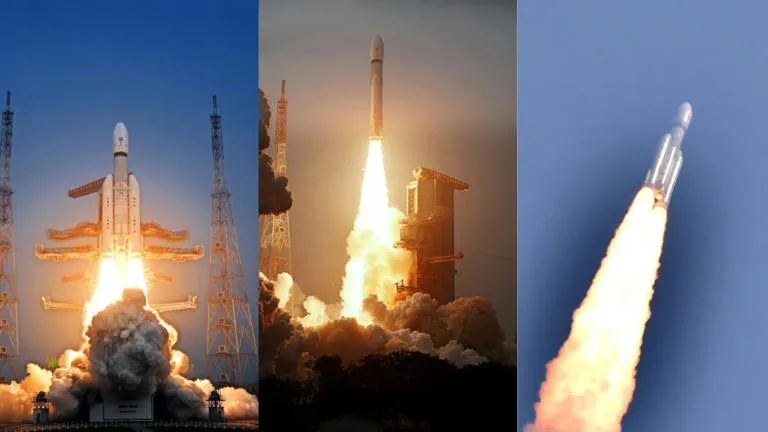
The discarded C25 upper stage of India’s LVM3 rocket has re-entered Earth’s atmosphere successfully, nearly nine months after its initial launch. This achievement, according to the Indian Space Research Organisation (Isro), demonstrates the effectiveness of mission planning in minimising space debris.

The re-entry took place on July 30, 2026, after the C25 stage spent a substantial period in orbit. Isro confirmed that the rocket had originally launched the CMS-03 communication satellite from Sriharikota on November 2, 2025, effectively placing it in its designated geostationary transfer orbit (GTO).

Upon completing its mission, the C25 upper stage was passivated to diminish the risk of an accidental breakup. It was positioned in a highly elliptical orbit inclined at 21 degrees. The US Space Command tracked the stage, while Isro’s System for Safe and Sustainable Space Operations Management (IS4OM) monitored its trajectory as well.

Re-Entry Details and Safety Measures

Isro estimated the C25 stage would make its re-entry around 5:38 PM IST on July 30, predicting that it would fall into the Atlantic Ocean. This conclusion was reached after evaluating the stage’s orbital behaviour and calculating its descent trajectory.

As the upper stage re-entered the atmosphere, the heat generated would likely incinerate most components. However, certain parts made from high-melting-point materials, such as gas bottles, the nozzle, and tanks, were expected to survive the descent. The design aimed to ensure that any remnants would pose minimal risk.

The Multi Object Tracking Radar at Sriharikota further facilitated the tracking of the rocket stage throughout its final orbits until its descent was confirmed.

Significance in Space Debris Management

Space debris management has become a critical issue as discarded rocket stages may remain in orbit for extended periods. The actual duration can vary significantly based on the object’s orbit and launch timing, where some can linger in space for years or even decades.

In the case of the LVM3-M5 mission, Isro had estimated the C25 stage’s orbital period to be less than a year. With its actual lifespan under nine months, this outcome aligns closely with the projections made prior to the launch, showcasing effective mission planning.

This initiative is consistent with international standards, specifically the 25-year guideline for limiting the post-mission lifespan of items in low Earth orbit. Additionally, Isro has adopted more stringent standards, such as the Debris Free Space Mission requirement, which advocates for limiting the lifetime of rocket stages in dense low Earth orbit to five years, highlighting the organisation’s commitment to sustainability in space operations.

Long or Short, get news the way you like. No ads. No redirections. Download Newspin and Stay Alert, The CSR Journal Mobile app, for fast, crisp, clean updates!

App Store –  https://apps.apple.com/in/app/newspin/id6746449540 

Google Play Store – https://play.google.com/store/apps/details?id=com.inventifweb.newspin&pcampaignid=web_share

Latest News

Popular Videos
