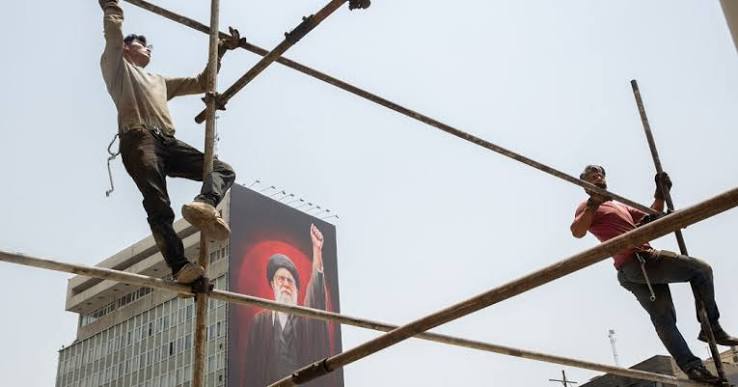
The Iranian government is preparing to conduct a multi-day funeral ceremony for Ayatollah Ali Khamenei, who was killed on February 28, amid ongoing conflict involving the United States and Israel. The ceremony will commence on Saturday in Tehran and will include a procession through various cities in Iran as well as neighbouring Iraq before concluding with his burial in Mashhad.
The mourning period was postponed until now due to the continuation of hostilities, raising questions about the regime’s capacity to mobilise significant public participation. This comes six months after a substantial security response to nationwide protests against Khamenei’s governance. Authorities are expected to encourage participation from public sector employees and paramilitary groups, aided by an interim ceasefire agreement that has fostered a sense of security for officials to appear publicly.
Khamenei led Iran for nearly four decades and his death has significant implications for the country’s political landscape. The status of his son, Ayatollah Mojtaba Khamenei, as the new Supreme Leader remains uncertain, as he reportedly sustained injuries during the same attack that claimed his father’s life and is currently believed to be in hiding.
Procession Route and Key Dates
The funeral arrangements released by officials detail a schedule that includes various key locations. Khamenei’s body will be displayed at Tehran’s Grand Mosalla over the weekend, followed by a procession through the capital on Monday. Then, it will be transported to Qom, a city known for its religious significance, on Tuesday. Subsequently, the body will move to Karbala in Iraq, where it will arrive on Wednesday, a day that also marks the anniversary of protests against Khamenei’s regime, which resulted in significant casualties.
Notably, other memorial events in Iran’s history, including the funerals of Ayatollah Ruhollah Khomeini and General Qassem Soleimani, led to tragic crowd surges. Khomeini’s burial in 1989 resulted in at least eight fatalities and significant injuries, while Soleimani’s funeral in 2020 witnessed a severe stampede that caused 56 deaths.
Political Context and Future Negotiations
The funeral occurs against the complicated backdrop of an interim agreement reached in June concerning hostilities and Iran’s nuclear programme. A 60-day period has been established for discussions aimed at achieving a lasting resolution to the conflict. Technical negotiations commenced in Qatar recently, but progress has been hampered by persistent disputes and ongoing crossfire between the US and Iranian forces.
As preparations for the funeral advance, the Iranian government is faced with managing a fragile ceasefire along with political uncertainty and heightened security measures. The situation poses significant challenges for authorities as they aim to maintain order during the mourning period while addressing broader geopolitical concerns.
The upcoming funeral processions and the associated events will not only serve as a farewell to Khamenei but also as a critical test of the current regime’s stability, uniting various aspects of social, political, and religious dimensions in Iran.
Long or Short, get news the way you like. No ads. No redirections. Download Newspin and Stay Alert, The CSR Journal Mobile app, for fast, crisp, clean updates!