


India And New Zealand Establish Strategic Partnership With Aims For NZ$7 Billion Trade By 2030
The CSR Journal Magazine

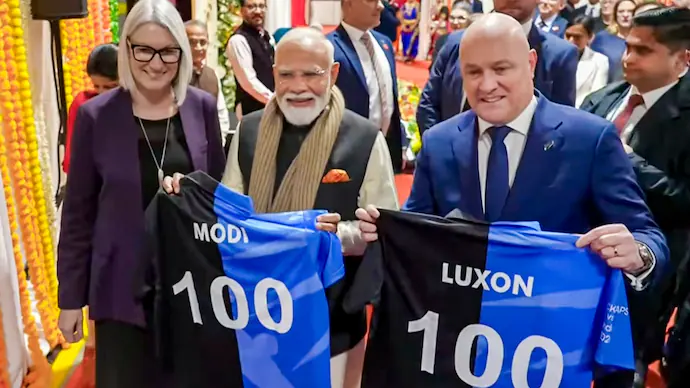
India and New Zealand have solidified their diplomatic ties by formalising a strategic partnership aimed at enhancing collaboration across various sectors. This agreement was made public on Saturday following discussions between Indian Prime Minister Narendra Modi and New Zealand Prime Minister Christopher Luxon. The partnership includes a commitment to double bilateral trade to 7 billion New Zealand dollars, approximately Rs 35,000 crore, by the year 2030.

This new alignment also emphasises cooperation in maritime security, which both nations believe is crucial for maintaining stability in the Indo-Pacific region. The announcement follows the recent ratification of the India-New Zealand Free Trade Agreement, highlighting a renewed focus on economic integration.

Key Agreements and Initiatives

The discussions resulted in 18 specific outcomes, one of which is a collaborative roadmap extending over four years to strengthen ties in various fields. A notable aspect of the agreement is the mutual commitment to enhance maritime engagement in the Indo-Pacific and to establish a maritime security dialogue.

Among the agreements reached are pacts concerning the sharing of hydrographic data and mutual naval logistics. The two countries also plan to create a joint working group dedicated to counter-terrorism efforts. Modi and Luxon expressed confidence that these initiatives will bolster strategic cooperation while addressing shared security concerns.

In the realm of sports, the leaders finalised a joint action plan covering high-performance athletics, sports science, and athlete development. The focus on sports illustrates the expanding nature of the bilateral relationship beyond traditional domains such as defence and trade.

Broader Global Concerns Addressed

The joint statement issued after the talks condemned various global challenges, including the ongoing tensions in West Asia and the conflict in Ukraine. Modi and Luxon expressed concern over the escalation of violence in West Asia and urged all parties involved to exercise restraint and protect civilians. They also agreed on the necessity of restoring freedom of navigation through crucial maritime routes.

The discussion extended to the ongoing war in Ukraine, with both leaders condemning the humanitarian impact and global ramifications stemming from the conflict. The importance of dialogue and adherence to international law was repeatedly emphasised as essential for achieving lasting peace.

Additionally, both leaders reaffirmed their zero-tolerance stance towards terrorism, unequivocally condemning specific recent attacks in India. They underlined the importance of disrupting terrorist financing and safe havens. The call for effective reforms of the United Nations was also a focal point of the discussions, with New Zealand reaffirming support for India’s bid for a permanent seat on an expanded UN Security Council.

Conclusion of Modi’s Three-Nation Tour

The formal announcements in Auckland marked the conclusion of Modi’s three-nation tour, where he also engaged with leaders from Indonesia and Australia. The strategic partnership with New Zealand underscores a broader agenda aimed at addressing contemporary global issues while enhancing mutual economic interests.

This partnership lays the groundwork for more effective collaboration in various critical areas, thus signifying a strong commitment from both nations to foster peace, stability, and economic growth in the Indo-Pacific and beyond.

Long or Short, get news the way you like. No ads. No redirections. Download Newspin and Stay Alert, The CSR Journal Mobile app, for fast, crisp, clean updates!

App Store –  https://apps.apple.com/in/app/newspin/id6746449540 

Google Play Store – https://play.google.com/store/apps/details?id=com.inventifweb.newspin&pcampaignid=web_share

Latest News

Popular Videos
