


Greenland Lost 105 Billion Tonnes of Ice Due to Darkening Surface Accelerating Melting
The CSR Journal Magazine

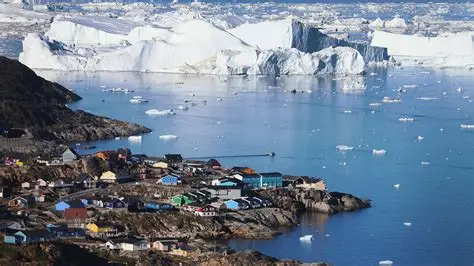
Recent studies indicate that Greenland has experienced a substantial loss of ice, amounting to approximately 105 billion tonnes. This phenomenon is believed to be primarily linked to changes in the surface albedo, which refers to the reflectivity of a surface. As the ice sheet absorbs more solar energy due to its darkening surface, the accelerated melting phenomenon has become increasingly pronounced.

Experts have highlighted that the darkening of Greenland’s ice is attributed to various factors, including the presence of soot and dust particles settling on the ice. These changes not only affect the ice sheets’ stability but also have significant implications for global sea levels. It is estimated that this magnitude of ice loss has the potential to contribute to rising sea levels, affecting coastal regions worldwide.

Impacts of Climate Change

The accelerating melting of Greenland’s ice is directly linked to broader climate change trends, a situation that has garnered the attention of scientists globally. Climate models suggest that the ongoing rise in global temperatures will continue to exacerbate these issues, further destabilising the ice sheets. As per studies, projections indicate that without significant changes in greenhouse gas emissions, ice loss could accelerate dramatically in the coming decades.

This alarming trend poses serious challenges for both environmental and socio-economic stability. Coastal communities are at increased risk due to the resultant rise in sea levels, which could potentially lead to displacement and economic instability for millions of people. The findings urge immediate action to address climate change and mitigate its impacts on vulnerable regions.

The continuing investigation into Greenland’s ice loss underscores the urgency needed for global collaboration to combat climate change. Researchers are appealing for heightened awareness and policy shifts that prioritise sustainable practices and emissions reduction strategies. The future of the ice sheets may depend on collective efforts to tackle the root causes of climate change.

Future Research Directions

As the ice loss in Greenland becomes more alarming, researchers assert the necessity for further investigations into the dynamics of ice sheet melting. Advancements in satellite technology and climate modelling techniques are expected to yield better predictions on the future of Greenland’s ice. Understanding the underlying mechanisms driving these changes will be crucial for developing effective response strategies.

Additionally, interdisciplinary research combining climatology, oceanography, and glaciology has gained momentum. Collaborating institutions aim to gather comprehensive data on how ocean temperatures and marine currents influence ice dynamics. This information will be critical for developing predictive models that can better forecast ice loss and its consequences.

Moreover, scientists are focusing on understanding the feedback loops that may arise from the melting ice. Increased freshwater flow from the melting ice sheets may disrupt ocean currents, further impacting global climate patterns. This highlights the interconnectedness of the climate system and the necessity for a multi-faceted research approach to address the complexities posed by climate change.

Long or Short, get news the way you like. No ads. No redirections. Download Newspin and Stay Alert, The CSR Journal Mobile app, for fast, crisp, clean updates!

App Store –  https://apps.apple.com/in/app/newspin/id6746449540 

Google Play Store – https://play.google.com/store/apps/details?id=com.inventifweb.newspin&pcampaignid=web_share

Latest News

Popular Videos
