


First-Ever Photographic Record of Eurasian Lynx Captured in Sikkim
The CSR Journal Magazine

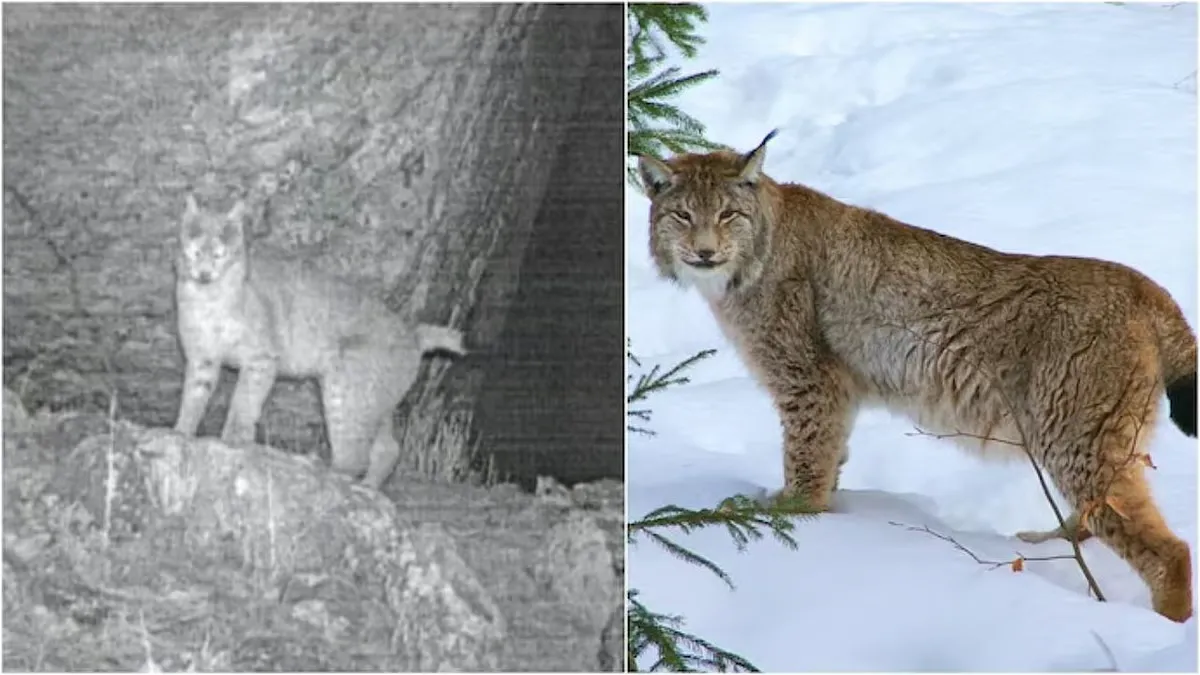
A significant discovery in wildlife conservation has emerged with the first-ever photographic documentation of a Eurasian lynx in Sikkim. This rare image, shared by Indian Forest Service (IFS) officer Parveen Kaswan on the X platform, has generated significant excitement among conservationists and wildlife enthusiasts alike. The lynx, known for its elusiveness, was photographed in the high-altitude terrain of North Sikkim, marking a noteworthy milestone for the conservation efforts in the region.

In his post, Kaswan stated, “Ghosts of the mountains do exist,” emphasising the importance of this photographic record in India’s ongoing wildlife conservation narrative. He highlighted that each new discovery serves as a reminder of the vast mysteries that nature continues to hold.

Importance of the Discovery

The image originated from a camera trap that was part of the long-term Snow Leopard and Rangeland Monitoring Programme, which is a collaborative initiative between the Sikkim Forest and Environment Department and WWF-India. The camera successfully documented the lynx on the Tso Lhamo Plateau, situated at an altitude of approximately 5,250 metres.

The Eurasian lynx (Lynx lynx), recognised as the largest of the four lynx species found across Europe and Asia, is distinguished by its characteristic tufted ears, thick spotted fur, broad paws, and short tail. This solitary predator typically resides in remote forests, alpine meadows, and rugged mountain ranges, thus making its sightings extremely rare and noteworthy. The recent photograph furthers the understanding of this elusive species within the region.

Historically, the presence of the Eurasian lynx in India has been limited to select high-altitude areas in the Himalayas, including portions of Ladakh and Himachal Pradesh, and now Sikkim. Due to their secretive nature and the challenging terrains they inhabit, researchers depend heavily on camera traps to study their populations and distribution patterns.

Community Response and Implications for Conservation

The social media post showcasing the Eurasian lynx has garnered widespread admiration, with users praising the documentation and acknowledging the dedication of forest officials and conservationists involved in protecting the species. Many comments reflected on the significance of revealing the hidden wildlife thriving in India’s remote mountainous ecosystems and called attention to the ongoing complexities of conservation and scientific monitoring needed to safeguard these fragile environments.

Such discoveries reinforce the necessity of continuous efforts to preserve biodiversity and maintain ecological balance within these unique habitats. The involvement of various organisations and local communities is crucial to ensure that similar milestones can be achieved in the future.

In conclusion, the sighting of the Eurasian lynx in Sikkim represents a pivotal moment for wildlife conservation in India. As researchers gather more data on this elusive species, it becomes clearer how important it is to protect not just the lynx, but the entire ecosystem in which it resides.

Long or Short, get news the way you like. No ads. No redirections. Download Newspin and Stay Alert, The CSR Journal Mobile app, for fast, crisp, clean updates!

App Store –  https://apps.apple.com/in/app/newspin/id6746449540 

Google Play Store – https://play.google.com/store/apps/details?id=com.inventifweb.newspin&pcampaignid=web_share

Latest News

Popular Videos
