


Europe’s Heatwave Accelerates Melting Of Switzerland’s Glaciers
The CSR Journal Magazine

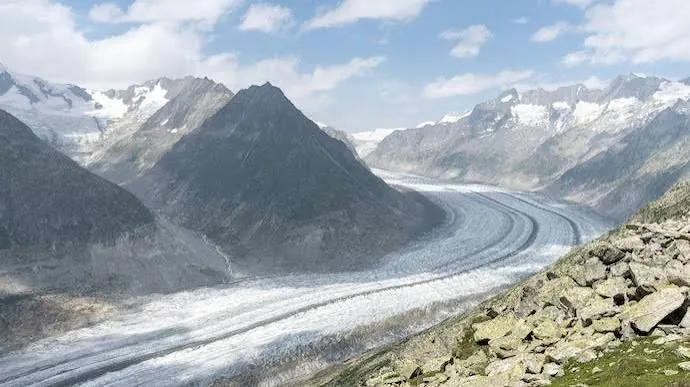
Europe’s ongoing heatwave is significantly affecting Switzerland’s glaciers, leading to alarming predictions from scientists. They have noted that the usual snow cover, which serves as a protective layer during winter, could vanish by the end of Monday, nearly six weeks earlier than the typical timeline. This rapid melting indicates a concerning shift in climatic patterns.

According to Glacier Monitoring Switzerland (GLAMOS), the present state of the glaciers shows a remarkably thin snow layer, exposing the underlying ice to increased solar radiation much earlier in the season than usually observed. Typically, this kind of exposure is expected around mid-August; thus, reaching this stage by the end of June raises severe concerns regarding accelerating climate change.

Various European nations are currently grappling with soaring temperatures, exceeding 40 degrees Celsius, which is straining public health systems, agriculture, transport networks, and energy supplies. As scientists assert, human-driven climate change is contributing to more frequent, enduring, and intense heatwaves.

Impact on Glacier Conditions

Report from GLAMOS revealed that the winter snowfall for 2025-26 was approximately 25 per cent lower than the average recorded from 2010 to 2020, marking it as one of the least snowy winters in the last two decades. Surveys across 25 glaciers during April and May indicated that snow depths fell notably short of the normal levels across much of the Swiss Alps.

The most significant deficits were observed in southeastern Switzerland, especially in the Engadin region. Notable glaciers, such as Pers and Murtel, recorded their lowest winter snow accumulations in history. Major glaciers like Grosser Aletsch, Rhone, and Silvretta have also reported snow levels that are among the lowest since 2000.

The protective winter snow layer is crucial for shielding glacier ice from the summer sun. When this layer is removed, the darker glacier ice beneath absorbs significantly more solar energy, accelerating the melting process dramatically.

Factors Exacerbating Glacier Melting

This year, conditions have been worsened by an unusually warm and dry spring. Although February and March saw some snowfall that temporarily improved conditions in certain areas, the unseasonably warm weather in April halted further snow accumulation and triggered early melting.

Additionally, dust transported from the Sahara Desert has darkened the snow surfaces, diminishing their reflectivity, which exacerbates heat absorption. This situation further hastens the melting of the glaciers.

If high temperatures persist throughout the summer months, scientists warn that Switzerland may experience another year marked by significant glacier mass loss, reminiscent of the record declines witnessed in 2022 and 2023. The swift retreat of Alpine glaciers highlights the urgent global climate crisis, emphasizing the necessity for immediate action.

Under the Paris Agreement, nations worldwide have pledged to reduce greenhouse gas emissions and adapt to the ongoing impacts of climate change. However, experts contend that current measures are insufficient to prevent further global warming. For Switzerland, well-known for its iconic, snow-capped Alps, the rapid disappearance of its glaciers serves as a stark reminder of the immediate consequences of climate change on landscapes that have existed for millennia.

Long or Short, get news the way you like. No ads. No redirections. Download Newspin and Stay Alert, The CSR Journal Mobile app, for fast, crisp, clean updates!

App Store –  https://apps.apple.com/in/app/newspin/id6746449540 

Google Play Store – https://play.google.com/store/apps/details?id=com.inventifweb.newspin&pcampaignid=web_share

Latest News

Popular Videos
