


Delhi Air Quality Hits Four-Year High for Early October as AQI Reaches 166
The CSR Journal Magazine

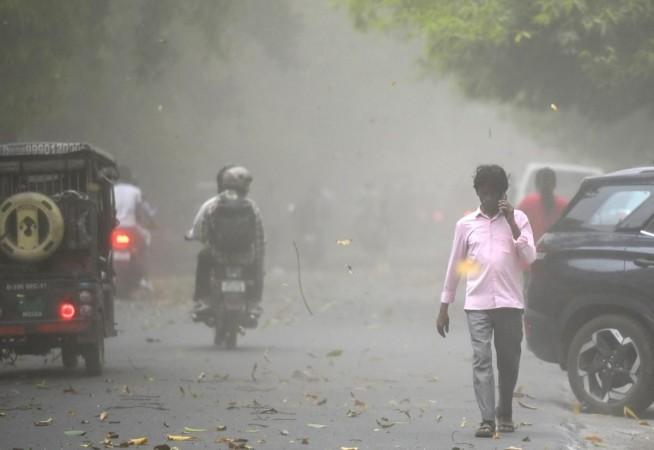
Delhi has recorded its most polluted start to October in four years, with the Air Quality Index (AQI) reaching 166 on Thursday, indicating a shift to the ‘moderate’ category. Official data reveals that this marks a decline in air quality compared to previous years, as the AQI was slightly higher at 186 on October 1, 2022. According to the Centre for Research on Energy and Clean Air, this recent figure highlights ongoing air quality concerns within the national capital.

Forecasts indicate that Delhi’s air quality is anticipated to remain within the ‘moderate’ category from October 2 to 4, and may transition between ‘moderate’ and ‘satisfactory’ levels over the subsequent six days. This information is crucial for residents, particularly those with respiratory issues, as it signals potential fluctuations in air quality during the early days of the month.

Data from the Central Pollution Control Board (CPCB) illustrated that of the 44 monitoring stations across Delhi, 37 reported air quality classified as ‘moderate’, while five stations fell into the ‘poor’ category. Two stations registered the air quality as ‘satisfactory’. Such a distribution underscores the varied levels of pollution across different areas of the city.

Pollution Sources and Dispersion Challenges

The Air Quality Early Warning System provides insights into pollution dispersion conditions, noting that a ventilation index below 6,000 square metres per second, coupled with an average wind speed of less than 10 km/h, hampers the dispersal of pollutants. This scenario enhances the likelihood of pollutant accumulation near the ground, further compounding air quality issues in the city.

Additionally, the Indian Agricultural Research Institute reported 23 instances of stubble burning on that same day, with four incidents noted in Punjab, five in Uttar Pradesh, and 14 in Madhya Pradesh. From September 15 to October 1, there were a total of 137 farm-fire occurrences documented, including one reported case in Delhi on September 19. These agricultural practices have been linked to seasonal spikes in air pollution levels in the region.

Weather Conditions and Temperature Insights

On October 1, Safdarjung, Delhi’s main weather station, recorded a maximum temperature of 35.2 degrees Celsius, which is 0.5 degrees above the seasonal average. Other regions in Delhi reported varied temperatures, with Palam registering a high of 33.5 degrees Celsius, 1.6 degrees below normal, while Lodi Road saw 35.3 degrees Celsius, 2.3 degrees above normal.

The lowest temperatures on that day included Safdarjung at 24 degrees Celsius, 0.7 degrees above normal, and Palam at 22 degrees Celsius, 1.5 degrees below normal. The Ridge reported a minimum of 19.6 degrees Celsius, which is 3.3 degrees below normal, illustrating the fluctuation in temperature degrees across different areas of the city.

Looking ahead, the weather department has predicted mainly clear skies for Friday, with a minimum temperature expected to settle around 23 degrees Celsius and a maximum forecasted at 34 degrees Celsius. This suggests that while air quality may remain a concern, weather conditions might not contribute additional complications.

Long or Short, get news the way you like. No ads. No redirections. Download Newspin and Stay Alert, The CSR Journal Mobile app, for fast, crisp, clean updates!

App Store –  https://apps.apple.com/in/app/newspin/id6746449540 

Google Play Store – https://play.google.com/store/apps/details?id=com.inventifweb.newspin&pcampaignid=web_share

Latest News

Popular Videos
