


Supreme Court Calls for Practical Firecracker Regulation in Delhi-NCR
The CSR Journal Magazine

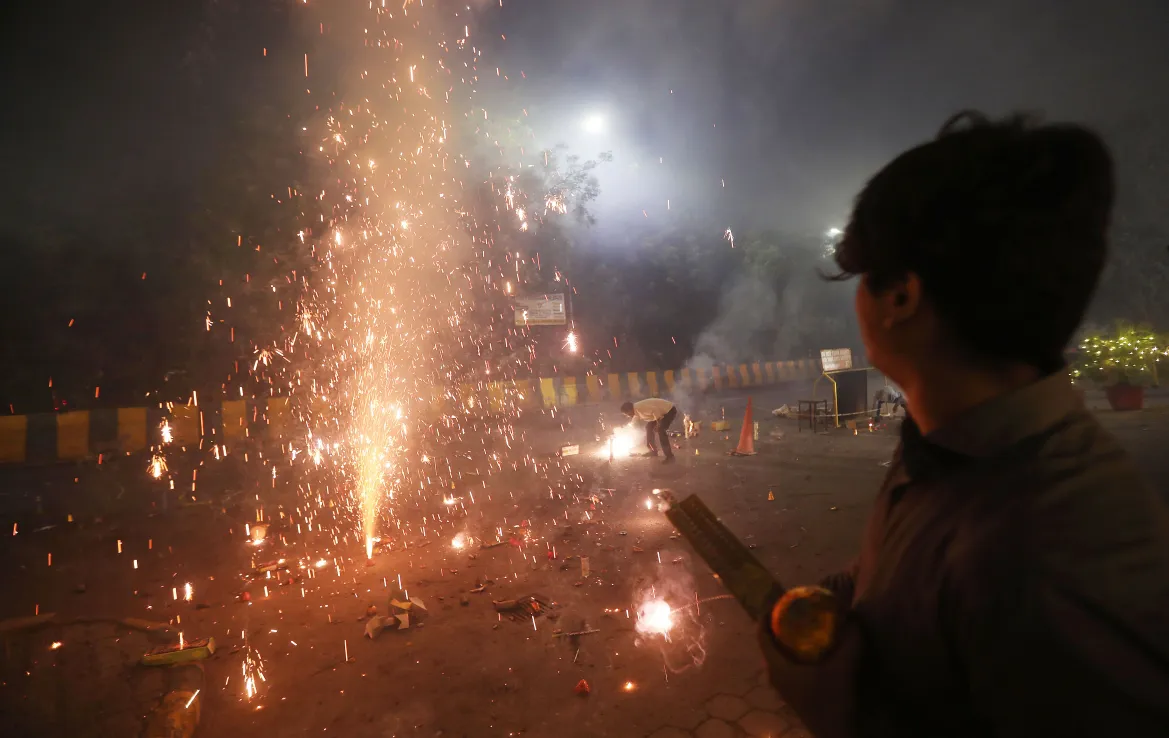
The Supreme Court is advocating for a “pragmatic and practical” approach to the regulation of firecrackers. On Monday, a bench led by Chief Justice Surya Kant acknowledged the importance of respecting religious sentiments while cautioning that a restrictive order could be perceived as coercive. This discussion links the ongoing case in Delhi-NCR to a national case overseen by Justice MM Sundresh, whose bench recently permitted the use of “next-generation” laris (string fireworks) across India on September 30. Both cases are scheduled for a hearing on October 15.

Concerns Raised by Amicus Curiae

During the proceedings, senior advocate and amicus curiae Aparajita Singh raised significant concerns regarding the enforcement of firecracker regulations. She remarked that while it may be easy to suggest limiting the use of firecrackers to a two-hour window, the reality is that it is impractical for law enforcement to monitor every street. Singh urged the bench to consider a report from the Commission for Air Quality Management (CAQM) on this issue, highlighting the challenges faced in managing firecracker usage.

Last year’s events serve as a cautionary tale. In October 2022, the court allowed the use of green crackers in Delhi-NCR for three days, restricted to specific hours. However, conventional firecrackers were still sold openly alongside boxes marked as “green,” often without any certification. Licensed manufacturers were found selling QR codes intended to verify the authenticity of their products, while Delhi lacked the necessary laboratories to conduct testing on these items.

Despite weather conditions that typically help reduce pollution, the capital recorded its highest pollution levels during Diwali since 2021. Effective enforcement must begin at the point of production and distribution, as firecrackers typically pass through factories, wholesalers, and licensed retailers before reaching consumers. At each stage, the state has the opportunity to conduct sampling, seal stock, and revoke licenses if necessary.

Challenges in Enforcement and Supply Chain Issues

Once firecrackers are in the hands of consumers, enforcement relies heavily on individual police officers patrolling specific streets, which, as Singh pointed out, is an unrealistic expectation. The supply chain has previously shown vulnerabilities, with QR codes being resold and firecrackers being smuggled from outside the region. Addressing these issues requires the establishment of testing laboratories, which are currently lacking in Delhi, as well as consistent inspections.

The court is urged to ensure that before allowing any additional firecracker sales, it must focus on enforceable measures rather than vague reassurances regarding religious sentiments. The CAQM’s report should outline what the state can realistically enforce, including the number of samples it can test prior to Diwali, the number of shops it can inspect, and the actions it will take against counterfeit products.

A regulatory framework that places the burden of policing on individual households has not succeeded in maintaining breathable air quality in Delhi in the past, and there is little reason to expect different outcomes now. If the state cannot verify the authenticity of a firecracker prior to its sale, regardless of how misleading the term “green” may be, it should not be permitted for sale.

Long or Short, get news the way you like. No ads. No redirections. Download Newspin and Stay Alert, The CSR Journal Mobile app, for fast, crisp, clean updates!

App Store – https://apps.apple.com/in/app/newspin/id6746449540

Google Play Store – https://play.google.com/store/apps/details?id=com.inventifweb.newspin&pcampaignid=web_share

Latest News

Popular Videos
