


Trump Proposed Renaming the Atlantic Ocean, but Pichai Reportedly Refused
The CSR Journal Magazine

Trump’s Proposal at South Carolina Rally

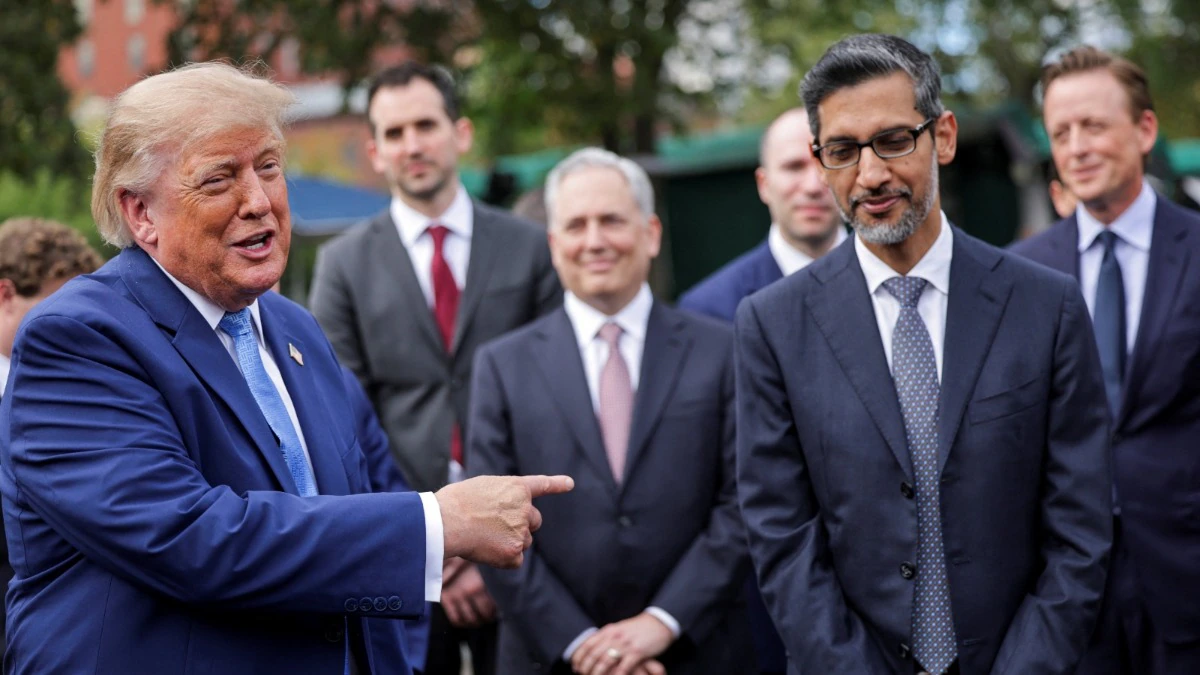
US President Donald Trump has revealed that he suggested renaming the Atlantic Ocean after himself or the United States, but this idea was rejected by Google CEO Sundar Pichai. During a campaign rally held in South Carolina on Wednesday, October 21, Trump shared details of a conversation he had with Pichai regarding the potential renaming of one of the world’s largest oceans.

Trump stated, “I’m not gonna put either Trump or America on any other ocean, but these two,” referring specifically to the Atlantic and Pacific Oceans. He expressed admiration for Pichai and Google co-founder Sergey Brin, calling them “totally brilliant guys.” This praise came despite Trump’s previous criticisms of Pichai.

In recounting his discussion with Pichai, Trump claimed he inquired whether Google could facilitate the renaming of the Atlantic Ocean. He recalled Pichai’s response as a firm refusal, stating, “No, no, no, this time I’m not doing it.” According to Trump, Pichai elaborated that oceans are distinct from other geographical features due to their expansive nature, covering multiple countries.

Context of Trump’s Ocean-Naming Idea

Earlier in October, Trump had first floated the idea of renaming either the Atlantic or Pacific Ocean, suggesting titles like “Trump Ocean” or “Ocean of the Americas.” He indicated that the United States required an ocean named after it and expressed a desire to implement this change before leaving office. His remarks were made in a light-hearted manner, as he joked about the possibility of naming an ocean after himself.

This proposal aligns with Trump’s previous attempts to rename geographical features. In 2025, he sought to rename the Gulf of Mexico as the Gulf of America, which led to diplomatic tensions with Mexico and a dispute with the Associated Press over the terminology used in reporting. In August 2026, Trump renamed Lake Ontario, situated between the United States and Canada, to Lake America amid trade and tariff disputes with Canadian leaders.

Following these initiatives, private mapping companies, including Google Maps, have generally adopted the new names for US users. However, these changes have not been universally recognised on an international scale, leading to ongoing discussions about the implications of such renaming efforts.

Reactions to Trump’s Comments

While Trump praised Pichai during the rally, he had previously referred to him unfavourably. On September 29, after a White House meeting with technology executives to discuss artificial intelligence safety, Trump labelled the Google CEO a “monster,” seemingly in reference to his significant influence within the tech industry. This inconsistency in Trump’s remarks has attracted attention from various media outlets.

Despite the lack of independent confirmation from Google or Pichai regarding Trump’s account of their conversation, the incident has sparked discussions about the nature of geographical naming and the role of technology companies in such processes. Trump’s comments have also reignited debates about the intersection of politics and geography.

As the conversation surrounding Trump’s ocean-naming proposal continues, it remains to be seen how this will impact his political campaign and the broader discourse on geographical features in the United States. The implications of such renaming efforts are likely to be examined in the context of international relations and domestic policy.

Long or Short, get news the way you like. No ads. No redirections. Download Newspin and Stay Alert, The CSR Journal Mobile app, for fast, crisp, clean updates!

App Store – https://apps.apple.com/in/app/newspin/id6746449540

Google Play Store – https://play.google.com/store/apps/details?id=com.inventifweb.newspin&pcampaignid=web_share

Latest News

Popular Videos
