


Shabana Azmi Opens Up About Her Relationship with Faith
The CSR Journal Magazine

Background of Shabana Azmi’s Upbringing

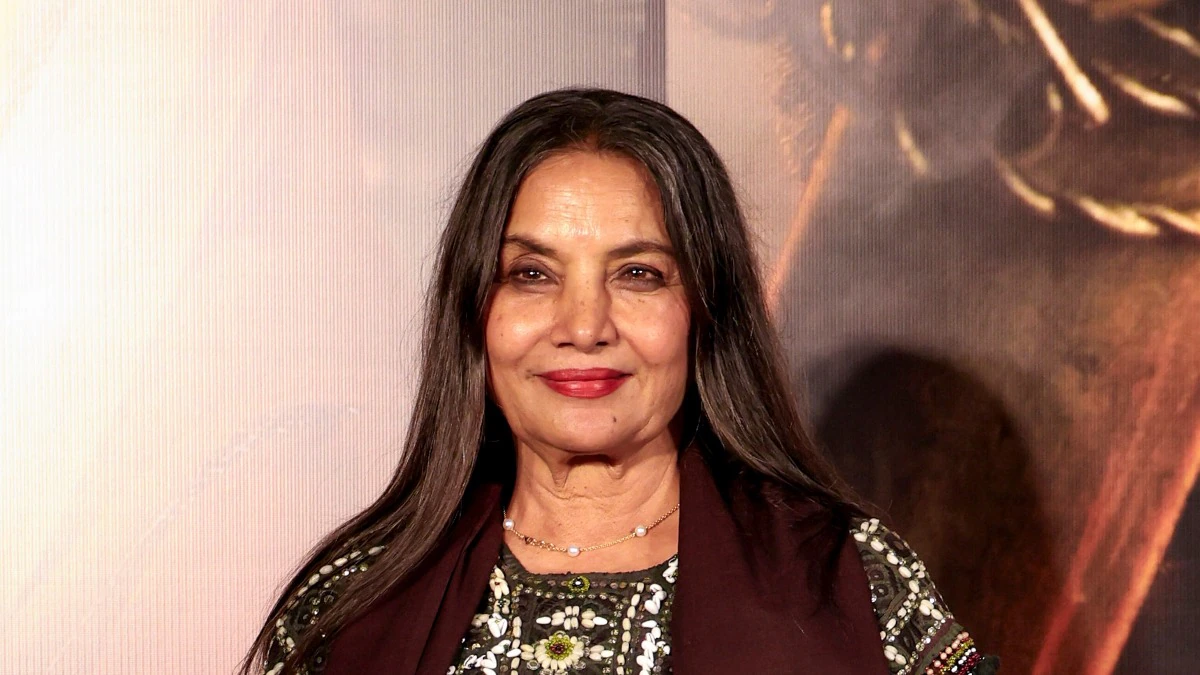
Shabana Azmi, the veteran Indian actor, has recently shared insights into her relationship with faith, shaped significantly by her upbringing. Raised in a household where her father was an atheist and her mother practiced religion casually, Azmi’s perspective on faith is both personal and nuanced. She has expressed a fondness for cultural aspects of her identity, such as Eid celebrations, the Urdu language, and traditional cuisine, while simultaneously distancing herself from formal religious practices.

In a discussion shared on IIMUN’s YouTube channel, Azmi reflected on the influence her family environment had on her beliefs. She noted that her father’s atheism and her mother’s more relaxed approach to faith created a unique dynamic that shaped her views. Azmi mentioned that while she occasionally uses phrases like ‘mashallah’ and ‘inshallah’, she does not engage in the practice of reading namaz, asserting that her relationship with religion is strictly personal.

Shabana Azmi’s Personal Beliefs

Azmi clarified her stance on her cultural identity, stating, “Yes, I am a Muslim, and I like Eid, Urdu, the food, I like all of that. But we don’t read namaz, and we have no association with religion as such.” This statement highlights her appreciation for cultural traditions without the necessity of religious adherence. She emphasised that faith should be a private matter, free from public governance or interference.

Addressing the contrasting beliefs within her marriage to veteran lyricist Javed Akhtar, Azmi described him as a “staunch atheist.” This difference in perspectives has allowed for open discussions about faith and belief systems in their household. Azmi reiterated the importance of personal freedom in matters of faith, stating that individuals should be free to pray if it brings them comfort, without any societal pressure.

Azmi’s comments also touched upon the broader social dynamics regarding secularism in India. She expressed concern that extremists from intolerant communities on both sides fail to understand her and Javed’s viewpoints. The actor highlighted that their experiences, including facing fatwas and accusations, reinforce their commitment to secular values.

Reflections on Secularism and Intolerance

In her reflections on the ideological rift in society, Azmi asserted that the conflict is not merely between Hindus and Muslims, but rather a struggle between liberal and intolerant ideologies. She emphasised that both liberal Hindus and Muslims must unite against intolerance to foster a more inclusive society. By framing the discussion in this manner, Azmi believes it is possible to mitigate the divisive effects of religion.

Azmi’s commitment to secularism is evident in her desire to promote understanding and dialogue among different communities. She stated, “We need to understand that it is not a fight between Hindu and Muslim; it’s a fight between the liberals and the intolerant.” This perspective underlines her belief in the necessity of collaboration among progressive individuals, regardless of their religious backgrounds.

On a professional note, Shabana Azmi was last seen in the period drama “Batwara 1947,” directed by Rajkumar Santoshi. The film, set against the backdrop of the India-Pakistan Partition in 1947, is based on the 1989 play “Jis Lahore Nai Vekhya, O Jamya E Nai” by Asghar Wajahat. The film features a notable cast, including actors Sunny Deol, Preity Zinta, and Ali Fazal, and was released theatrically on August 14, 2026.

Long or Short, get news the way you like. No ads. No redirections. Download Newspin and Stay Alert, The CSR Journal Mobile app, for fast, crisp, clean updates!

App Store – https://apps.apple.com/in/app/newspin/id6746449540

Google Play Store – https://play.google.com/store/apps/details?id=com.inventifweb.newspin&pcampaignid=web_share

Latest News

Popular Videos
