


CENTCOM Redirects 35 Commercial Vessels Amid Ongoing US Blockade Against Iran
The CSR Journal Magazine

The US Central Command (CENTCOM) has announced that it has redirected 35 commercial vessels as part of a naval blockade against Iran, which was reintroduced last month. This action highlights the ongoing tensions in the region as CENTCOM seeks to enforce maritime security measures. The blockade comes amid escalating hostilities between the United States and Iran, following a series of confrontational exchanges between the two nations.

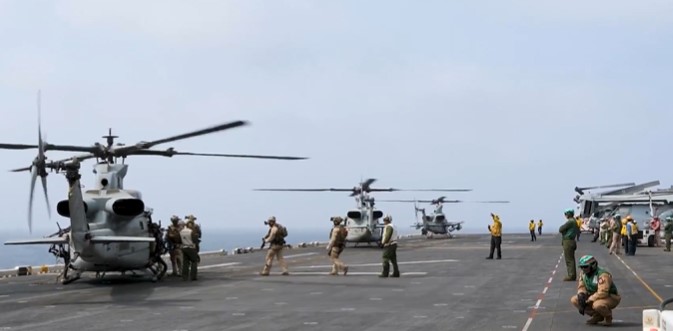
In addition to redirecting these vessels, CENTCOM has reportedly disabled two and boarded two others. The command shared an update via a post on X, illustrating its operational capabilities. A video accompanying the announcement displayed a US Marine Corps F-35C stealth fighter jet taking off from the USS Abraham Lincoln, which is currently operating in the Arabian Sea in support of the blockade.

According to CENTCOM’s statement, these actions demonstrate the US military’s commitment to maintaining security in critical shipping lanes, particularly in light of threats posed by Iranian military forces. The announcement underscores the strategic importance of the Arabian Sea and the measures taken by the US to enforce maritime law in this volatile region.

Iran Responds to US Military Actions

In response to the escalating situation, Iran’s Acting Minister of Defence and Armed Forces Support, Brigadier General Seyyed Majid Ibn al-Reza, has asserted that Tehran will regard any threats from its adversaries as serious. He previously expressed intentions to enhance military readiness in the face of ongoing confrontations. This statement indicates that Iran is preparing to bolster its deterrence capabilities in light of the ongoing tensions and US military actions.

Ibn al-Reza’s comments were relayed through Iranian state media, where he indicated that Iran perceives the statements made by the US as part of a psychological strategy. Nevertheless, he confirmed that Tehran would not ignore these threats, suggesting a cautious approach to the evolving geopolitical landscape.

Moreover, the Iranian leadership seems determined to improve its military posture amid perceived external pressures. The rhetoric suggests Tehran is not only prepared to confront challenges but is actively seeking ways to assert its influence over regional security dynamics.

Diplomatic Efforts and Ceasefire Proposals

Meanwhile, the situation has taken a complex turn as US President Donald Trump announced on August 1 that he would cancel a planned military strike against Iran. This decision appears contingent upon the potential for a swift diplomatic agreement with Tehran. Trump’s announcement reflects a broader strategy to de-escalate military tensions while preserving US interests in the region.

In his statement, Trump noted that multiple countries in West Asia had urged restraint, suggesting that negotiations were underway to resolve outstanding issues. He outlined the expectations for Iran’s compliance regarding the Strait of Hormuz, a crucial maritime chokepoint, and its nuclear programme. These conditions form the foundation of a potential deal aimed at reducing hostilities in the region.

The President’s comments emphasised that while military options remain on the table, dialogue is being prioritised. Trump insisted that the current pause in military action hinges on Iran’s willingness to engage in meaningful negotiations. He called upon all stakeholders to work collaboratively in order to formulate a binding agreement that could lead to lasting peace and stability in the region.

Long or Short, get news the way you like. No ads. No redirections. Download Newspin and Stay Alert, The CSR Journal Mobile app, for fast, crisp, clean updates!

App Store –  https://apps.apple.com/in/app/newspin/id6746449540 

Google Play Store – https://play.google.com/store/apps/details?id=com.inventifweb.newspin&pcampaignid=web_share

Latest News

Popular Videos
