


Brazil’s Supreme Court To Hear Cases That May Impact Amazon Protections
The CSR Journal Magazine

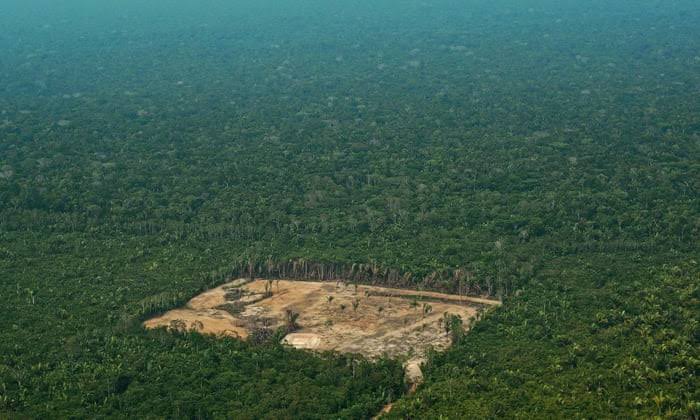
Brazil’s Supreme Court is preparing to examine multiple cases that could significantly alter the protections in place for the Amazon rainforest. These hearings come in the wake of actions taken by a predominantly conservative Congress that has overridden various environmental vetoes from President Luiz Inácio Lula da Silva.

The court’s discussions are set to commence on Wednesday, amid ongoing debates among lawmakers and environmental advocates about the balance between economic development and environmental conservation. In recent months, there appears to be a growing divide between these two factions.

One of the pivotal issues centres around a legal theory known as the “time limit” thesis, which was previously rejected in a 2025 ruling. This theory, which enjoys support from the agribusiness sector, restricts Indigenous land claims to territories that were either occupied or legally disputed when Brazil’s 1988 Constitution came into effect. Indigenous groups argue that this approach neglects the history of violence and forced removal from ancestral lands.

Deforestation and Environmental Agreements Under Review

The Supreme Court will also deliberate on Brazil’s soya moratorium, an agreement that prohibits major traders from purchasing soya produced on land that has been deforested in the Amazon since 2008. The moratorium has been credited with aiding the reduction of deforestation, even as Brazil’s agricultural sector has expanded considerably.

This year, states known for soya production have passed legislation that revokes tax incentives for companies adhering to the moratorium. The Brazilian Association of Vegetable Oil Industries (ABIOVE) consequently announced its withdrawal from the agreement. As the largest producer and top exporter of soya beans globally, Brazil’s decisions in this regard are closely observed by international stakeholders.

The Ministry of Environment and Climate Change has voiced support for the soya moratorium, emphasising its role in reducing deforestation while allowing for agricultural growth. Nonetheless, the ongoing tension between agricultural interests and environmental protection remains evident.

Controversial Environmental Licensing Law

Additionally, the Supreme Court will consider a challenge against a new environmental licensing law that was enacted in February. This legislation facilitates the expedited approval process for various projects, including those involving mining, highways, and industrial facilities.

Critics from environmental organisations warn that this law may undermine crucial safeguards in an ecosystem already facing significant threats. The law’s impact is tangible, with reports of the paving of a contentious highway and plans to dredge the Tapajós River without adequate environmental assessments.

Suely Araujo of the Climate Observatory has been vocal about the law’s implications, suggesting that it serves as a catalyst for environmental degradation within the Amazon. As these legal cases unfold, the balance between development and conservation efforts is likely to remain in the spotlight.

Long or Short, get news the way you like. No ads. No redirections. Download Newspin and Stay Alert, The CSR Journal Mobile app, for fast, crisp, clean updates!

App Store –  https://apps.apple.com/in/app/newspin/id6746449540 

Google Play Store – https://play.google.com/store/apps/details?id=com.inventifweb.newspin&pcampaignid=web_share

Latest News

Popular Videos
