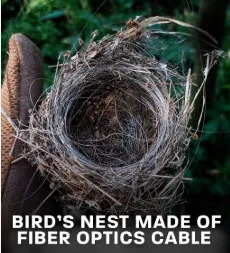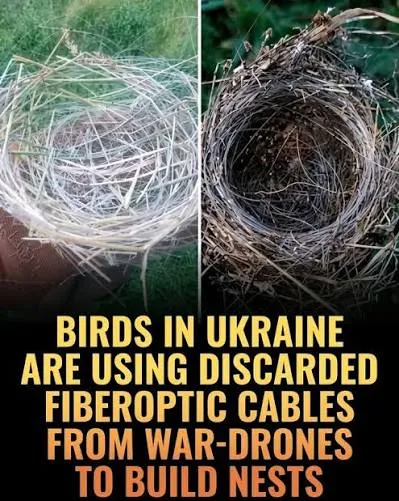

A pair of bird nests discovered close to Ukraine’s frontline provides an intriguing yet alarming insight into the effects of modern warfare on natural wildlife. These nests, unlike typical structures made from twigs and grass, incorporate fibre optic cables, which are generally utilised for guiding military drones. This finding underscores how the prolonged conflict has not only reshaped the battlefield but also drastically altered the surrounding environment.
The nests were retrieved from conflict zones by Ukrainian soldiers and have been examined by researchers at Kyiv’s War Museum. They believe these may be among the first recorded instances of birds using discarded fibre optic cables from military drones as nesting materials. One of the nests will remain in the museum’s collection for further study, while the other is slated for scientific analysis in the Netherlands before its eventual return to Ukraine.
Environmental Impact of Drones in Warfare
Since the onset of Russia’s full-scale invasion of Ukraine in February 2022, drones have become a critical tool for both sides in the conflict. To circumvent electronic jamming, many attack drones utilise thin fibre optic cables instead of traditional radio signals. These cables can extend up to 20 kilometres, trailing behind the drone during its operation. After missions are concluded, the cables are frequently left dangling from trees, strewn across fields, and hung over rooftops, particularly in contested areas like Donetsk, Kharkiv, and Zaporizhzhia.
As time has elapsed, birds have begun to collect these abandoned cables, combining them with natural materials such as dry grass to construct their nests. Researchers assert that this unusual adaptation serves as a testament to wildlife’s resilience in adjusting to the transformed landscapes brought about by conflict, despite the potential hazards these new materials might present.
The use of fibre optic cables raises concerns regarding their impact on the avian population. While the strong synthetic fibres may lead to more durable nests, there are risks of entanglement for the birds, which could result in injury to both chicks and adult birds. This highlights the complex relationship between modern warfare and wildlife, as the remnants of conflict present both opportunities and dangers.