


Amit Shah’s Four-Hour Meeting Leads to End of Sonam Wangchuk’s Hunger Strike
The CSR Journal Magazine

The four-hour meeting led by Union Home Minister Amit Shah on Thursday was pivotal in concluding activist Sonam Wangchuk’s 26-day hunger strike. The Centre decided to address Wangchuk’s concerns and prioritise his health as student protests escalated across the nation. This urgent discussion included key government officials, reflecting the seriousness of the situation.

Participants of the meeting included Union Health Minister JP Nadda and Minister of State in the Prime Minister’s Office, Jitendra Singh. The dialogue was initiated amid rising worries regarding Wangchuk’s declining health, which had become a central issue in light of ongoing protests linked to the NEET-UG paper leak.

The government ultimately resolved to adopt a constructive stance regarding Wangchuk’s requests while ensuring that his health was a primary concern. Following the meeting, Singh communicated with Wangchuk’s wife, Gitanjali Angmo, reiterating that the administration was dedicated to resolving the issues raised by the activist.

Government Ministers Engage with Wangchuk

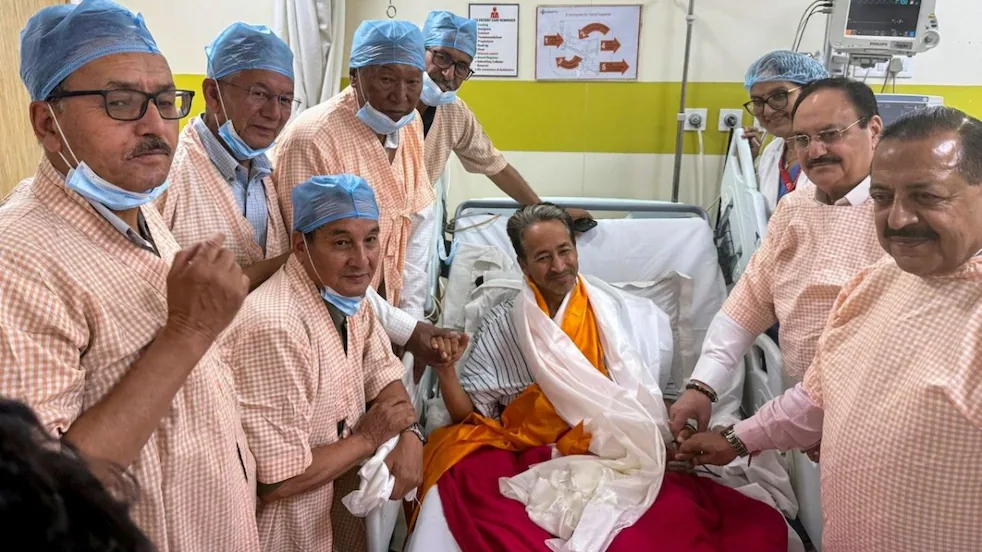
Later that day, JP Nadda and Jitendra Singh visited Wangchuk at a hospital in Gurugram. They delivered a written promise from the government directly to Wangchuk, which was seen as a significant gesture. The ministers were also present when the activist decided to end his hunger strike later that night.

During their meeting, the ministers assured Wangchuk that new legislation, aimed at strengthening measures against examination paper leaks, would soon be presented in Parliament. This new Bill is expected to receive Cabinet approval on July 24. The intention is to address the vulnerabilities in the examination process that have led to public discontent.

The Centre also signalled its willingness to engage with the Cockroach Janta Party (CJP), a group at the forefront of student protests. The government proposed discussions at a neutral location following the CJP leadership’s rejection of the offer to meet at JP Nadda’s residence, demanding that any dialogue occur at a more impartial venue.

Wangchuk Expresses Conditions for Future Engagement

Furthermore, Wangchuk noted that the government was “positively considering” compensation for families of students who reportedly took their own lives in connection with the examination controversy. The commitments made to him signalled a potential shift in the administration’s approach to addressing the concerns of the protesting student community.

Expressing his desire to return to Ladakh after his recovery, Wangchuk also urged the government to engage constructively with students and supporters of the movement. He emphasised the importance of maintaining faith in the Centre’s pledges and ensuring that the protests remained peaceful during ongoing discussions.

Wangchuk committed to continuing his advocacy for dialogue and emphasised the need for vigilance against possible disruptions from anti-social elements. He called for patience from the protestors as the situation with the government progressed, reflecting a desire for a constructive pathway forward.

Long or Short, get news the way you like. No ads. No redirections. Download Newspin and Stay Alert, The CSR Journal Mobile app, for fast, crisp, clean updates!

App Store –  https://apps.apple.com/in/app/newspin/id6746449540 

Google Play Store – https://play.google.com/store/apps/details?id=com.inventifweb.newspin&pcampaignid=web_share

Latest News

Popular Videos
