


What are the Warning Signs of a Landslide? How to Understand Possibility of Landslide in an Area?
The CSR Journal Magazine

Landslides represent a significant natural hazard that can occur unexpectedly. They may transpire suddenly or manifest over a period, particularly following substantial rainfall or seismic activity. Individuals residing near hills, mountains, or steep inclines should be aware of the potential signs of a landslide, which are just as critical as monitoring weather conditions.

Subtle changes in the environment surrounding one’s home or community can serve as early indicators that the ground may be losing stability. Early detection and swift action can help mitigate risks to individuals, properties, and infrastructure.

Causes of Landslides

A landslide occurs when soil, rock, or debris descends downhill due to various triggers. Heavy rainfall is the leading factor, as it can saturate the soil and diminish its strength. Other contributors include seismic events, volcanic activity, natural erosion, and human actions like hillside excavation or inadequate drainage systems.

Moreover, climate change is projected to heighten the likelihood of landslides in specific regions as more intense rainfall patterns become prevalent. As these climatic shifts intensify, they exacerbate the inherent vulnerabilities of certain landscapes.

Areas with loose materials, weak geological structures, or documented histories of landslides face particularly heightened risks. Even slopes that have been stable for extended periods can suddenly become perilous under specific conditions.

Identifying Warning Signs

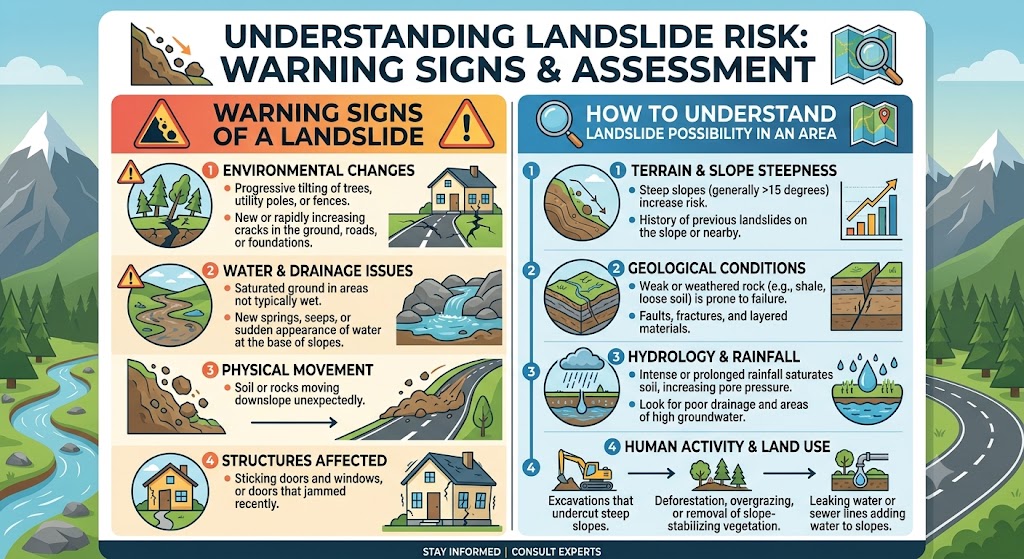
Several warning signs can precede a landslide, signalling potential ground instability. Residents should look for new cracks in the earth, roads, or walls, as well as leaning trees, tilted utility poles, and fences. Additionally, if doors or windows are unexpectedly hard to open, this may indicate shifting ground.

Unexpected water accumulation in areas where it typically does not appear, alterations in stream levels, or signs of broken underground pipes can also suggest that the ground may be moving. In some cases, unnatural sounds such as cracking timber, shifting rocks, or deep rumblings should not be disregarded as they may indicate imminent danger.

Individuals living on or beneath steep gradients are at greater risk, particularly during or after extended periods of rainfall. It is crucial for those in such locations to remain vigilant, especially in regions known for loose soil or unstable rock formations.

Safety Recommendations

In the event that multiple warning signs are observed, or if a landslide appears to be occurring, it is essential to vacate the area without delay if safe to do so and notify local authorities of the situation. During periods of heavy rain, individuals should avoid areas prone to flooding, such as river channels and steep inclines.

If signs of ground movement are noted on one’s property consistently, it is advisable to have the area evaluated by a qualified geologist or structural engineer. Staying informed about local weather updates and remaining alert during storms can significantly lower the risk associated with potential landslides.

Preparedness and awareness can play a key role in safeguarding lives and property. Understanding the dynamics of landslides and implementing necessary precautions can help mitigate potential hazards for at-risk individuals.

Long or Short, get news the way you like. No ads. No redirections. Download Newspin and Stay Alert, The CSR Journal Mobile app, for fast, crisp, clean updates!

App Store –  https://apps.apple.com/in/app/newspin/id6746449540 

Google Play Store – https://play.google.com/store/apps/details?id=com.inventifweb.newspin&pcampaignid=web_share

Latest News

Popular Videos
