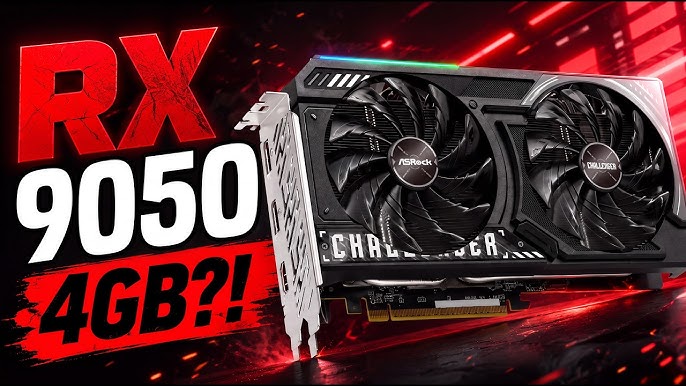
The news that AMD is set to introduce the Radeon RX 9050 with a 4GB variant is capturing attention in the gaming community. This move marks a significant shift, as modern graphics cards have not featured such a low memory option for several years. Reports indicate that this decision may be linked to the ongoing memory shortages affecting the industry.
Industry Context and AMD’s Strategy
A recent leak revealed a listing for the Radeon RX 9050 on ASRock’s website, which showcased both 4GB and 8GB models. Following the leak, AMD acknowledged the forthcoming 8GB version and provided initial gaming performance metrics. However, the company has not verified the existence of a 4GB model, leading to speculation about its implications.
The rationale behind releasing a graphics card with 4GB of VRAM is prompting questions among gamers, particularly as contemporary titles often require more robust memory capacities. Many current games struggle with 8GB GPUs when running at higher settings, casting doubt on the viability of a 4GB option for demanding applications. It may offer adequate performance for less demanding esports games, older titles, or basic computing tasks, but it raises concerns for upcoming AAA titles.
Industry experts suggest that the demand for memory chips driven by artificial intelligence applications is exacerbating the situation. This has resulted in many AI enterprises purchasing large quantities of memory, leading to higher prices and reduced availability in the semiconductor sector. The compounded effects of this crisis could be pushing AMD and other manufacturers to consider smaller VRAM configurations to maintain affordability in entry-level graphics cards.
Specifications and Production Factors
Initial leaks hint that the Radeon RX 9050 will adopt AMD’s Navi 44 GPU, albeit with a reduced number of compute units compared to its higher-end counterpart, the RX 9060. The anticipated design also suggests lower power consumption, positioning it as an entry-level offering targeted at budget-conscious consumers.
Industry analysts indicate that such strategic moves are not isolated to AMD. Other manufacturers may also face similar pressures due to the soaring demand for high-performance memory chips. This necessitates compromises in product specifications that could influence the entry-level market significantly.
As the gaming landscape evolves, the inclusion of a 4GB option reinforces how hardware manufacturers are navigating current supply chain challenges. Many gamers will need to weigh whether such a graphics card aligns with their gaming habits and expectations, particularly as gaming technology continues to advance.
Future Implications for Gamers
The potential release of the 4GB Radeon RX 9050 may set a precedent for future developments in the graphics card sector. As the dynamics of game development and hardware specifications shift, gamers might need to adapt their expectations, especially regarding performance standards for modern games.
As AMD and other companies strive to offer accessible graphics solutions amid rising costs, the implications for overall gaming experience and hardware affordability will remain closely scrutinised. The reaction from the gaming community will likely influence future developments and product offerings in this competitive market.
In summary, while the decision to launch a 4GB graphics card might seem regressive, it reflects broader trends and challenges in the technology industry that could change the landscape of affordable gaming hardware for the foreseeable future.
Long or Short, get news the way you like. No ads. No redirections. Download Newspin and Stay Alert, The CSR Journal Mobile app, for fast, crisp, clean updates!