


Warfare Has Changed: IAF Chief Highlights Rising Role Of Drones And Autonomous Systems
The CSR Journal Magazine

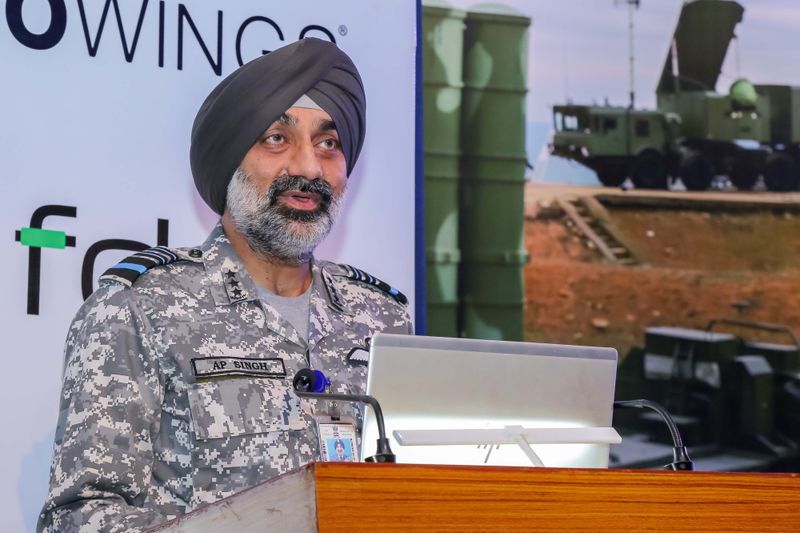
On May 15, Indian Air Force Chief Air Chief Marshal AP Singh highlighted the significance of advancing technology in contemporary military operations. During a speech at the Centre for Aerospace Power and Strategic Studies, he described Unmanned Aerial (UA) systems as essential extensions of air power. Singh pointed out that warfare has transitioned from a focus on concentrated air power to a more decentralised and autonomous methodology. He stressed the necessity for the armed forces to adapt to this evolving landscape.

Singh remarked on the relevance of drones and UA systems, stating, “This topic is a reality.” He noted the shift in battlefield dynamics and insisted that these systems play a crucial role in modern engagements. Furthermore, he explained that the adoption of UA systems reduces the risk to human life during operations, underlining that the principles governing traditional air power remain applicable to the use of these technologies.

Countering Unmanned Aerial Systems

Speaking about the challenges posed by UA systems, Air Chief Marshal Singh compared it to a “cat-and-mouse game,” where advancements in one field necessitate corresponding developments in countermeasures. He highlighted the need for continuous innovation in military technology to maintain strategic advantage. In his address, he praised the collaboration among the three branches of the armed forces during Operation Sindoor, which was India’s military response to a terror attack in Pahalgam.

Singh commented on the importance of coordination among services, stating, “Without a central agency coordinating it, it would not have been possible.” The Air Chief expressed confidence in the structural preparations in place that facilitate effective responses during military operations, emphasising that total coordination is essential when all branches operate in the same airspace.

Air Marshal Ashutosh Dixit also contributed to the discussion on UA systems, underlining the necessity of integrating these technologies into India’s defence strategy. He noted, “Forging triservice energy and integration in UAS, UV and counter UAS is a strategic imperative for operational freedom.” Dixit emphasised that successful future military engagements depend on collective leadership and integrated systems across the three services.

Future of Warfare and Industry Collaboration

Lieutenant General Vinod Nambiar, Director General of the Indian Army Aviation Corps, spoke about the significance of the seminar in shaping the future of warfare through UA systems. He stated that the event was not merely an academic gathering but a convergence of vision, technology, and strategy. Nambiar underscored the need for dialogue between the military and industry, aiming to find collaborative pathways for indigenisation and joint development of advanced military systems.

“The dialogue is not optional, but essential,” he highlighted, stressing that the future battle space will depend on the effective utilisation of Unmanned systems and robust defensive capabilities against them. He noted that Unmanned Aerial Vehicles (UAVs) have the potential to transform military doctrines globally, serving multiple roles in logistics, communications, electronic warfare, search and rescue, maritime patrol, and nuclear, biological, and chemical defence.

Nambiar concluded by affirming that UAVs are increasingly recognized not only as supporting tools but as integral components of modern warfare, thereby reshaping how military operations are conducted in the coming years.

Long or Short, get news the way you like. No ads. No redirections. Download Newspin and Stay Alert, The CSR Journal Mobile app, for fast, crisp, clean updates!

App Store –  https://apps.apple.com/in/app/newspin/id6746449540 

Google Play Store – https://play.google.com/store/apps/details?id=com.inventifweb.newspin&pcampaignid=web_share

Latest News

Popular Videos
