


Supreme Court Declares Right to Walk on Safe Footpaths a Fundamental Right
The CSR Journal Magazine

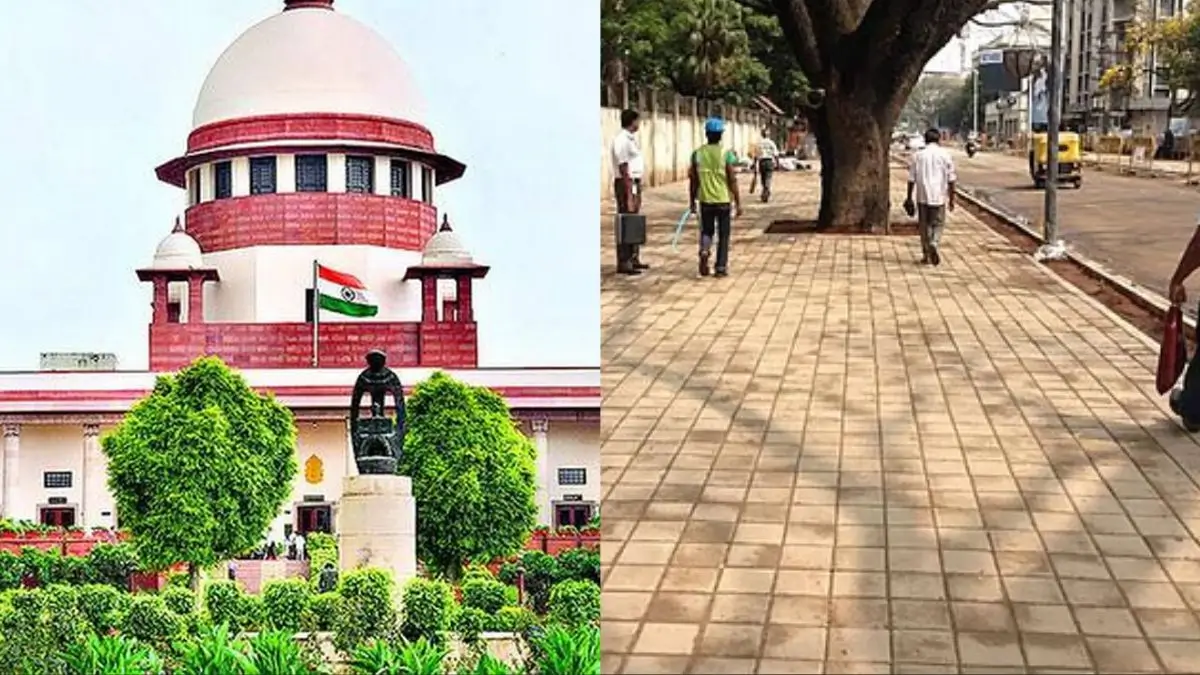
The Supreme Court has affirmed that individuals possess the right to walk on safe and designated footpaths, classifying it as a fundamental right under Articles 19 and 21 of the Indian Constitution. In a significant ruling issued on Friday, the bench, comprising Justice PS Narasimha and Justice AS Chandurkar, emphasised that this right takes precedence over the privileges afforded to motor vehicles on public pathways.

The Court asserted that public authorities are mandated to create and uphold footpaths wherever there are roads. It stated, “If a road exists, there must then be a duty to ensure that a footpath is demarcated and maintained for the walkers.” The judgment underscores that the right to walk safely must be preserved, overriding the operational freedom of motorised vehicles.

In its observations, the Court pointed out that city planning in India has long favoured vehicles, leaving pedestrians vulnerable and underserved. The lack of accessible footpaths has been characterised as a “civilisational problem,” highlighting the need for a shift in urban planning priorities to better accommodate human movement.

Responsibilities of Public Authorities

The Supreme Court clarified that the Urban Development Authorities, Municipal Corporations, Municipalities, and Panchayats bear the primary responsibility for ensuring pedestrian infrastructure is available and well-maintained. Citizens were informed of their right to seek legal recourse if these bodies fail to uphold their duties in providing safe walking environments.

The ruling also allows for the possibility of claiming compensation under the Motor Vehicles Act for accidents that occur due to inadequate pedestrian infrastructure. This highlights a significant legal mechanism for ensuring accountability among public authorities regarding pedestrian safety.

In a call for legislative reform, the Court indicated that there is currently no dedicated legal framework addressing pedestrian rights. To address this gap, it recommended forming a regulatory body and instructed that the judgment be forwarded to relevant ministries and the Law Commission for consideration of appropriate legislative measures.

Case Background and Compensation Ruling

This judgement was delivered while adjudicating a case involving a tragic incident where a five-year-old boy was fatally struck by a tanker while walking to school with his father. The Court noted the accident transpired in a location devoid of footpaths or pedestrian crossings, highlighting the urgent need for infrastructural improvements.

The Supreme Court set aside a previous High Court ruling that had reduced the compensation awarded to the child’s family, subsequently increasing the compensation amount to Rs 11.44 lakh. The bench’s decision indicates a recognition of the severe consequences arising from the absence of pedestrian facilities.

Furthermore, the Court indicated that the case would be transformed into a distinct proceeding to explore wider issues related to pedestrian rights and infrastructure planning. It also sought the cooperation of the Union government to tackle the deficiencies in pedestrian safety and rights across the country.

Long or Short, get news the way you like. No ads. No redirections. Download Newspin and Stay Alert, The CSR Journal Mobile app, for fast, crisp, clean updates!

App Store –  https://apps.apple.com/in/app/newspin/id6746449540 

Google Play Store – https://play.google.com/store/apps/details?id=com.inventifweb.newspin&pcampaignid=web_share

Latest News

Popular Videos
