


Min Aung Hlaing Celebrates 100 Days in Office with Five-Year Myanmar Strategy
The CSR Journal Magazine

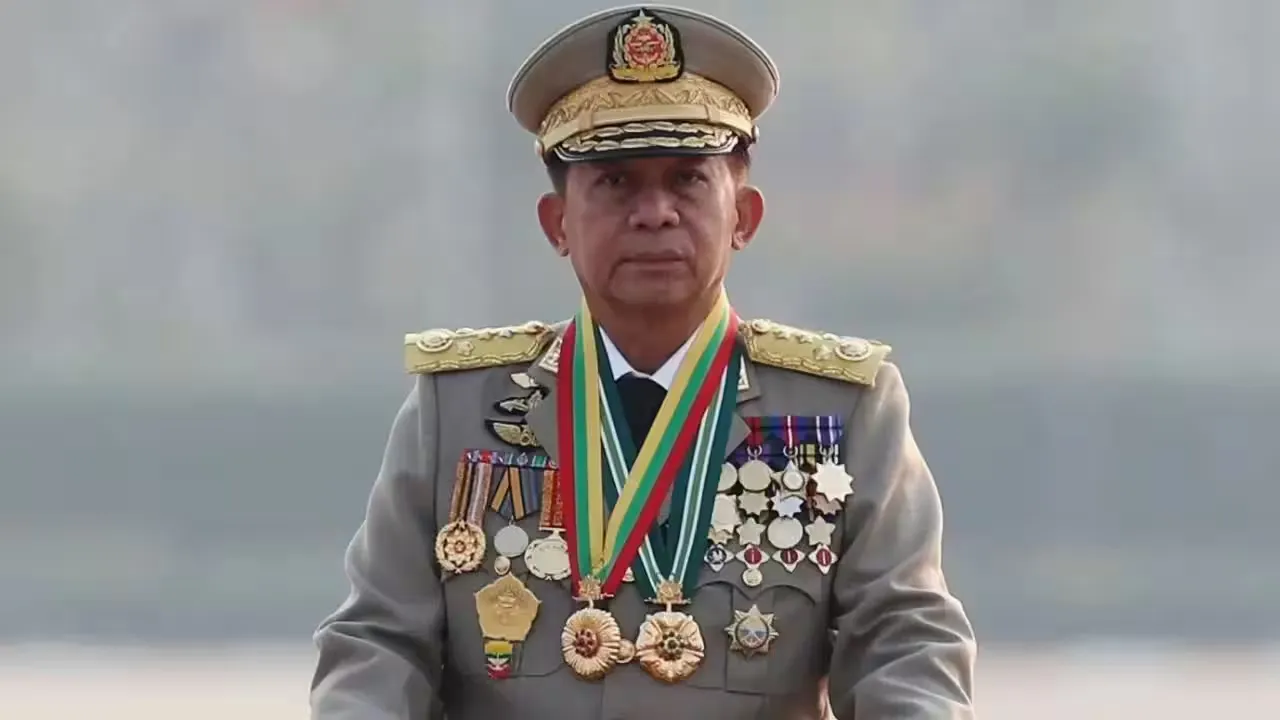
Min Aung Hlaing, the President of Myanmar, recently marked the first 100 days of his administration and unveiled a comprehensive five-year strategy for the nation. The roadmap comes amidst ongoing armed conflicts and global scrutiny of his government. Hlaing, who formerly served as the army chief, took control of the country in 2021 following a coup that replaced a civilian-led government. He officially became president in April after an election process that critics argue was structured to solidify military authority.

Addressing a gathering of over 900 participants, including lawmakers and military officials in Naypyitaw, Hlaing asserted that his government had established crucial foundations since taking office. He highlighted two main priorities: the restoration of peace and stability, alongside national development efforts. The president outlined a timeline for his administration’s objectives, indicating a focused two-year period aimed at constructing a modern, developed nation based on democratic principles and a federal system, followed by an intense three-year phase for execution.

As part of the electoral process, Hlaing announced that special elections would be conducted in 2027 across 102 townships that had faced disruptions during the prior three-phase election held late last year due to armed conflict. This initiative is part of the government’s broader agenda to quell unrest while navigating the complex political landscape.

Military Policies and Security Measures

In his address, Hlaing reaffirmed the government’s commitment to implementing the military’s conscription law, which aims to bolster the armed forces and police in their ongoing battles against pro-democracy activists and ethnic minority insurgents throughout Myanmar. He reiterated an invitation to armed groups engaged in conflict with the military to disarm and participate in discussions, revealing that talks had already taken place with 13 ethnic armed organisations.

Furthermore, Hlaing described the five-point consensus established by Southeast Asian leaders in 2021—a plan aimed at addressing the civil strife in Myanmar—as flawed. He accused the regional bloc of not representing all member states’ views and asserted that ASEAN had shown bias against Myanmar. This follows ASEAN’s call for an immediate cessation of violence and the initiation of dialogue among the conflicting parties, facilitated by a special envoy from the organisation.

Hlaing also laid out the government’s intentions concerning development projects, announcing the advancement of ten power generation initiatives. This includes the contentious Myitsone hydropower project, which was halted over a decade ago due to environmental concerns raised by public protests. Plans to establish a nuclear power plant were also mentioned, indicating the administration’s push towards diversifying energy sources.

Challenges and Criticism of Government Policies

The president acknowledged the challenges posed by rampant issues such as money laundering and drug trafficking while highlighting efforts to combat online scams. He stated that over 72,000 foreigners linked to scam operations had been returned to 58 countries. Despite these claims, he conceded that the significant emigration of young people from Myanmar adversely affects economic progress, without addressing the conscription law’s role in this exodus.

Subsequently, Nan Lin, a spokesperson for the General Strike Coordination Body, a key non-violent activist group, interpreted Hlaing’s speech as a sign of the military’s intent to retain political power. He expressed concerns that under the current policies, the societal situation would likely deteriorate further. Lin claimed that the junta would exploit the conscription law to instil fear among youth while suggesting a cycle of hardship driven by the regime’s governance strategy.

As Hlaing’s presidency reached the 100-day mark, the government shared its plans concerning security, electoral processes, international diplomacy, energy policies, and law enforcement strategies. Critics remain sceptical about the military’s grip on power and the implications of its operational policies.

Long or Short, get news the way you like. No ads. No redirections. Download Newspin and Stay Alert, The CSR Journal Mobile app, for fast, crisp, clean updates!

App Store –  https://apps.apple.com/in/app/newspin/id6746449540 

Google Play Store – https://play.google.com/store/apps/details?id=com.inventifweb.newspin&pcampaignid=web_share

Latest News

Popular Videos
