


Sixteen Metro Stations Closed Due To Security Measures Ahead Of Jantar Mantar Protest
The CSR Journal Magazine

The Delhi Metro Rail Corporation (DMRC) has announced the temporary closure of sixteen metro stations as a security measure related to the ongoing Jantar Mantar protests. The closure aims to ensure passenger safety while maintaining accessibility for train exchanges at significant metro nodes.

The affected stations, which will remain closed until further notice, include Lok Kalyan Marg, Rajiv Chowk, Patel Chowk, Ramakrishna Ashram Marg, Barakhambha Road, Supreme Court, Seva Teerth, Janpath, Mandi House, Central Secretariat, ITO, Delhi Gate, Indraprastha, Khan Market, Jor Bagh, and Shivaji Stadium.

Despite the closures, interchange facilities will still be operational at certain locations, specifically Rajiv Chowk, Mandi House, and Central Secretariat. This decision enables commuters to switch lines even amid heightened security measures.

Heightened Security on Parliament’s Monsoon Session

The announcement of these closures coincides with the third day of the Monsoon Session of Parliament, occurring in close proximity to both Jantar Mantar and the Parliament complex. The Delhi Police have stepped up security protocols in anticipation of protests and other activities associated with the session.

On Sunday morning, the DMRC had also closed five central Delhi metro stations—Janpath, Rajiv Chowk, Patel Chowk, Central Secretariat, and Seva Teerth—due to security concerns. The initiative reflects a broader strategy to maintain public safety during heightened tensions and potential protests in the area.

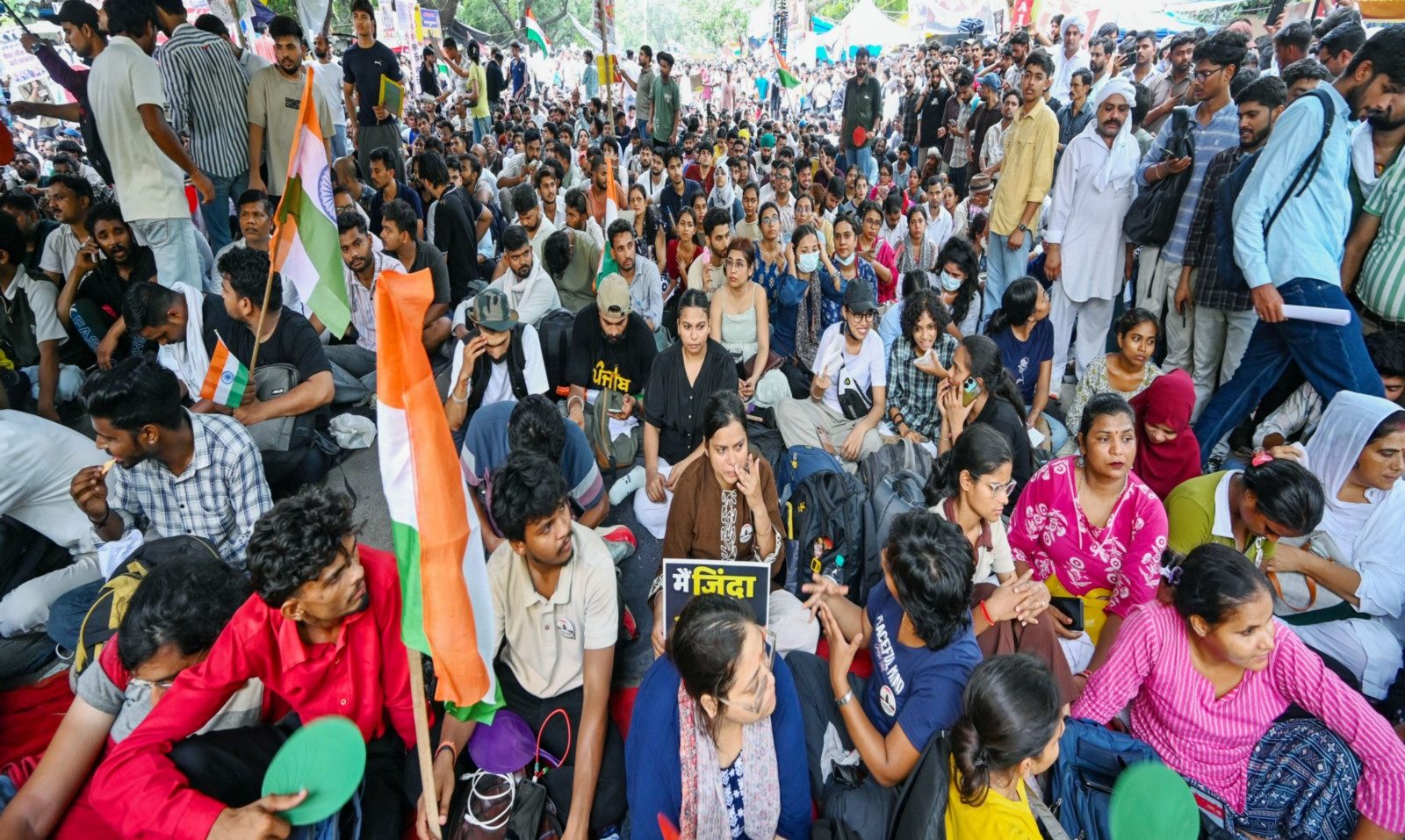
As security measures increased, the Citizens for Justice and Peace (CJP) continued its protest at Jantar Mantar, advocating for various issues. Reports indicate that security personnel, including members of the Rapid Action Force, have been deployed to manage both the protest activities and ensure a secure environment during the parliamentary session.

Protest Details and Official Response

Recent developments in the protests have created a complex situation. According to the Delhi Police, the CJP has not approached them for official permission for the march to Parliament, which has raised concerns about compliance with legal requirements. Activist Sonam Wangchuk, who initiated the protest, was taken to hospital on Saturday morning, exacerbating concerns surrounding the protests.

On Monday, the Delhi Police issued an advisory detailing that no permission has been sought or granted for a march to Parliament by the CJP. They have warned that strict action will occur against individuals who do not adhere to prohibitory orders currently in effect within the New Delhi district.

Prohibitory orders under Section 163 of the Bharatiya Nagarik Suraksha Sanhita (BNSS), which replaces the previous Section 144 of the Criminal Procedure Code (CrPC), are still in place. Public gatherings of five or more individuals, excluding designated protest areas and prior permission, are prohibited by this mandate.

Prior to this escalation, Sonam Wangchuk had announced his intention to terminate his hunger strike contingent on government accountability regarding recent shortcomings in the education sector, specifically issues like examination paper leaks. His protest traces back to June and has garnered substantial public and media attention, particularly following his involvement in late June when he initiated an indefinite hunger strike in response to calls for the resignation of Union Education Minister Dharmendra Pradhan.

Long or Short, get news the way you like. No ads. No redirections. Download Newspin and Stay Alert, The CSR Journal Mobile app, for fast, crisp, clean updates!

App Store –  https://apps.apple.com/in/app/newspin/id6746449540 

Google Play Store – https://play.google.com/store/apps/details?id=com.inventifweb.newspin&pcampaignid=web_share

Latest News

Popular Videos
