


Shehbaz Sharif Leads Delegation at Khamenei Funeral in Tehran
The CSR Journal Magazine

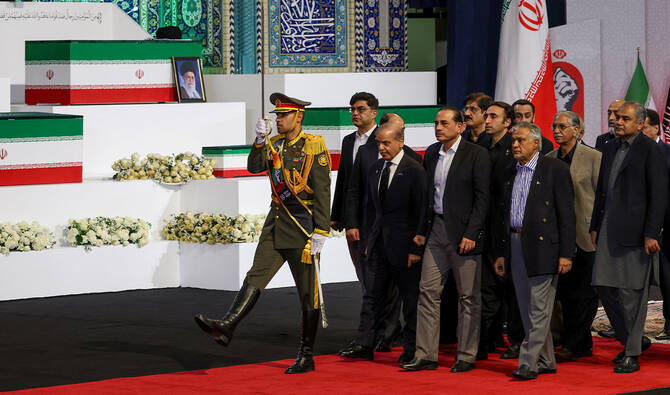
On July 3, 2026, a high-ranking delegation from Pakistan, under the leadership of Prime Minister Shehbaz Sharif, attended the funeral of the Iranian supreme leader Ayatollah Ali Khamenei in Tehran. Khamenei was reportedly assassinated in strikes attributed to the United States and Israel earlier in February. During the ceremony, Sharif paid tribute to the deceased leader, recognising his influence over Islamic thought and leadership over Iran.

In a statement released by Sharif’s office, the prime minister expressed heartfelt condolences to Iran’s new Supreme Leader, Ayatollah Seyyed Mojtaba Hosseini Khamenei, and conveyed solidarity towards President Masoud Pezeshkian and the Iranian populace during this time of mourning. He highlighted Khamenei’s significant contributions to Islamic governance and his decades-long guidance of the Iranian nation, characterised by wisdom and astuteness.

Composition of the Pakistani Delegation

The delegation comprised several prominent figures, including Army Chief Field Marshal Asim Munir, Deputy Prime Minister and Foreign Minister Ishaq Dar, and Interior Minister Mohsin Naqvi, amongst others. Information Minister Attaullah Tarar and Pakistan Peoples Party Chairman Bilawal Bhutto Zardari were also present, indicating the importance of this mission. A parliamentary group led by Senate Chairman Syed Yousaf Raza Gillani and National Assembly Speaker Sardar Ayaz Sadiq, along with Sindh Chief Minister Syed Murad Ali Shah, also joined the funeral proceedings.

Sharif’s presence alongside such high-ranking officials underscores the significance of bilateral relations between Pakistan and Iran. The gathering of these political leaders highlights their commitment to acknowledging shared grief and fostering stronger ties between the two neighbouring nations. Following the ceremony, several officials returned to Pakistan, while Sharif continued his journey to Istanbul for an official visit to Turkiye.

The relationship between Pakistan and Iran has often oscillated between cooperation and tension, and such diplomatic gestures could pave the way for future collaboration in the region. The tragic event surrounding Khamenei’s death further emphasises the necessity for maintaining dialogue and mutual understanding.

Future Ceremonies and Context of Death

The public memorial services for Ayatollah Khamenei are scheduled to occur in both Tehran and Qom from July 5 to July 7, with the burial planned for July 9 in Mashhad. These ceremonies are expected to attract significant public attention, underscoring Khamenei’s lasting impact on Iranian society. The Iranian leadership has framed Khamenei’s death as a significant loss, potentially influencing the political landscape within the country.

Beyond the immediate mourning, Khamenei’s assassination has raised questions about the security dynamics in the region, particularly concerning the ongoing tensions between Iran, the United States, and Israel. In recent months, Pakistan’s role as a mediator, notably in the ceasefire agreements and subsequent dialogue between the US and Iran, highlights its unique position in South Asian geopolitics. The signing of a Memorandum of Understanding (MoU) on June 18 demonstrated ongoing efforts towards de-escalation.

As diplomatic efforts continue, the loss of Khamenei could have ramifications for future negotiations, with Iranian leadership now under the guidance of his successor. The delicate nature of these transitions necessitates careful observation of regional allies’ reactions, including Pakistan’s diplomatic strategies and initiatives in the months to come.

Long or Short, get news the way you like. No ads. No redirections. Download Newspin and Stay Alert, The CSR Journal Mobile app, for fast, crisp, clean updates!

App Store –  https://apps.apple.com/in/app/newspin/id6746449540 

Google Play Store – https://play.google.com/store/apps/details?id=com.inventifweb.newspin&pcampaignid=web_share

Latest News

Popular Videos
