


Rs 250 An Hour For Housework? How AI Is Turning Daily Tasks Into Data
The CSR Journal Magazine

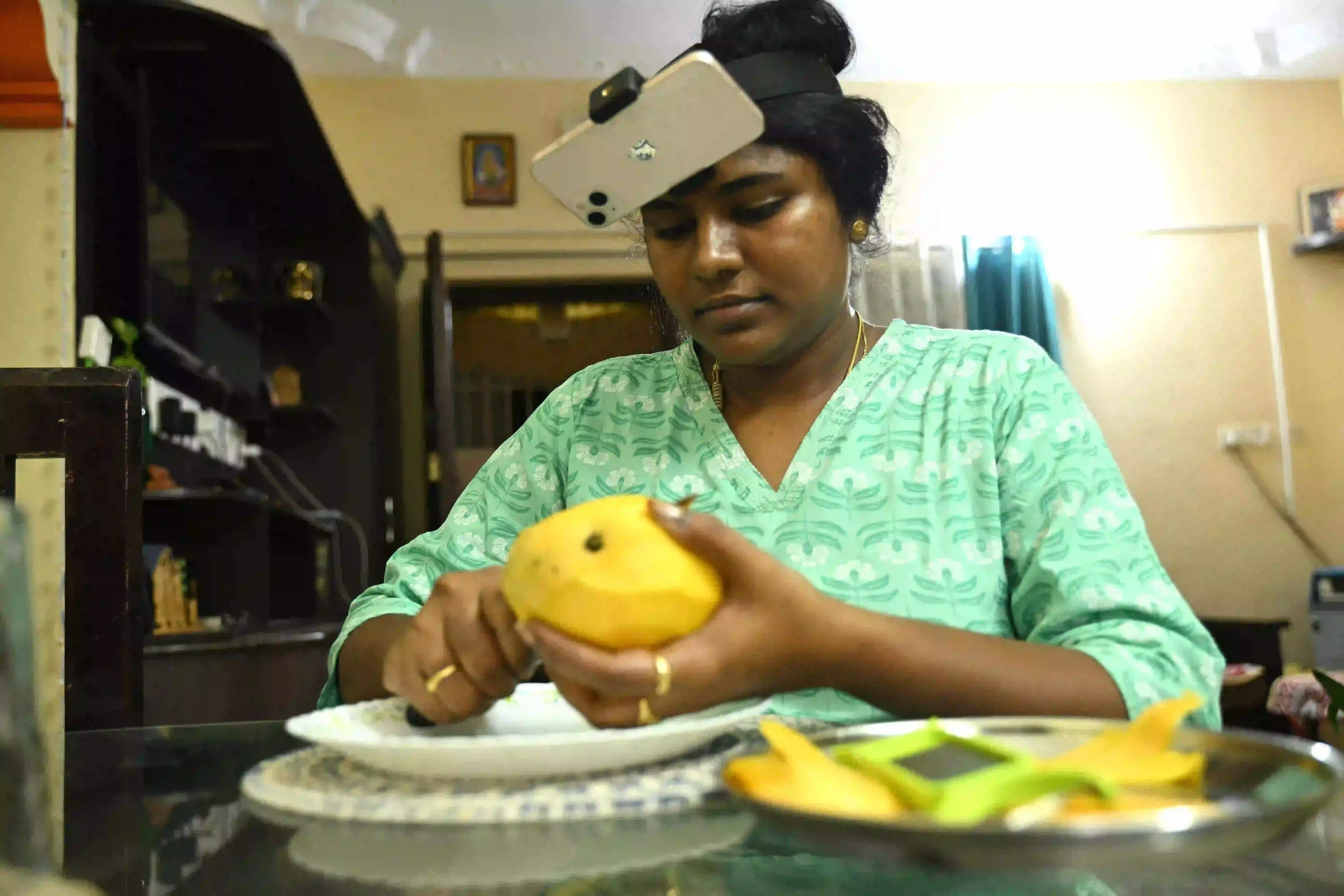
Indian homemakers and informal workers are increasingly turning everyday tasks into training material for artificial intelligence, wearing smartphones and cameras mounted on their heads to record activities ranging from cutting fruits to making flower garlands.

The unusual practice is part of a growing effort by AI companies to collect “egocentric data” — first-person videos that help teach robots how humans interact with the physical world. Unlike chatbots and image-generation systems, humanoid robots require detailed information about movement, hand coordination and object handling to replicate human actions.

As demand for robotics accelerates, India has emerged as a major hub for the collection, processing and annotation of AI data, with thousands of workers contributing to the rapidly expanding industry.

Everyday Chores Becoming Training Material

Among those participating is 25-year-old Nagireddy Sriramyachandra from Chennai, who earns Rs 250 an hour by recording herself carrying out household activities.

Using a smartphone attached to her head, she films tasks such as slicing fruits and working in the kitchen. The videos are then sent to an AI data company with operations in India and the United States, which works with several Fortune 500 firms.

According to a report by AFP, the recording system alerts users when their hands are not clearly visible, ensuring the footage captures precise movements needed to train robotic systems.

“Who else will give you 250 rupees an hour just for doing housework?” Sriramyachandra told AFP, adding that she hopes to one day own one of the robots she is helping train.

Workers involved in such projects use a variety of devices, including head-mounted cameras, smart glasses and motion sensors to create data that enables robots to understand and mimic real-world actions.

India Emerges As Key AI Data Hub

Experts believe demand for such services will continue to rise alongside the rapidly expanding humanoid robot market.

Industry estimates suggest that more than one billion robots could be in operation globally by 2050, primarily in industrial and commercial sectors. This has increased the importance of high-quality training data capable of teaching machines how to function in dynamic environments.

Digital labour expert Aditi Surie of the Indian Institute for Human Settlements told AFP that AI-related data collection services are expected to grow significantly in the coming years.

India’s large workforce and expertise in data processing have positioned the country as a critical player in the development of next-generation artificial intelligence technologies.

Concerns Over Jobs And Automation

The growth of AI-driven automation has also raised concerns about its impact on employment, particularly among informal workers.

NITI Aayog has previously noted that discussions around artificial intelligence often focus on white-collar professions while overlooking India’s nearly 490 million informal workers.

One such worker is 55-year-old Ponni, who has spent a decade making flower garlands by the roadside in Bengaluru. She too has participated in the data collection effort by wearing a camera while carrying out her work.

According to AFP, Ponni worries about what automation could mean for future generations.

“The next generation … who might have to do work similar to mine, they will face a problem,” she said.

While the sight of workers wearing cameras to perform ordinary tasks may appear unusual today, it reflects a broader transformation taking place in the age of artificial intelligence, where the routines of millions of people are increasingly becoming the foundation for the robots of the future.

Long or Short, get news the way you like. No ads. No redirections. Download Newspin and Stay Alert, The CSR Journal Mobile app, for fast, crisp, clean updates!

App Store –  https://apps.apple.com/in/app/newspin/id6746449540 

Google Play Store – https://play.google.com/store/apps/details?id=com.inventifweb.newspin&pcampaignid=web_share

Latest News

Popular Videos
