


STF Uncovers Cross-Border Spy Network After Arrest of ISI Operative
The CSR Journal Magazine

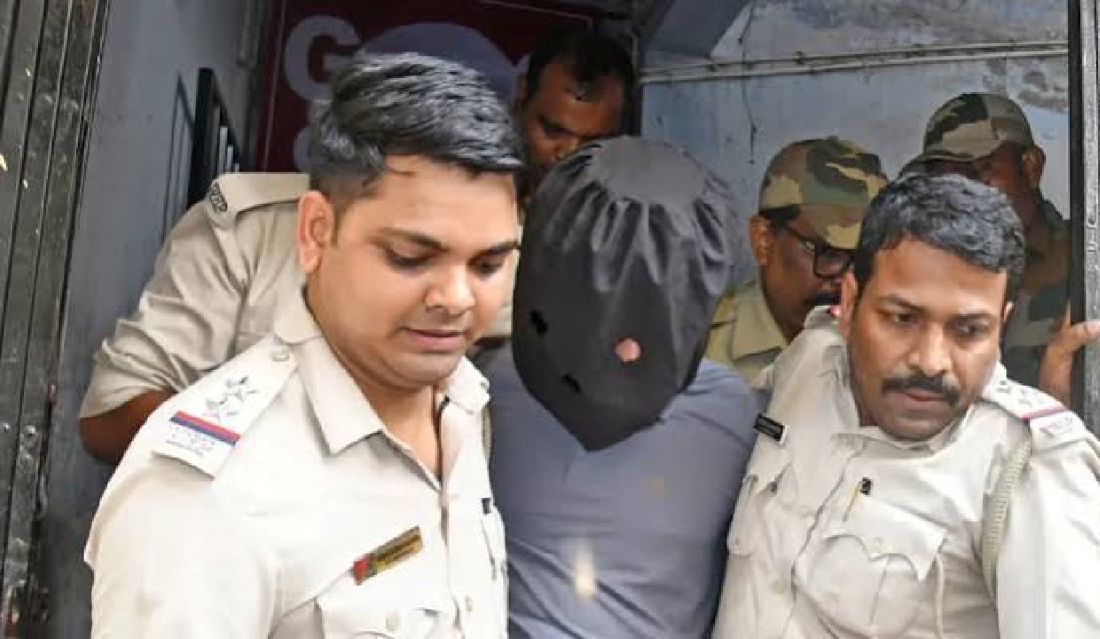
Detectives from the State Police’s Special Task Force (STF) have uncovered key details of an international espionage network following the arrest of suspected ISI operative Rana Rauf Khalid on Wednesday. Despite attempts to destroy evidence, including smashing his mobile phone, investigators were able to retrieve crucial leads from his diary and notebook.

According to STF sources, the recovered notebook contained the names of at least six foreign operatives connected to the network—five believed to be based in Nepal and one in Bangladesh. The Nepal-based operatives have been identified as Kashif, Hanif Chowdhury, Sohail, JD, and Harun Safdar, while the Bangladesh-based contact has been named as Pavel.

Rana, who operated under aliases such as Sunny and Wahab Alam, was arrested in Habra.

His associate, Mohammad Ejaz, was later detained in Topsia for allegedly providing logistical assistance. Investigators have also identified the involvement of two additional residents from East Kolkata, suggesting a broader local support network.

Sensitive data shared across borders

Officials revealed that Khalid had been transmitting sensitive information, including photographs and videos of army cantonments around Kolkata, Border Security Force (BSF) camps in border areas, railway stations, tracks, and strategic maps. These were allegedly shared through digital platforms with operatives stationed in Nepal.

Investigators noted that Khalid attempted to eliminate digital evidence by smashing his mobile phone during his stay in Nepal. However, he failed to dispose of two SIM cards, which are now in STF custody and are expected to provide further leads into the network.

Planned Bangladesh route exposed

The probe has also revealed details of a planned cross-border movement. After a covert meeting in Kathmandu, Khalid intended to travel to Bangladesh via Bongaon. Authorities believe that the Bangladesh-based operative, Pavel, was waiting for him in Jashore with a new mobile device. Khalid allegedly planned to insert his old SIM card into the new phone to re-establish communication with contacts in Nepal and Pakistan.

At the time of his arrest, Khalid attempted to mislead authorities by presenting Aadhaar and voter ID cards under the name Wahab Alam, claiming to be a resident of Topsia. However, inconsistencies in his statements—particularly regarding identity documentation and the National Register of Citizens (NRC)—raised suspicions. During sustained interrogation, he eventually confessed to being a Pakistani national.

International coordination underway

Police sources confirmed that only ₹350 was recovered from Khalid at the time of his detention. Authorities have indicated that details of the espionage network are being shared with the governments of Nepal and Bangladesh through the Ministry of External Affairs as part of ongoing international coordination.

The investigation remains active as agencies work to identify additional operatives and dismantle the wider network.

Long or Short, get news the way you like. No ads. No redirections. Download Newspin and Stay Alert, The CSR Journal Mobile app, for fast, crisp, clean updates!

App Store –  https://apps.apple.com/in/app/newspin/id6746449540 

Google Play Store – https://play.google.com/store/apps/details?id=com.inventifweb.newspin&pcampaignid=web_share

Latest News

Popular Videos
