


Rebel TMC MPs Merge With NCPI – Will This Benefit NDA?
The CSR Journal Magazine

The recent political landscape shifted dramatically when a faction of dissenting Trinamool Congress (TMC) Members of Parliament revealed their merger with the Nationalist Citizens Party of India (NCPI) and declared their support for the National Democratic Alliance (NDA). This announcement led to swift and sharp reactions from TMC leadership, who denounced the merger as “ridiculous” and accused the dissident MPs of betraying the party that had elected them.

Senior TMC leader Sougata Roy publicly questioned the significance of the NCPI, noting it is a registered yet unrecognised party based in Tripura. Roy challenged the rebel MPs to justify their decision to their constituents, asserting that they would find it difficult to defend their actions when confronted by the voters. Further, he claimed that this move appeared to be an effort to appease their “BJP masters.”

Roy elaborated that the decision to merge was strategically chosen, as parliamentary rules do not permit recognition of separate factions within a political party. He stated that voter support for Mamata Banerjee-led TMC would remain unshaken, contrasting it with the prospects for those who have defected.

Rebel MPs Seek Separate Seating in Parliament

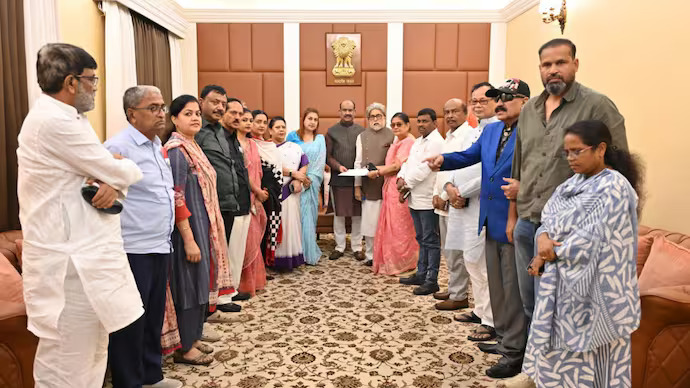
The situation intensified when the rebel MPs convened with Lok Sabha Speaker Om Birla, expressing their wish for a distinct seating arrangement within the Parliament following their merger announcement. Reports from the dissident faction indicated that they had the backing of twenty MPs, which constitutes more than two-thirds of TMC’s 28-member presence in the Lok Sabha, as they pledged to provide support to the NDA on legislative matters.

The leadership of the TMC has since rebelled against these assertions in discussions before the Speaker, arguing that constitutional principles, alongside anti-defection laws, prohibit the recognition of a distinct faction from within an existing party. The TMC has maintained that the integrity of their party structure remains intact despite the dissenting voices.

This unfolding drama has raised questions about the solid foundations of the TMC, with speculation that it might be facing an internal challenge more serious than previously recognised.

BJP Claims TMC Is Facing Internal Crisis

The Bharatiya Janata Party (BJP) has interpreted the developments as indicative of significant internal turmoil within the TMC, particularly in West Bengal. BJP spokesperson Sayantan Basu articulated that this exodus exemplifies rising discontent among TMC members, urging the party’s leadership to undergo introspection rather than attributing blame to external parties.

Senior BJP figure Tathagata Roy drew parallels to the decline of the Left Front, asserting that even the Communist Party of India (Marxist), despite its loss of power in 2011, had not experienced a rebellion of this magnitude. He posited that these developments reveal an ideological dilemma within the TMC and underscore growing rifts within the party, particularly as it approaches future electoral contests.

This scenario, marked by dissent and fragmentation, positions both the TMC and the BJP in a complex political milieu as they navigate voter sentiments ahead of upcoming electoral challenges, raising questions about the stability of the existing party dynamics in West Bengal.

Long or Short, get news the way you like. No ads. No redirections. Download Newspin and Stay Alert, The CSR Journal Mobile app, for fast, crisp, clean updates!

App Store –  https://apps.apple.com/in/app/newspin/id6746449540 

Google Play Store – https://play.google.com/store/apps/details?id=com.inventifweb.newspin&pcampaignid=web_share

Latest News

Popular Videos
