


Lunar Eclipse Set to Occur After Recent Total Solar Eclipse
The CSR Journal Magazine

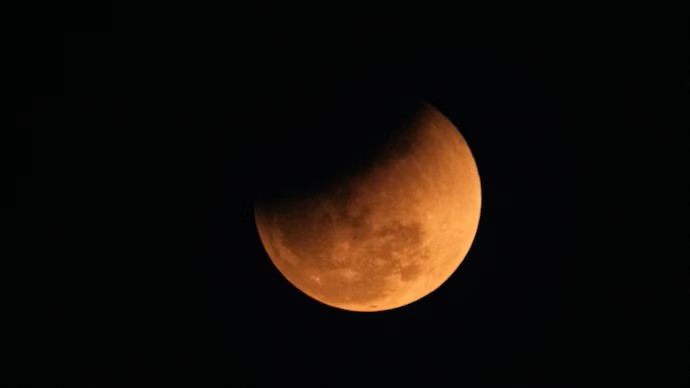
The lunar eclipse is poised to take place on August 28, 2026, as the Moon aligns with the Earth’s shadow. This event follows a total solar eclipse that occurred on August 12, 2026, affecting various regions in the Northern Hemisphere. The forthcoming lunar eclipse will be characterised as a deep partial eclipse, with about 93 per cent of the Moon entering the umbra, or the darkest part of Earth’s shadow.

During the peak of this eclipse, only a small section of the lunar disc will remain illuminated. As the Earth’s shadow envelops the Moon, it may assume a hue of deep orange or red. This colour transformation is due to certain wavelengths of sunlight passing through the Earth’s atmosphere, contributing to the overall appearance of the lunar orb.

The eclipse will commence at 8:00 am IST, with the partial stage beginning at approximately 9:43 am IST. This spectacle will come to a close at around 11:22 am IST. However, this event will not be viewable from India, as the Moon will have already set across the country during these timings.

Significance of the August Eclipses

This lunar eclipse closely follows the August 12 solar eclipse, which was notable for its path across Greenland, Iceland, northern Russia, the Atlantic Ocean, Spain, and a small section of Portugal. This total solar eclipse was a unique occurrence, being the first of its kind to be seen in Europe since 1999.

The mechanics of a solar eclipse differ from those of a lunar eclipse. In a solar eclipse, the Moon obscures the Sun by positioning itself between the Earth and the Sun. Conversely, in a lunar eclipse, the Earth obstructs sunlight from reaching the Moon. The interplay of these celestial bodies has contributed to a busy month for astronomical observers.

The significance of these two eclipses highlights the extraordinary activity occurring in the sky during August. Observers across various regions experience the beauty and complexities of celestial movements, enriching their understanding of astronomical phenomena.

Visibility of the Upcoming Lunar Eclipse

A key distinction between solar and lunar eclipses is their visibility. While solar eclipses are confined to a specific path, lunar eclipses can be witnessed from any location on the nighttime side of Earth where the Moon is above the horizon. This particular lunar eclipse will be observable across large parts of the Americas, Europe, and Africa, as well as in some regions of western Asia.

It is important to note that observers in Europe, Africa, and the Middle East may miss the full experience of the partial phase, as the Moon will set during this period. Unlike solar eclipses, lunar eclipses are safe for viewing with the naked eye, eliminating the need for special eye protection.

The lunar eclipse on August 28 serves as another opportunity for skywatchers to engage with the wonders of the universe. As the Moon traverses through the Earth’s shadow, it offers a different yet equally captivating spectacle compared to the recent solar event.

Long or Short, get news the way you like. No ads. No redirections. Download Newspin and Stay Alert, The CSR Journal Mobile app, for fast, crisp, clean updates!

App Store –  https://apps.apple.com/in/app/newspin/id6746449540 

Google Play Store – https://play.google.com/store/apps/details?id=com.inventifweb.newspin&pcampaignid=web_share

Latest News

Popular Videos
